9 Best Car Batteries for Trucks (November 2026)
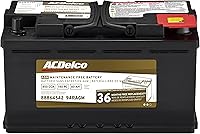
The best best truck batteries for pickups include the ACDelco Gold 48AGM for daily pickup use, the ACDelco Gold 94RAGM for larger battery trays, and the Optima RedTop 34/78 for basic electrical needs.
On this page (6 sections)
The best truck battery for a compatible Group 48/H6 truck is the ACDelco Gold 48AGM, our highest-scoring pick for that application. Choose the ACDelco Gold 94RAGM when your truck requires H7, or the Optima YellowTop D34/78 for a compatible truck with repeated accessory cycling.
Fit comes before rank. A battery must match the truck's tray, connections, battery type and starting requirements before its extra features matter.
For a Ford pickup, start with our Ford F-150 battery size guide. Our complete AGM car battery guide explains the battery type used throughout these picks.
Our picks at a glance
-
1

-
2
-
3
- 4
 Best for winches and audioCheck it
- 5
 Best for stock pickup replacementsCheck it
- 6
 Best for accessory-heavy start-stop trucksCheck it
- 7
 Check it
Mighty Max MM-H6 Start-Stop (Group 48)
Best for compact start-stop applications - 8
 Check it
Mighty Max MM-H7 Start-Stop (Group 94R)
Best for alternate mounting needs - 9
 Best for pure-lead AGM buyersCheck it
Which best truck battery pick suits your use?
Choose by vehicle fit first, electrical use second. These batteries cover several group sizes, so the highest-scoring option is a starting point for compatible trucks rather than a universal replacement.
Best truck battery picks: how we compared them
We compared construction, stated electrical specifications, warranty terms and intended use. We gave starting-focused batteries and dual-purpose designs different roles because daily commuting and repeated accessory use place different demands on a battery.
ACDelco Gold 48AGM: Best for daily pickup use
- Group 48/H6
- AGM design
- 36-month free replacement / limited warranty
- High-density negative paste
Our first choice for a compatible Group 48/H6 truck, especially one that requires AGM for start-stop use.
Pros
- Designed for start-stop applications
- Vent cap resists acid leakage
- 36-month free replacement / limited warranty
Cons
- Requires a confirmed Group 48/H6 application and matching starting requirements
The ACDelco Gold 48AGM suits a daily pickup that requires Group 48/H6 AGM, including a confirmed start-stop application. It is the first option to consider here when your truck's requirements match.
Its high-density negative paste and enhanced-life alloy are designed to support performance and cycle life. A puncture-resistant envelope separator helps prevent internal shorts, while the vent cap resists acid leakage.
ACDelco backs this model with a 36-month free replacement / limited warranty. Keep the receipt and check the claim process before installation, since replacement coverage is most useful when you know how to use it.
Skip it if your truck requires a different group or its starting-output requirement cannot be confirmed for this model. For size questions, our car battery group size chart helps you narrow the search before checking exact vehicle fit.
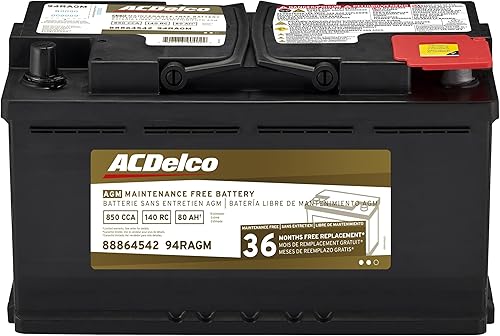
ACDelco Gold 94RAGM: Best for larger battery trays
- Group 94R/H7
- AGM design
- 36-month / unlimited-mile limited warranty for parts only
- Puncture-resistant envelope separator
A vehicle-specific AGM replacement for trucks that require Group 94R/H7, with a parts-only limited warranty.
Pros
- AGM construction
- Vent cap resists acid leakage
- 36-month / unlimited-mile limited warranty for parts only
Cons
- Not interchangeable with a smaller H6 battery without vehicle approval
The ACDelco Gold 94RAGM is the direct candidate for a truck that requires Group 94R/H7 AGM. Choose it because it matches that application, rather than treating the larger case as an automatic upgrade over H6.
The battery uses high-density negative paste, a puncture-resistant envelope separator and a leak-resistant vent cap. ACDelco's warranty is 36 months with unlimited miles, limited to parts, so do not assume it covers installation or other repair costs.
This pick suits an owner replacing the battery in an otherwise stock truck who wants a vehicle-specific AGM option. Confirm the engine and trim as well as the model year, especially when the same truck came with several electrical packages.
Skip it when your tray, cables or approved battery specification calls for another size. A longer battery should never require improvised brackets or stretched cables to fit.
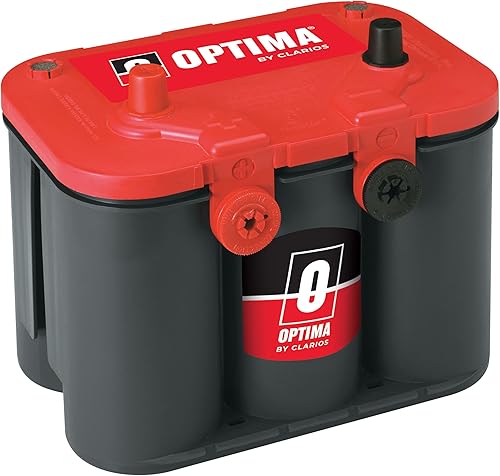
Optima RedTop 34/78: Best for basic electrical needs
- 800 CCA
- Dual SAE and GM terminals
- 100-minute reserve capacity
- SpiralCell design
A starting-focused option for a compatible truck with standard electrical demands and SAE or GM battery connections.
Pros
- Dual SAE and GM terminals
- 100-minute reserve capacity
- Maintenance free
Cons
- Starting-focused design is less suited to repeated accessory cycling
The Optima RedTop 34/78 suits a compatible truck whose main job is starting the engine and running standard electrical equipment. Its dual SAE and GM terminals give it connection options, but the correct terminal style must still match your cables.
It provides 800 CCA and a 100-minute reserve capacity. Optima uses a SpiralCell design and describes the battery as maintenance free, with greater vibration resistance than a standard flooded battery.
That makes it worth considering for a compatible truck used on rough roads, provided the hold-down secures it correctly. Vibration-resistant construction cannot compensate for a battery that moves around in its tray.
Skip the RedTop if you regularly draw down the battery with equipment while the engine is off. The YellowTop below is the more suitable design for repeated cycling, while extended campsite power may call for a separate auxiliary battery system.
Optima YellowTop D34/78: Best for winches and audio
- 750 CCA
- Dual SAE and GM terminals
- 120-minute reserve capacity
- Dual-purpose design
A dual-purpose battery for compatible trucks that need engine starting plus cycling support for demanding accessories.
Pros
- Dual-purpose design
- 120-minute reserve capacity
- Dual SAE and GM terminals
Cons
- Accessory use still requires a charging and power plan
The Optima YellowTop D34/78 suits a compatible truck with winches, demanding audio equipment or other loads that repeatedly draw charge. Its dual-purpose design combines engine starting with cycling capability.
It has 750 CCA, a 120-minute reserve capacity and dual SAE and GM terminals. Compared with the RedTop, its main buying reason is that different use pattern, rather than a higher starting-output number.
Plan accessory use around the whole electrical system. A winch can place a heavy load on the battery, and a larger battery cannot correct undersized wiring or inadequate charging.
Choose the YellowTop when its size and connections fit and cycling support serves a clear need. Skip it for a truck that requires another group, or when you only need a straightforward starting replacement with standard electrical demands.
Weize Platinum Group 65 AGM: Best for stock pickup replacements
- Group 65
- 750 CCA
- 70 Ah
- 3-year warranty
An AGM candidate for a confirmed Group 65 truck, with starting and capacity figures that are easy to compare against vehicle requirements.
Pros
- 750 CCA
- 70 Ah capacity
- 3-year warranty
Cons
- Not intended for deep-cycle solar or marine use
The Weize Platinum Group 65 AGM suits a confirmed Group 65 truck whose requirements fit 750 CCA and 70 Ah. It is a candidate for a stock replacement or a compatible start-stop application.
The case measures 12.05 x 7.56 x 7.56 inches. Weize describes the terminal arrangement as left-positive and right-negative; compare the actual post locations in the truck's installed orientation before connecting anything.
Weize backs this model with a 3-year warranty. Its automotive starter design supports vehicle electrical loads, but Weize specifically excludes deep-cycle solar and marine applications.
Choose it when the required group, polarity and charging system all match. Skip it if the engine requires more starting output, and do not buy it as a house battery for long engine-off camping sessions just because it has an amp-hour figure.
Weize Platinum Group 94R AGM: Best for accessory-heavy start-stop trucks
- Group 94R
- 850 CCA
- 80 Ah
- 140-minute reserve capacity
A Group 94R AGM option for compatible start-stop trucks whose starting and accessory needs suit its specifications.
Pros
- 850 CCA
- 80 Ah capacity
- 140-minute reserve capacity
Cons
- Automotive starter design is not a deep-cycle power bank
The Weize Platinum Group 94R AGM suits a compatible H7 truck with start-stop equipment and higher accessory demands. It combines 850 CCA, 80 Ah and a 140-minute reserve capacity.
Its case measures 12.4 x 6.89 x 7.48 inches, with the negative terminal on the left and positive on the right in Weize's stated orientation. Compare the post positions, case and hold-down with your truck before ordering.
This is an automotive starter battery with improved cycling ability, not a substitute for a dedicated deep-cycle power system. Choose it for the truck's starting and onboard electrical needs.
Skip it if your battery compartment requires a different size or connection arrangement. Against another H7 battery with matching electrical figures, use confirmed fit, warranty handling and installation requirements to decide rather than treating equal specifications as proof of equal service life.
Mighty Max MM-H6 Start-Stop (Group 48): Best for compact start-stop applications
- Group 48
- 760 CCA
- 70 Ah
- 120-minute reserve capacity
An H6 AGM alternative for compatible start-stop trucks, with stated starting output, capacity and reserve capacity.
Pros
- 760 CCA
- 120-minute reserve capacity
- Mounts in multiple positions except upside down
Cons
- Wire harness and other mounting accessories are not included
- Confirm warranty terms before buying
The Mighty Max MM-H6 suits a compatible Group 48 start-stop truck when you want stated starting output and reserve capacity to compare with the vehicle's requirements. It provides 760 CCA, 70 Ah and a 120-minute reserve capacity.
The case measures 10.94 x 6.88 x 7.48 inches, with positive on the right and negative on the left in the brand's stated orientation. Check the actual terminals and cable connections as part of fit confirmation.
Mighty Max allows several mounting positions, excluding upside down. The truck's approved mounting and venting arrangement still governs installation.
Mounting screws are included, but a wire harness and other mounting accessories are not. Choose it when your existing hardware is suitable; skip it if installation would depend on an assumed adapter, and confirm the applicable warranty terms because Mighty Max's warranty descriptions differ.
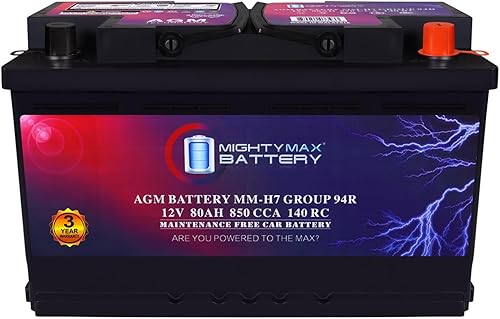
Mighty Max MM-H7 Start-Stop (Group 94R): Best for alternate mounting needs
- Group 94R
- 850 CCA
- 80 Ah
- 140-minute reserve capacity
An H7 AGM candidate with flexible mounting permission for vehicle-approved installations, excluding upside-down mounting.
Pros
- 850 CCA
- 140-minute reserve capacity
- Mounts in multiple positions except upside down
Cons
- Wire harness and other mounting accessories are not included
- Confirm warranty terms before buying
The Mighty Max MM-H7 suits a confirmed Group 94R application, including an installation that needs a permitted alternate mounting position. Its electrical figures are 850 CCA, 80 Ah and a 140-minute reserve capacity.
It measures 12.50 x 6.88 x 7.48 inches. That small length difference from the Weize H7 matters if the truck's battery compartment or cover leaves little room.
Mighty Max permits mounting in multiple positions except upside down. This flexibility helps only when the vehicle's brackets, cable routing and any vent connection support the same arrangement.
Mounting screws come with it, but the remaining installation hardware must already be suitable or sourced separately. Skip it if clearance is marginal or the terminal connection cannot be confirmed, and resolve the differing warranty descriptions before choosing it over another H7 option.
Interstate Group 65 AGM: Best for pure-lead AGM buyers
- Group 65
- 750 CCA
- Spill-proof AGM design
- Maintenance free
A pure-lead AGM option for a confirmed Group 65 application, aimed at start-stop vehicles and their electrical equipment.
Pros
- Pure-lead AGM construction
- 750 CCA
- Maintenance-free, spill-proof design
Cons
- Exact vehicle fit requires confirmation through the compatibility guide
The Interstate Group 65 AGM suits an owner who wants pure-lead AGM construction for a confirmed Group 65 truck. It has 750 CCA and 68 Ah capacity, with a case measuring 12.06 x 7.56 x 7.44 inches.
Interstate describes its MTX design as maintenance free, spill-proof and vibration resistant. The brand positions it for start-stop vehicles and the accessories they power.
Choose it when the compatibility guide confirms your exact truck and its starting requirements. Pure-lead construction is a reason to consider it, but it does not remove the need to check tray fit, terminal arrangement and charging compatibility.
Skip it if your engine requires more starting output or another battery group. Between this and the Weize Group 65, the small capacity difference should carry less weight than confirmed fit and a clear route for support if a problem occurs.
How do you choose the right truck battery?
Match group size, battery type, terminal layout and minimum CCA before comparing capacity. Then choose a design that suits how often you start the truck and how you use electrical equipment.
Start with the exact truck configuration
Use the year, make, model, engine and trim to find the approved replacement. A gasoline pickup, diesel version and truck with start-stop may have different battery requirements despite sharing a model name.
Compare that requirement with the battery already installed, but do not assume the current battery is correct. Our Ford F-150 battery size guide shows why a model name alone is not enough.
For a truck with 2 starting batteries, follow its service guidance for diagnosis and replacement. Do not assume these single-battery recommendations describe a matched dual-battery setup.
Separate CCA, amp-hours and reserve capacity
CCA describes cold starting output, so meet or exceed the vehicle's minimum requirement. A higher figure does not make the wrong case, polarity or battery type usable.
Amp-hours describe stored capacity under stated conditions. Reserve capacity measures how long a fully charged battery can sustain a defined load, rather than promising a specific runtime for your refrigerator, lights or audio system.
Use our guide to what CCA means on a car battery for the starting measure. For winter use, our car batteries for cold weather guide covers additional buying considerations.
Keep the required battery chemistry
Keep AGM when the truck requires AGM. Start-stop systems and charging controls can depend on the battery type and capacity the vehicle was designed to use.
A flooded-to-AGM upgrade needs approval for that truck's charging system. Our AGM vs flooded battery guide explains the tradeoffs, including why AGM does not excuse poor charging habits.
Some vehicles require battery registration or a battery-monitor reset after replacement. Check that procedure before buying so you can arrange the right tools or installation service.
Match the battery to accessory use
A starting battery suits routine starts and normal vehicle loads. A dual-purpose design is more appropriate when a compatible truck repeatedly draws charge for demanding accessories.
For long engine-off use, plan a separate auxiliary power system with suitable protection and charging. Keeping campsite loads off the starting battery preserves the charge needed to leave.
Towing also needs context: trailer lights, a refrigerator and an auxiliary trailer battery are different loads. Confirm how each receives power instead of assuming a higher-capacity truck battery solves every towing need.
What should you check before ordering a truck battery?
Confirm physical fit and the return process before placing an order. A battery that meets the electrical requirement can still be unusable if the hold-down, cables or cover do not fit.
Measure the tray and available height, including clearance above the terminals. Check the base shape, hold-down location and any factory insulation sleeve or battery cover.
Compare positive and negative post locations with the battery oriented as it will sit in the truck. Never rotate a battery simply to make the cables reach unless the vehicle's approved arrangement permits it.
If the battery sits in an enclosed compartment, confirm the required vent connection. AGM construction does not remove vehicle venting requirements.
Check how damaged deliveries, returns and warranty claims are handled. Our guide to buying a car battery online helps you plan that part before moving a heavy battery into the truck.
How should you install a replacement truck battery?
Follow the truck's service procedure, including any power-down wait and battery-monitor reset. Arrange professional installation if the battery is hard to access or the procedure requires tools you do not have.
Wear eye protection and gloves, remove metal jewelry and keep sparks or flames away. Secure the truck with the ignition off, and keep the key away if the vehicle can wake up automatically.
Inspect the new battery before installation. Stop if its case is cracked, swollen or leaking, or if a terminal is damaged.
On a conventional negative-ground system, disconnect the negative cable first, then the positive. During installation, reconnect the positive first and the negative last, unless the vehicle's service instructions specify another procedure.
Lift the battery upright with suitable handling equipment or help. Avoid leaning over exposed posts with a metal tool, and protect disconnected cables from accidental contact.
Clean the tray and inspect the cable ends before seating the replacement. Replace damaged connections rather than clamping them harder, then tighten terminals and hold-downs to the vehicle's specified torque.
Reconnect any required vent tube and reinstall covers. Complete the reset or registration procedure, then confirm the battery is secure and the cables are clear of moving parts.
Return the old battery through an approved recycling or core-return program. Keep the new battery's receipt and warranty information with the truck's service records.
How do you keep a truck battery ready to start?
Keep the battery charged, secure and free of connection problems. Maintenance-free construction means no routine water topping, not freedom from inspection or charging care.
Short trips may use more charge than the drive replaces, especially with frequent starts and heavy electrical use. If the truck sits for long periods, use a maintainer approved for its battery type and follow the vehicle's connection instructions.
Use the correct charger mode and follow both charger and battery guidance. Do not assume an aggressive recovery mode is suitable while the battery remains connected to the truck's electronics.
Inspect the hold-down and terminals during routine service. Loose cables can cause starting trouble, while a loose battery can damage its case, connections or nearby parts.
Repeated jump-starts call for diagnosis, not another battery bought on guesswork. Our guide to checking a car battery at home explains useful first checks before you arrange a charging-system or parasitic-draw diagnosis.
Avoid the mistakes that shorten battery life
Do not repeatedly run a starting battery flat. Even a dual-purpose battery needs timely recharging, and leaving any lead-acid battery discharged can damage it.
Do not rely on a brief idle to restore a deeply discharged battery. Use suitable charging equipment, then find out why it lost charge.
Heat, cold and storage change how you should manage charge. Park away from extreme heat when practical, and prepare for cold weather before slow cranking becomes a no-start.
Keep engine starting issues separate from battery choice. Poor grounds, damaged cables, starter faults and charging problems can remain after a new battery goes in.
Which best truck battery should you buy?
Choose the ACDelco Gold 48AGM for a confirmed H6 AGM application, or the ACDelco Gold 94RAGM for a matching H7 truck. Those are the first options here for an ordinary replacement that meets the truck's full specification.
Pick the RedTop for a compatible starting-focused setup, or the YellowTop when repeated accessory cycling makes its dual-purpose design useful. For Group 65 trucks, compare the Weize and Interstate options against the required starting output and physical fit.
The best truck battery is the one that fits correctly and stays charged in your actual use. Before ordering, work through our guide to choosing a car battery with your truck's manual beside you.
| Product | Best for | Group | Battery type | Warranty | Our score |
|---|---|---|---|---|---|
| ACDelco Gold 48AGM | daily pickup use | 48/H6 | AGM | 36-month free replacement / limited warranty | 9.1 |
| ACDelco Gold 94RAGM | larger battery trays | 94R/H7 | AGM | 36 months / unlimited miles, limited warranty for parts only | 9.0 |
| Optima RedTop 34/78 | basic electrical needs | 8.6 | |||
| Optima YellowTop D34/78 | winches and audio | 8.2 | |||
| Weize Platinum Group 65 AGM | stock pickup replacements | 65 | 8.1 | ||
| Weize Platinum Group 94R AGM | accessory-heavy start-stop trucks | 94R | 8.1 | ||
| Mighty Max MM-H6 Start-Stop (Group 48) | compact start-stop applications | 48 | 8.0 | ||
| Mighty Max MM-H7 Start-Stop (Group 94R) | alternate mounting needs | 94R | 7.9 | ||
| Interstate Group 65 AGM | pure-lead AGM buyers | 65 | AGM | 7.6 |
For more detail on battery chemistry and charging needs, use the complete AGM battery guide. If repeated discharge prompted this replacement, follow our guide to why a car battery keeps dying so the same fault does not drain the new battery.
Our top 3 picks at a glance
-
1
-
2
-
3
Frequently asked questions
What is the best truck battery?
The best truck battery matches your truck's group size, battery type, terminal layout and minimum CCA. The ACDelco Gold 48AGM is our highest-scoring choice for a compatible Group 48/H6 truck.
Choose a different size when your vehicle requires it, and consider a dual-purpose design for repeated accessory cycling.
Can I put an AGM battery in my truck?
Yes, if your truck supports AGM and the replacement meets its fit and charging requirements. Keep AGM when the vehicle requires it, particularly with start-stop equipment.
Before replacing a flooded battery with AGM, check the owner's manual and any battery registration procedure.
Our AGM vs flooded battery guide explains the differences.
How many CCA does a truck battery need?
Use at least the minimum CCA specified for your exact engine and vehicle configuration. Diesel and gasoline versions of the same truck may have different requirements.
Extra CCA cannot correct the wrong group size, weak cable connections or an undercharged battery.
Our guide to car battery CCA explains this starting-output measure.
How do I know what battery group fits my truck?
Check the owner's manual or a vehicle-specific fit guide using the year, model, engine and trim. Compare that requirement with the current battery, then verify dimensions, terminal positions, hold-down style and any vent connection.
Our battery group size guide explains why capacity alone cannot confirm a correct replacement.