AGM Car Batteries: The Complete Buying Guide
Choose an AGM car battery when your vehicle requires AGM or approves it as a replacement. Match the group size, terminals, starting power and charging requirements before comparing features.
On this page (12 sections)
- What is an AGM car battery?
- When should you choose AGM instead of a flooded battery?
- How do you choose the right AGM car battery?
- Which AGM batteries should you compare?
- How should driving habits change your choice?
- What should you check before ordering a battery online?
- How do you install an AGM replacement correctly?
- How do you charge and care for an AGM battery?
- What can shorten AGM battery life?
- How do you tell whether the battery needs replacement?
- Which buying mistakes should you avoid?
- Which AGM car battery should you buy?
Choose an AGM car battery when your vehicle requires AGM or approves it as a compatible replacement. Match the battery's physical fit and electrical requirements before choosing a brand or comparing extra starting power.
AGM holds electrolyte in absorbent glass mat separators rather than allowing it to flow freely inside the cells. That construction suits repeated engine restarts and other demanding automotive uses, but it does not make every AGM battery right for every car.
Start with your exact vehicle details, then narrow the options by how you drive. If you have not confirmed the required chemistry, use how to tell whether your car needs an AGM battery before ordering.
What is an AGM car battery?
An AGM car battery is a lead-acid battery with electrolyte held in glass mats between its plates. It supplies the burst of current needed to start an engine and supports vehicle electronics when required.
AGM stands for absorbed glass mat. It describes the battery's internal construction, not its size, terminal arrangement or suitability for a particular vehicle.
How AGM construction helps in a car
The glass mats hold electrolyte close to the plates, while the sealed, valve-regulated design reduces routine water loss. Automotive AGM batteries do not need the water top-ups associated with some serviceable flooded batteries.
AGM construction can support repeated cycling and good charge acceptance. Those qualities matter when a vehicle repeatedly restarts its engine or asks the battery to support electrical equipment between charging periods.
The battery still needs to stay charged. A sealed case cannot prevent damage from a persistent electrical drain, an unsuitable charger or a faulty charging system.
What AGM does not mean
AGM does not mean lithium, and it does not mean every battery is built for deep discharge. A starting battery and a deep-cycle battery serve different jobs even when both use glass mat construction.
Likewise, spill resistance does not remove the need for correct mounting and ventilation. Follow the battery and vehicle instructions, including any required vent tube connection.
When should you choose AGM instead of a flooded battery?
Choose the battery type your vehicle specifies. AGM makes sense when the car is designed for it, while a compatible flooded battery may remain the right choice for a vehicle with simpler demands.
Some start-stop systems use AGM because the battery must handle repeated restarts while helping power equipment during engine-off periods. Other systems have different requirements, so the presence of a start-stop button is not enough to choose a battery.
A vehicle with factory electronics, heated equipment and other electrical loads may also call for AGM. The useful question is what the vehicle requires, rather than how many accessories appear on the dashboard.
If your car currently has a flooded battery, check whether AGM is an approved alternative. Battery management settings, charging behavior and required capacity can affect that decision.
AGM may cost more without solving your actual problem. If a car loses charge while parked, find the drain before spending more on a different battery type.
For the construction and ownership differences, see AGM vs flooded car batteries. Use our AGM battery fit guide when the vehicle's required type is still unclear.
How do you choose the right AGM car battery?
Choose an AGM car battery by matching chemistry, fit and electrical requirements in that order. Compare convenience features and warranty support only among batteries that pass those checks.
Keep a short record of the required group, capacity, minimum starting current and terminal layout. Add any vent connection or battery-management procedure so those details do not get lost while comparing options.
Check AGM car battery group size and terminal position
Group size describes a battery's case and terminal configuration. The battery must fit the tray, accept the correct hold-down and let the cables reach without stretching or crossing.
Check height as well as length and width. A battery can sit inside the tray yet leave too little clearance above a terminal or interfere with a protective cover.
Terminal location matters because vehicle cables usually have limited reach. Similar-looking cases can put the positive connection on different sides, and the wrong arrangement can make installation unsafe.
Read what car battery group size means if the letters and numbers are unfamiliar. Confirm the actual dimensions and mounting details even when two batteries share a group designation.
Match starting power without chasing the largest number
Cold cranking amps, or CCA, describe starting-current capability in cold conditions. Meet the vehicle maker's minimum using the same measurement standard.
Do not compare CCA directly with cranking amps measured under warmer conditions. The labels describe different conditions, so a larger number may not represent the stronger cold-start option.
Extra CCA can provide headroom among otherwise suitable batteries, especially where winters are severe. It cannot make the wrong chemistry, terminal layout or capacity acceptable.
Our explanation of what CCA means on a car battery helps you read those labels. If no reliable CCA figure is available for a candidate, confirm it before buying for a demanding cold-weather application.
Understand amp-hours and reserve capacity
Amp-hours describe charge capacity under stated conditions. Reserve capacity describes how long a charged battery can supply a standard load before reaching a defined cutoff.
These figures help describe stored energy, while CCA focuses on starting current. A battery with strong cranking ability is not automatically the best choice for supporting electrical loads over time.
Match any capacity requirement in the vehicle's service information. Do not assume a battery-management system will treat a much larger or smaller battery correctly without the required settings.
Reserve capacity also is not permission to leave accessories running until the battery is flat. Starting batteries need enough charge left to crank the engine, and repeated deep discharge can shorten their service life.
Check venting and battery-management needs
A battery under the hood may have different installation needs from one inside a trunk or cabin compartment. Confirm the required vent arrangement and use the vehicle's vent connection as instructed.
Some cars require registration after battery replacement so the charging system recognizes a new battery. Changing chemistry or capacity may also require configuration, which is a separate task from simply recording replacement.
Find out who will perform those steps before ordering. A battery that needs a workshop visit is still a valid choice, but that work belongs in your replacement plan.
Compare warranty support after fit
Read what the warranty covers, who handles a claim and what documents you need. Parts coverage, replacement terms and labor coverage are separate details.
A warranty period is not a promise that every battery will last that long under every condition. It also cannot compensate for buying an incompatible battery.
Which AGM batteries should you compare?
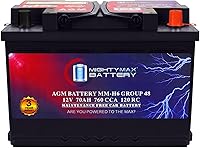
Compare these 4 options within the correct vehicle application. The Group 48/H6 candidates, Group 94R/H7 battery and 34/78 starting battery are not interchangeable choices for the same tray.
The useful distinction is who each battery serves. Choose the right application first, then decide which construction details and support terms matter to you.
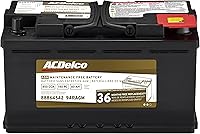
ACDelco Gold 48AGM: for a confirmed Group 48/H6 application
The ACDelco Gold 48AGM suits drivers replacing a compatible AGM battery who want clear free-replacement coverage. Its application includes select vehicles, so a brand badge on the car alone does not confirm fit.
The internal design uses high-density negative paste, a silver-calcium alloy and a calcium-lead positive grid. ACDelco uses these features to support cycle life, conductivity and performance.
Its puncture-resistant envelope separator helps prevent shorts while allowing acid circulation. The vent cap is designed to resist acid leakage, and the AGM construction avoids routine water top-ups.
This is a sensible candidate for a compatible daily driver, including applications that require repeated cycling. Before ordering, confirm the starting-current and capacity requirements for your exact vehicle rather than choosing on construction features alone.
Skip it if your car requires a different group or terminal arrangement. Also keep looking if you cannot confirm that its electrical specifications meet your vehicle's needs.
The battery weighs 45.5 lb, so plan how to lift it out of its packaging and into the tray. A recessed battery location can make that job harder than the weight alone suggests.
ACDelco Gold 94RAGM: for a confirmed Group 94R/H7 application
The ACDelco Gold 94RAGM belongs on your shortlist when the vehicle specifically calls for this larger group. It suits select passenger cars, SUVs, trucks and vans, subject to exact fit confirmation.
ACDelco uses high-density plate construction, envelope separators and a leak-resistant pressurized valve system. The design focuses on automotive starting and cycling needs rather than serving as an auxiliary deep-cycle power source.
Choose it for the correct application and the stated parts warranty, not because a larger battery sounds like an upgrade. Its case still needs to match the tray, clamp and cable connections.
Skip it if your vehicle calls for H6 or another smaller group, unless vehicle service information expressly allows this size. An improvised hold-down is not a sound reason to change groups.
At 53.2 lb, this is the heaviest of these 4 options. If access involves reaching into a trunk well or leaning across the engine bay, arrange suitable lifting help or professional installation.
Confirm the actual terminal connection against your cables before ordering. Group labels help narrow the search, but the finished installation must match the vehicle in every required detail.
Optima RedTop 34/78: for starting-focused vehicles with basic electrical demands
The Optima RedTop 34/78 suits compatible vehicles where engine starting is the main battery job. Optima positions it for basic electrical demands, including suitable hot-rod and off-road applications.
Its SpiralCell construction uses 99.99% pure lead. Optima emphasizes vibration resistance, making it worth considering when rough surfaces are part of the vehicle's normal use.
Dual terminal styles can help match particular cable systems, but they do not make the battery universal. Verify the hold-down, cable routing and clearance around both terminal arrangements.
The 50 Ah capacity gives another useful comparison point once fit and starting requirements are satisfied. At 38.8 lb, it is lighter than the other options here, though secure lifting and mounting still matter.
Skip it for repeated engine-off accessory use that calls for a deep-cycle battery. Do not choose it for a start-stop vehicle solely because it uses AGM construction; confirm approval for that exact application.
Optima's durability claims do not predict a fixed service life in your car. Charge condition, mounting and the health of the vehicle's electrical system still influence the result.
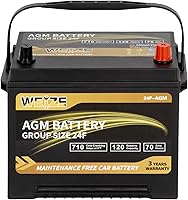
Weize Platinum Group 48 AGM: for compatible start-stop applications after specification confirmation
The Weize Platinum Group 48 AGM is aimed at compatible start-stop vehicles and cars with higher accessory loads. Weize describes it as an automotive starter battery, rather than a deep-cycle option for solar or marine use.
Its tapered terminals place negative on the left and positive on the right in Weize's stated orientation. Compare the terminal layout from the same viewing direction, since turning a battery around changes how left and right appear.
The main buying issue is conflicting electrical figures. Weize gives both 70 Ah and 60 Ah capacity figures, along with both 760 CCA and 680 CCA starting figures.
Confirm the exact unit's capacity and CCA in writing before ordering. That difference matters if your vehicle's minimum falls between the two starting-current figures or its battery-management setup requires a particular capacity.
Weize gives a 120-minute reserve capacity and a 3-year warranty. Those details make it worth comparing once the electrical figures and fit are settled.
Skip it if you need to order immediately without resolving those figures. Also skip it for deep-cycle duties, even if its dimensions happen to fit an auxiliary battery compartment.
How should driving habits change your choice?
Driving habits should guide capacity checks and charging care, while the vehicle's requirements remain the starting point. A different brand cannot remove the effects of short trips, long parking periods or repeated accessory use.
Short trips and city driving
Frequent starts followed by brief drives can leave a battery short of a full charge. Heating, defrosting and other electrical loads can add to that burden.
Choose the specified battery, then consider an approved charging routine if the car rarely gets sustained use. Do not assume idling for a few minutes will restore a deeply discharged battery.
Cold mornings and hot parking conditions
In cold weather, starting demands rise while a battery's available output falls. Correct CCA and a healthy state of charge matter more than a general promise of winter performance.
Heat also contributes to battery wear, even if the problem becomes obvious on a later cold morning. Keep factory heat shields and covers in place when the vehicle requires them.
Long periods parked
Modern vehicle electronics can continue drawing a small amount of current after shutdown. Over a long parking period, that draw can leave even a healthy battery unable to start the engine.
Use a compatible maintainer if the vehicle and battery instructions recommend one. Check the power supply and lead routing so charging does not depend on a loose connection or a pinched cable.
Audio systems, camping equipment and other accessories
Regular engine-off accessory use may need a separate power plan. A starting battery should not be selected as though it were a dedicated camping or auxiliary battery.
Check the accessory load, wiring and charging capacity before adding equipment. For larger installations, have a qualified installer assess whether an isolated auxiliary battery is appropriate.
What should you check before ordering a battery online?
Confirm exact fit, delivery condition and return arrangements before placing the order. Batteries are heavy items, and resolving an incorrect shipment can be more involved than returning a small accessory.
Save the exact model and part number you intend to buy. Check the warranty process, who handles a damaged shipment and whether a core return applies.
Make the installation plan before delivery, especially if the car needs battery registration. Arrange transport or mobile help if the existing battery can no longer start the vehicle.
After arrival, compare the battery label with your order and vehicle requirements before removing the old battery. Do not install a case with cracks, leakage, swelling or damaged terminals.
For a fuller ordering checklist, read how to buy a car battery online. Resolve a mismatch before connecting the battery, rather than hoping the vehicle will accept it.
How do you install an AGM replacement correctly?
Install the battery using the vehicle's service procedure, including any vent connection and battery-management steps. Get professional help if access, lifting or electrical procedures exceed your tools or experience.
Prepare the car and work area
Park securely, switch the vehicle off and keep the key away as directed by the manual. Some cars need time for control modules to shut down before the battery is disconnected.
Wear eye protection and gloves, remove metal jewelry and keep flames and sparks away. Never let a tool bridge the terminals or connect the positive terminal to vehicle metal.
Photograph the cable routing, covers, hold-down and vent tube before removal. Keep small fasteners where they cannot fall into the battery tray or engine compartment.
Remove and secure the battery
For a conventional negative-ground vehicle, the usual order is negative cable off first and positive cable off second. Follow the vehicle's instructions if its procedure differs.
Lift the battery upright using an approved handle or carrier. Do not use the terminals as lifting points, and do not strain a cable to make room.
Clean and inspect the tray, cables and hold-down before fitting the replacement. Replace damaged parts rather than relying on extra tightening to hold a poor connection.
Secure the new battery with the correct clamp and connect any required vent tube. On a conventional negative-ground vehicle, reconnect positive first and negative last, using the specified terminal torque.
Finish the required setup
Complete registration or configuration when the vehicle requires it. Follow any relearn steps for windows, steering or other systems described in the service instructions.
Check that protective terminal covers are back in place and the battery cannot move. Arrange proper recycling of the old lead-acid battery rather than putting it in household trash.
How do you charge and care for an AGM battery?
Use a charger approved for the battery and vehicle, and keep the connections and mounting in good condition. Maintenance-free means no routine water top-ups, not freedom from charging or inspection.
Choose the correct charging mode
Select the AGM mode when the charger and battery instructions call for it. A charger's label alone is not enough; its voltage, current and operating modes must suit the battery.
Do not use an equalization or high-voltage recovery mode unless the battery maker expressly permits it. Extra voltage can damage a sealed battery and may also threaten connected vehicle electronics.
Follow the vehicle's approved charging points, which may be separate from the battery terminals. This can matter where a battery sensor needs to detect charging current.
Stop charging if the case becomes unusually hot, swells or shows damage. Do not charge a frozen battery; arrange safe assessment before attempting to restore it.
Keep connections clean and the case secure
Look for loose clamps, corrosion, damaged insulation and a blocked or disconnected vent arrangement. Vibration and poor connections can cause trouble even when the battery itself remains healthy.
Do not open a sealed AGM battery or add water. Use the maker's cleaning instructions, avoid creating a short circuit and wash your hands after handling battery components.
For storage, follow the battery maker's charge and inspection schedule. Disconnecting the battery is not suitable for every vehicle, so check the manual before using that approach.
What can shorten AGM battery life?
Undercharging, deep discharge, heat and charging faults can shorten AGM battery life. Replacing the battery without correcting those conditions can lead to another early failure.
Repeated short journeys can keep charge levels low. Long parking periods can have the same result when security systems, control modules or added accessories continue drawing current.
A faulty alternator or charging connection can also leave the battery undercharged or expose it to unsuitable charging. Battery replacement alone does not repair either fault.
See how long a car battery lasts for the factors behind service life. If discharge keeps returning, troubleshoot why your car battery keeps dying before choosing another battery.
How do you tell whether the battery needs replacement?
Have the battery and charging system assessed together when starting becomes slow or charge repeatedly disappears. Similar symptoms can come from cable resistance, a starter fault or an electrical drain.
A dashboard battery warning often points to a charging-system problem rather than identifying a worn battery. Follow the vehicle's instructions promptly instead of assuming a new battery will clear it.
A voltage reading gives useful information about charge state, but it does not show the battery's full starting ability by itself. Recent driving or charging can also affect the reading.
Use equipment with the correct AGM setting and enter the battery's actual label information. If the battery is simply discharged, follow the proper charging procedure before making a replacement decision.
For a step-by-step approach, follow our guide to checking a car battery at home. Seek professional help if the car loses charge quickly after replacement or shows persistent charging warnings.
Which buying mistakes should you avoid?
Avoid choosing by chemistry or a single large number. Most costly mistakes happen when one appealing feature distracts from fit, charging needs or the cause of the original failure.
- Copying an incorrect old battery. Check vehicle-specific requirements if the current installation looks improvised.
- Treating H6 and H7 as interchangeable. Similar names do not guarantee the same case fit or hold-down arrangement.
- Stretching cables to reach reversed terminals. Choose the correct layout instead of forcing the connection.
- Confusing starting power with stored energy. CCA and capacity answer different questions.
- Expecting deep-cycle use from a starter battery. Choose a battery built for the actual job.
- Skipping registration when required. Plan the vehicle's setup procedure along with the physical swap.
- Using warranty length as a lifespan forecast. Read the coverage and address charging problems.
- Replacing a repeatedly flat battery without finding the cause. Check the vehicle's electrical system before repeating the expense.
Which AGM car battery should you buy?
Buy the AGM car battery that meets every required fit and electrical check, then choose according to its intended use and support. If any required specification remains uncertain, resolve it before ordering.
For a confirmed Group 48/H6 application, compare the ACDelco Gold 48AGM with the Weize option. Choose ACDelco if its specifications meet your vehicle's needs and its free-replacement terms suit you; consider Weize only after its conflicting electrical figures are resolved.
For a confirmed Group 94R/H7 application, the ACDelco Gold 94RAGM is the relevant candidate here. The smaller-group options should not distract you from buying the required case and mounting arrangement.
Choose the Optima RedTop 34/78 for a compatible starting-focused vehicle with basic electrical demands. Use a different battery designed for the job if regular deep discharge is part of your plans.
For vehicle-specific sizing, see the Toyota Camry battery size guide or the Ford F-150 battery size guide. Your exact model year, engine and equipment determine which guidance applies.
Once those requirements are written down, use our best AGM car battery comparisons to narrow compatible choices. Order only when you can also explain how the battery will be installed, configured and kept charged.
Frequently asked questions
Do I need an AGM car battery?
You need an AGM car battery when your vehicle specifies AGM for its exact engine, trim and equipment. Start-stop operation can be one reason, but it does not identify the required battery by itself; check the manual or vehicle-specific service information before choosing a replacement.
Can I replace a flooded battery with an AGM battery?
You can switch only when the vehicle supports AGM and the replacement meets its fit and electrical requirements; confirm the charging-system settings, battery capacity and any registration procedure first. Physical fit alone does not make AGM a suitable upgrade, and changing chemistry will not solve an electrical drain.
What matters most when choosing an AGM car battery?
Match the required battery type, group size, terminal position and minimum CCA before comparing extra features; check capacity, vent connections and battery-management requirements where applicable. Once those match, reserve capacity and warranty support can help you choose between suitable options without letting a bigger number outweigh correct fit.
How do I know what group size my car needs?
Use your exact year, make, model, engine and trim to check the manual or a vehicle-specific fit guide; compare the result with the current battery, tray and cables. If a previous replacement looks improvised, confirm the original requirement rather than copying the battery already installed.
How long does an AGM car battery last?
An AGM car battery has no fixed service life because heat, charge level, driving habits and electrical faults all affect wear; a warranty period is not a lifespan promise. Investigate slower starts, repeated discharge or charging warnings promptly, and check the charging system before assuming the battery needs replacement.