Why Does My Car Battery Keep Dying?
If your car battery dies repeatedly, check for a weak battery, poor connections, a charging fault, or power use while parked. Charge and assess the battery before choosing a replacement.
On this page (8 sections)
- Why does a car battery keep dying?
- What does the timing of the failure tell you?
- How do you choose a battery tester?
- How should you prepare the battery for a useful reading?
- What if the battery passes but still goes flat?
- Which replacement makes sense after the battery fails?
- How can you avoid another dead battery?
- What should you choose when your car battery dies again?
If your car battery dies repeatedly, check battery health, charging, terminal connections, and power use while parked before buying a replacement. A jump-start gets you moving, but it doesn't identify which problem needs fixing.
The useful distinction is whether the battery can't store enough energy, the car isn't replenishing it, or something is using it after shutdown. The timing of each failure helps you choose the next check.
Why does a car battery keep dying?
A battery keeps dying because it loses charge or can't deliver enough starting power. Loose or corroded connections can also prevent starting even when the battery has charge.
Start with these common causes:
- Battery wear: Capacity and starting ability decline with age and damage.
- Low charge: Short trips and long parking periods can leave too little energy for the next start.
- Charging faults: The alternator, wiring, or related controls may fail to replenish the battery.
- Parked drains: Lights, accessories, or an electrical fault may keep drawing power.
- Poor connections: Loose clamps and corrosion can restrict current during starting and charging.
Battery age is a clue, not a replacement rule. Our guide to how long a car battery lasts explains the conditions that affect service life.
What does the timing of the failure tell you?
When it happens narrows the search, though it doesn't prove the cause. Record how long the car sat, how far it last traveled, and whether the starter cranked slowly or didn't crank at all.
Why does my car battery die overnight?
An overnight failure suggests low charge, reduced battery capacity, or an electrical drain. Check cabin and trunk lights, doors that aren't fully latched, and accessories plugged into sockets that stay powered after shutdown.
If nothing obvious is on, arrange a parked-current check. Vehicle electronics need time to go to sleep, so measuring too soon can make normal power use look like a fault.
Why does the battery die after several days parked?
A marginal battery or small drain becomes more noticeable over longer parking periods. Repeated short trips before parking can leave the battery partly charged from the start.
For planned storage, use a compatible maintainer according to the vehicle and charger manuals. It supports charge during storage but won't repair battery wear or an electrical fault.
Why does the battery warning light come on while driving?
A battery warning light while driving usually calls for a charging-system check. If lights dim or the engine starts to stall, pull over safely and arrange assistance.
Don't disconnect a battery cable with the engine running as an alternator check. That shortcut can damage vehicle electronics.
How do you choose a battery tester?
Choose a tester by system voltage, battery chemistry, and the checks you need. Battery condition, cranking performance, and charging output answer different questions; none alone locates an overnight electrical drain.
Before ordering, read the battery label for its chemistry and rating standard. Entering a CA or MCA number as CCA can produce a misleading result.
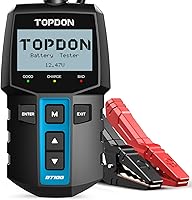
Topdon BT200: for households with different vehicle systems
The Topdon BT200 suits DIY users who need 12V and 24V coverage, including cars and compatible larger vehicles or equipment. It supports 100–2000 CCA batteries in flooded, AGM, GEL, and deep-cycle types, with battery, cranking, and charging checks.
Its 2.4-inch color display helps when reading results outdoors, and its memory function recalls the last check. Those features suit someone comparing results before and after charging or maintaining several vehicles.
Skip it if you only want occasional checks on one 12V car and won't use the broader voltage coverage. It also isn't a replacement for tracing a hidden drain through the vehicle's circuits.
Motopower MP0515A: for routine 12V checks
The Motopower MP0515A suits drivers who want battery health and charging checks on a 12V vehicle. It covers 100–2000 CCA lead-acid batteries, including flooded, flat-plate AGM, spiral AGM, GEL, and EFB types.
It reports state of health, state of charge, internal resistance, cranking voltage, and charging-system condition. That makes it useful for deciding whether to recharge and reassess the battery or investigate the car's charging system.
Skip it for a 24V system or a battery chemistry outside its supported types. For more choices, use our car battery tester guide.
How should you prepare the battery for a useful reading?
Inspect, connect correctly, and follow the charging instructions before trusting a result. A low charge or poor clamp contact can send you toward the wrong repair.
- Park safely, switch off the ignition and accessories, and follow the vehicle's instructions for accessing the battery.
- Check for cracks, swelling, leaks, or suspected freezing. Don't charge or jump-start a damaged or frozen battery; arrange professional help.
- Use the approved connection points and match clamp polarity. Keep tools and jewelry from bridging the terminals.
- Select the correct battery chemistry, rating standard, and rating shown on its label.
- If instructed to recharge and recheck, use a compatible charger and follow the required waiting period before measuring again.
Follow the tester's separate steps for cranking and charging checks, and keep cables clear of belts and fans. Our guide to how to test a car battery at home walks through the process.
A conductance tester estimates battery condition from electrical measurements; a traditional load check applies a load and measures the response. Neither result explains every starting fault, so a healthy battery with continued slow cranking needs further diagnosis.
What if the battery passes but still goes flat?
A battery that passes after charging needs checks of charging output and parked current draw if the problem returns. Replacing it immediately can leave the underlying fault untouched.
An occasional short drive after a jump may not restore a deeply discharged battery. Use a suitable charger rather than assuming the alternator has fully replenished it.
If charging checks are normal, have a technician trace the drain after the car enters its sleep state. Randomly pulling fuses or disconnecting equipment can wake modules and complicate the diagnosis.
Short trips, storage, and weather also matter. Cold makes starting harder, while heat can speed battery aging; what CCA means on a car battery explains the cold-start measure.
Which replacement makes sense after the battery fails?
Buy the replacement that matches the vehicle's requirements, not whichever battery has the largest capacity number. Group size, terminal position, hold-down fit, chemistry, and minimum CCA all matter.
Check vent connections and any required battery registration or reset procedure as well. Start with how to choose a car battery if you're comparing options beyond these two sizes.
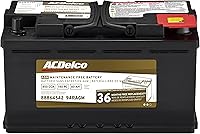
ACDelco Gold 48AGM: for compatible Group 48/H6 vehicles
The ACDelco Gold 48AGM is an option for vehicles that require a 12V Group 48/H6 AGM battery. Its absorbed-glass-mat design holds the electrolyte in the separator and doesn't require water top-ups.
ACDelco backs it with a 36-month free-replacement limited warranty. At 45.5 pounds, it also calls for a clear lifting path and a secure grip during installation.
Skip it if your car requires another case size or terminal arrangement. Check what battery group size means and whether your car needs an AGM battery before choosing it.
Weize Platinum Group 35 AGM: for compatible Group 35 cars
The Weize Platinum Group 35 AGM suits a vehicle requiring a 12V Group 35 AGM battery, provided its 650 CCA meets the car's minimum. It has 55Ah capacity, and Weize offers a 3-year warranty.
Confirm the exact case height before ordering: Weize gives conflicting height measurements of 8.03 and 8.82 inches. Hood clearance matters as much as whether the battery fits the tray.
Skip it if the vehicle needs higher CCA, another group size, or a deep-cycle battery for repeated accessory discharge. This is an automotive starter battery, not a solar-storage choice.
For either replacement, follow the vehicle's chemistry requirements. Our AGM car battery guide explains where AGM fits and what to consider before switching types.
How can you avoid another dead battery?
Keep connections clean, the battery secure, and its charge supported during long parking periods. After installation, make sure the hold-down is fitted and any required vent tube is connected.
For a conventional negative-ground vehicle, removal generally starts with the negative cable, and reconnection ends with it. Follow the vehicle's specific procedure, since access points and battery-management requirements vary.
Use a charger with the correct battery mode, and don't open a sealed AGM case to add water. Clean corrosion using the vehicle's service guidance, wear eye protection, and wash your hands after handling the battery.
What should you choose when your car battery dies again?
Choose diagnosis first if the cause is unclear. The Topdon fits mixed 12V and 24V needs; the Motopower fits routine checks on supported 12V batteries.
Choose the ACDelco only for a confirmed Group 48/H6 AGM fit, or the Weize for a confirmed Group 35 AGM fit with adequate CCA and clearance. If a new battery dies too, have charging, connections, and parked draw checked before buying another.
Your next step is to record the symptoms and follow how to test a car battery at home. Bring those results to a mechanic if the battery keeps losing charge or the readings don't explain the failure.
Frequently asked questions
Why does my car battery keep dying overnight?
An overnight failure usually points to low starting charge, a weak battery, or power use while parked; check lights and plugged-in accessories first, then assess battery health and charging. If those checks pass, a mechanic can measure parked current draw after the vehicle's electronic systems have gone to sleep.
Can a bad alternator keep draining a car battery?
Yes, an alternator fault can leave the battery undercharged, and some faults can also allow power loss while parked; a charging-system check helps identify the first problem, while tracking an overnight drain may require further diagnosis. Don't disconnect a battery cable with the engine running to check the alternator.
How can I tell if my car battery is bad or just discharged?
Charge it with a compatible charger, then assess its condition using the correct battery type and rating; a discharged battery may recover, while a worn battery may still struggle to deliver starting power. Follow any charge-and-recheck instruction, since a low state of charge can affect the result.
Should I replace a car battery that keeps dying?
Replace it when a proper assessment shows it can no longer meet the vehicle's starting needs; check charging and parked drains too, especially after repeated failures. Before ordering, confirm battery type, group size, terminal position, minimum CCA, and any venting or battery-registration requirements in the vehicle's service guidance.