How to Choose a Car Battery
To choose a car battery, match your vehicle’s required group size, terminal layout and battery type first. Then meet its cold cranking amp requirement and compare reserve capacity, warranty and your driving needs.
On this page (10 sections)
- How to choose a car battery that fits your vehicle
- Which car battery type should you choose?
- How much CCA does your car battery need?
- What do reserve capacity, amp-hours and warranty tell you?
- How should your climate and driving habits affect your choice?
- Which battery or diagnostic tool suits your situation?
- How do you know when to replace a car battery?
- What should you check during installation and care?
- Which buying mistakes should you avoid?
- How to choose a car battery: make the final decision
To understand how to choose a car battery, match your vehicle’s required group size, terminal layout and battery type first. Then meet its cold cranking amp requirement and compare reserve capacity, warranty and your driving needs.
Start with the owner’s manual and use the current battery label as a cross-check. Our guides to car battery group size, AGM car batteries and whether you need an AGM battery explain those first decisions.
The right replacement must fit securely, connect without strained cables and work with the vehicle’s charging system. A larger starting-current number cannot make up for a mismatch in any of those areas.
How to choose a car battery that fits your vehicle
Choose a battery approved for your exact vehicle, engine and equipment. Confirm its case size, terminal position, hold-down arrangement and any vent connection before ordering.
Start with the manual or vehicle maker’s replacement guidance, then cross-check a fit guide using the correct year, model and engine. Features such as start-stop can change the requirement within the same model range.
Group size describes a battery’s physical format, including case dimensions and terminal arrangement. Our guide to what battery group size means explains the code, while the car battery group size chart helps compare common formats.
How do you choose a car battery with the right dimensions?
Check length, width, height and mounting points, rather than judging fit from a photo. Include terminal height and clearance above the battery, since contact with nearby metal can cause a short circuit.
The hold-down must secure the case without makeshift spacers or loose brackets. A battery that moves in its tray can damage its case, terminals or cables.
Check polarity with the battery facing the same direction as it will sit in the car. Cables should reach their correct posts naturally, without stretching, crossing awkwardly or needing the battery rotated into an unsuitable position.
If the original battery has a vent tube, the replacement needs the correct vent arrangement. This matters especially when the battery sits in the trunk or passenger area; follow the vehicle’s instructions for connecting it.
Which car battery type should you choose?
Choose the battery technology your vehicle specifies, usually conventional flooded, enhanced flooded battery (EFB) or absorbed glass mat (AGM). Physical fit alone does not guarantee compatibility with the charging system.
A conventional flooded battery can suit a vehicle built for that design and normal starting duties. AGM holds electrolyte in a glass mat, while EFB is a flooded design intended for greater cycling demands than a basic flooded battery.
Start-stop systems place repeated restart demands on the battery, but they do not all use the same type. A “start-stop” product name is not enough to confirm suitability for your car.
For construction and care differences, read AGM vs flooded car batteries. Our complete AGM car battery guide explains where AGM fits and what to check before switching.
Is AGM worth choosing for your car?
AGM is worth choosing when the vehicle requires it or approves it for your use. Keep an AGM replacement where AGM is specified, and check the approved procedure before changing from EFB or conventional flooded construction.
Some vehicles need battery registration after replacement so their energy-management system can account for the new battery. A change in battery type or capacity may also require coding, so include that work in your buying decision.
Do not assume AGM will solve an electrical drain or compensate for constant undercharging. Those problems need attention regardless of battery construction.
How much CCA does your car battery need?
Choose a battery that meets the vehicle’s required cold cranking amps, using the same measurement standard when comparing options. CCA describes starting-current capability in cold conditions, rather than how long accessories can run.
Cold weather reduces available battery power while making the engine harder to turn. If you park outdoors through winter, meeting the required CCA deserves close attention.
More CCA can be useful within an approved size and battery type. It does not replace sufficient charge, clean connections or a healthy starter.
Our guide to what CCA means on a car battery explains the number in more detail. Do not compare CCA directly with a higher figure labeled CA or cranking amps, because the measurement conditions differ.
Should you buy the highest CCA available?
Choose enough CCA for the vehicle and climate, then compare other useful features. Buying the largest number makes little sense if it means giving up the correct fit, battery technology or suitable capacity.
A higher CCA figure does not force extra current into the starter; the starter draws what it needs. Still, an approved replacement specification is a better buying guide than CCA alone.
What do reserve capacity, amp-hours and warranty tell you?
Use reserve capacity and amp-hours to compare capacity, then read the warranty terms separately. Neither capacity figure is interchangeable with CCA, and warranty length is not a prediction of service life.
Reserve capacity is expressed in minutes under a defined discharge condition. It helps compare stored-power reserves, but it is not a promise that your lights or audio system will run for that exact time.
Amp-hours describe capacity at a stated discharge rate. Compare like-for-like figures and stay within the vehicle maker’s approved capacity range, especially where the charging system manages battery condition.
A starting battery should retain enough charge to restart the engine. Regularly draining it for parked accessory use calls for a suitable power setup rather than simply choosing a larger starting battery.
Read whether warranty coverage offers free replacement or another remedy, what proof is required and who handles a claim. If buying remotely, include return arrangements and old-battery disposal in your plan; our guide to buying a car battery online covers those practical details.
How should your climate and driving habits affect your choice?
Choose for your coldest normal starts and your charging routine. Winter increases starting demands, while heat can accelerate battery aging even when the car still starts easily.
Frequent short trips may not replace all the energy used during starting, especially with lights, heaters and other electrical loads running. A higher-capacity battery can also remain undercharged if the driving pattern never restores it.
For a car parked for long periods, check the vehicle’s storage guidance and consider a compatible maintenance charger where power is available. Select the charger mode for the battery type and follow both sets of instructions.
Do not treat idling or an occasional short drive as a reliable charging plan. A deeply discharged battery may need proper charging and a condition check before returning to normal use.
The car battery lifespan guide explains common causes of early failure. If yours repeatedly goes flat, read why a car battery keeps dying before buying another.
Which battery or diagnostic tool suits your situation?
Choose among these products by vehicle fit and the problem you need to solve. The 3 batteries serve different fit requirements, while the diagnostic tool helps assess whether replacement is needed.
These are alternatives for different vehicles, not interchangeable upgrades. Narrow the field using your required group size and battery type before comparing their other features.
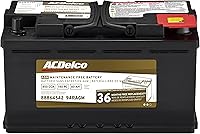
ACDelco Gold 48AGM: for an approved Group 48/H6 AGM replacement
The ACDelco Gold 48AGM suits a vehicle that requires a 12-volt Group 48/H6 AGM battery. Its case measures 11.9 in long, 7.5 in wide and 7.6 in high, and it weighs 45.5 lb.
This is a sensible candidate when you want to retain the required AGM construction without changing the vehicle’s battery format. ACDelco backs it with a 36-month free-replacement limited warranty.
Its construction includes a calcium lead positive grid and a puncture-resistant separator. ACDelco says its vent cap design resists acid leakage, but the installation must still meet the vehicle’s venting requirements.
Skip it if your car needs another group size or does not support this AGM replacement. Confirm the required CCA before ordering, and plan how to lift the battery safely into its tray.
Mighty Max MM-G35 Start-Stop (Group 35): for compatible Group 35 vehicles
The Mighty Max MM-G35 suits a compatible vehicle needing Group 35 AGM construction and a starting requirement within its 650 CCA capability. It has 55 Ah capacity and a 100-minute reserve capacity.
The case measures 9.06 x 6.89 x 8.82 in, with the positive terminal on the right and negative on the left in the stated orientation. Check that arrangement against the actual installation direction before connecting cables.
Mighty Max allows multiple mounting positions except upside down. Mounting screws are included, but a wire harness and other mounting accessories are not, so confirm that your vehicle’s retaining hardware is suitable.
Skip this model if your vehicle needs more starting current, another case format or a different battery type. Confirm warranty coverage before buying, because Mighty Max’s stated terms differ between 1 year and 3 years.
Optima RedTop 34/78: for compatible vehicles with starting-focused needs
The Optima RedTop 34/78 suits compatible starting applications with basic electrical demands, including vehicles that need its dual SAE and GM terminal options. It is a 12-volt AGM starting battery with 800 CCA.
It has a 50 Ah C20 capacity, a 100-minute reserve capacity and a weight of 38.8 lb. Its maintenance-free SpiralCell construction makes it a candidate for buyers who want a starting battery without routine water checks.
Optima emphasizes vibration resistance, which is relevant for compatible vehicles used on rough roads. Check exact case and terminal clearance before ordering, since both sets of terminals need safe clearance from nearby metal.
Skip it if your main goal is repeated engine-off accessory use or deep discharge. Its starting-focused role also does not guarantee approval for a particular start-stop vehicle.
Topdon BT100 Battery Load Tester: for deciding whether replacement is needed
The Topdon BT100 suits a DIY user who wants to check battery condition before buying a replacement. It works with 12-volt lead-acid batteries rated from 100 to 2,000 CCA.
It supports conventional flooded, flat-plate AGM, spiral AGM, EFB and gel batteries. Its functions cover battery health, cranking and charging-system checks, with power drawn from the connected battery.
Enter the correct battery type, measurement standard and label value so the tool can assess the battery appropriately. Clean, secure clamp contact matters, and low charge may require charging before a useful reassessment.
Skip it if you need a charger, jump starter or replacement battery; it performs none of those jobs. A battery analyzer also cannot locate every wiring fault or identify every source of parked electrical drain.
How do you know when to replace a car battery?
Replace the battery when a condition check supports replacement, after accounting for low charge and connection problems. Slow cranking alone can also point to cable resistance, a starter issue or another fault.
Inspect accessible terminals for looseness and corrosion before blaming the battery. A healthy battery can struggle to deliver starting current through a poor connection.
The home car battery check guide explains how to assess the battery before buying. If charge is low, follow the appropriate charging procedure and reassess its condition rather than judging it only while discharged.
A swollen, leaking or visibly damaged case needs professional attention. Do not try to charge or jump-start a frozen or damaged battery.
What should you check during installation and care?
Follow the vehicle’s replacement procedure, including any venting, registration or memory requirements. Arrange professional installation if access is difficult or you lack the equipment to complete those steps.
Before removing anything, switch the vehicle off and keep keys away as directed by the manual. Wear eye protection, remove metal jewelry and keep flames and sparks away from the battery.
For a conventional negative-ground vehicle, disconnect the negative cable first and reconnect it last, unless the vehicle procedure directs otherwise. Keep tools from bridging terminals or touching a positive terminal and grounded metal together.
Clean the tray and suitable cable contact surfaces, then secure the new battery with the correct hold-down. Tighten connections to the vehicle’s specified torque rather than forcing them.
Reconnect any required vent tube and protective terminal covers. Keep the battery upright while handling it, and arrange recycling through an appropriate battery collection service.
During regular maintenance, check that the case stays secure and the terminals remain clean. Maintenance-free AGM construction does not remove the need to inspect connections or address charging faults.
Which buying mistakes should you avoid?
Avoid substituting one appealing number for the complete fit requirement. Most poor choices begin with buying by CCA, brand or appearance before checking the vehicle’s specifications.
- Copying the old battery without checking it: a previous replacement may have the wrong size, technology or capacity.
- Choosing by brand alone: a trusted brand still sells batteries for different vehicles and duties.
- Ignoring terminal style: the correct case size does not guarantee that your cables connect safely.
- Treating reserve capacity as accessory runtime: actual loads and the charge needed for restarting change usable runtime.
- Skipping the installation procedure: registration, vent connections and secure mounting can be part of a correct replacement.
- Replacing a repeatedly flat battery without diagnosis: an electrical drain or charging fault can discharge the next battery too.
Write down the approved fit and electrical requirements before shopping. That short checklist makes it easier to reject unsuitable options without getting distracted by feature claims.
How to choose a car battery: make the final decision
Use fit, battery type and required starting power as pass-or-fail checks when deciding how to choose a car battery. Compare capacity, coverage and installation support only among options that pass all 3.
Consider the ACDelco for an approved Group 48/H6 AGM replacement, the Mighty Max for a compatible Group 35 AGM application, and the RedTop for compatible starting-focused use. Choose the Topdon tool first if you need to assess an existing battery rather than replace it immediately.
For an AGM vehicle, use our AGM car battery guide to narrow the choice. If physical fit remains uncertain, check the group size chart and confirm the final selection against your vehicle’s requirements before ordering.
Frequently asked questions
How do I know which battery fits my car?
Match the group size, terminal layout and battery type required for your exact vehicle, including its engine and equipment; check the owner’s manual and a vehicle fit guide, then confirm tray clearance, hold-down fit and vent connections. Use the old battery as a cross-check, since it may be an incorrect replacement.
Should I choose a car battery with higher CCA?
Meet your vehicle’s required CCA first, then consider extra starting capacity if you face cold winters; higher CCA does not compensate for the wrong battery type, poor cable connections or a charging fault. Compare batteries using the same cold cranking standard rather than treating CCA and ordinary cranking amps as equal.
Do I need an AGM car battery?
Choose AGM when your vehicle requires it, including start-stop applications that specify AGM; some start-stop vehicles use EFB instead, so check the exact requirement rather than guessing. An AGM upgrade also needs approval for the vehicle’s charging system, and some cars require a battery replacement procedure or registration.
When should I replace a car battery?
Replace a battery when a battery check confirms failure, with charge level and charging-system condition taken into account; slow cranking can also come from loose connections, a starter fault or low charge. Repeated discharge needs further diagnosis, since a new battery can go flat if the cause remains.