10 Best AGM Car Batteries (November 2026)
The best AGM car batteries include the ACDelco Gold 48AGM for daily commuters, the ACDelco Gold 94RAGM for H7 replacement shoppers, and the Optima RedTop 34/78 for dual-terminal starting needs.
On this page (8 sections)
- How we chose these AGM car batteries
- Compare the best AGM car batteries
- The best AGM car batteries by use
- What should you check before buying an AGM battery?
- How should you install an AGM car battery?
- How do you care for an AGM battery?
- Which AGM buying mistakes should you avoid?
- Which AGM car battery should you choose?
The ACDelco Gold 48AGM is our top pick for the best AGM car battery in compatible Group 48/H6 vehicles. Choose a different size when your car requires it, or a dual-purpose design when repeated accessory use matters more than basic engine starting.
Start with your vehicle’s requirements before comparing brands. Our car battery group size guide explains how case size and terminal position affect fit.
Our picks at a glance
-
1

-
2
-
3
- 4
 Best for start-stop commutersCheck it
- 5
 Best for 24F start-stop replacementsCheck it
- 6
 Best for everyday startingCheck it
- 7
 Best for accessory-heavy vehiclesCheck it
- 8
 Best for Group 25 driversCheck it
- 9
 Check it
Mighty Max MM-H6 Start-Stop (Group 48)
Best for H6 comparison shoppers - 10
 Check it
Mighty Max MM-G35 Start-Stop (Group 35)
Best for reserve-focused Group 35 shoppers
How we chose these AGM car batteries
We compared fit, intended use, starting output, reserve capacity and warranty clarity. The order favors useful replacement choices, but a lower-ranked battery in the correct group is a better buy than our top pick in the wrong size.
We also separated starting-focused batteries from options designed for repeated cycling. Those jobs overlap, but running accessories with the engine off asks more of a battery than starting the engine and driving away.
Clear specifications matter because several choices have conflicting measurements or warranty terms. We flag those conflicts where they affect a buying decision rather than choosing the more appealing number.
If you're changing battery technology, read our AGM versus flooded battery comparison first. The AGM car battery buying guide covers the wider selection process.
Compare the best AGM car batteries
Compare approved group size and minimum starting output first, then look at reserve capacity and intended use. Batteries in this table cover different applications, so their scores don't make them interchangeable.
| Product | Best for | Group size | Voltage | Warranty | Our score |
|---|---|---|---|---|---|
| ACDelco Gold 48AGM | daily commuters | 48/H6 | 12V | 36-month free replacement limited warranty | 9.1 |
| ACDelco Gold 94RAGM | H7 replacement shoppers | 94R/H7 | 12V | 36-month/unlimited-mile limited warranty for parts only | 9.0 |
| Optima RedTop 34/78 | dual-terminal starting needs | 8.6 | |||
| Weize Platinum Group 48 AGM | start-stop commuters | 48 | 8.4 | ||
| Weize Platinum Group 24F AGM | 24F start-stop replacements | 24F | 8.3 | ||
| Optima RedTop 35 | everyday starting | 8.3 | |||
| Optima YellowTop D34/78 | accessory-heavy vehicles | 8.2 | |||
| Optima RedTop 25 | Group 25 drivers | 8.1 | |||
| Mighty Max MM-H6 Start-Stop (Group 48) | H6 comparison shoppers | 48 | 8.0 | ||
| Mighty Max MM-G35 Start-Stop (Group 35) | reserve-focused Group 35 shoppers | 35 | 7.9 |
The best AGM car batteries by use
Choose the battery that fits your vehicle and driving pattern from the options below. Each write-up explains who should buy it, who should skip it and which details need attention before ordering.
ACDelco Gold 48AGM: Best for daily commuters
- AGM construction
- Puncture-resistant separator
- Leak-resistant vent cap
Our first choice for a compatible daily driver that needs an H6 AGM replacement. ACDelco combines cycling-focused construction with clear replacement coverage.
Pros
- Free replacement warranty period
- Construction designed for repeated cycling
- Vent cap resists acid leakage
Cons
- Confirm starting rating for your exact vehicle
ACDelco Gold 48AGM: our top AGM car battery pick
Choose the ACDelco Gold 48AGM for a compatible daily driver requiring an H6 AGM replacement. It leads this roundup because its cycling-focused construction and clear replacement coverage suit a straightforward replacement job.
ACDelco uses high-density negative paste, Silver-Calcium alloy and a calcium-lead positive grid. The puncture-resistant envelope separator and leak-resistant vent cap address internal separation and acid containment.
ACDelco backs it with a 36-month free replacement limited warranty. Keep the receipt and check the claim process before buying, especially if you plan to arrange installation elsewhere.
Skip it if your car needs another group size or you haven't confirmed its required starting output. We don't have a confirmed CCA figure here, so ask ACDelco to verify that requirement for your exact application.
This is a replacement choice for a matching vehicle, not a reason to change your battery tray or stretch cables.
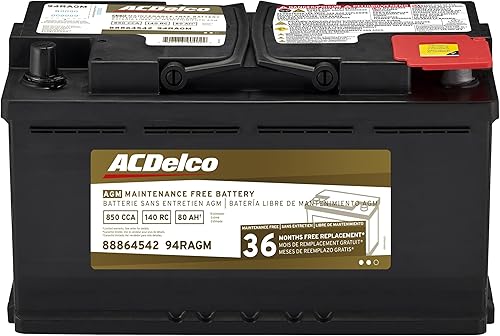
ACDelco Gold 94RAGM: Best for H7 replacement shoppers
- High-density plate construction
- Leak-resistant valve system
- Vehicle-specific fit
Choose this ACDelco when your vehicle requires the H7 format. Its warranty covers parts, so plan separately for installation and any vehicle reset work.
Pros
- Clear parts warranty term
- Leak-resistant pressurized valve system
- Puncture-resistant envelope separator
Cons
- Parts warranty does not cover installation labor
- Vehicle-specific fit needs confirmation
Choose the ACDelco Gold 94RAGM when your vehicle requires Group 94R/H7. It's the relevant ACDelco choice here for that format, even though the H6 model sits higher in the roundup.
Its construction includes high-density plates, puncture-resistant envelope separators and a leak-resistant pressurized valve system. ACDelco provides a 36-month/unlimited-mile limited warranty for parts only.
That last detail matters if a shop will handle the replacement. Budget separately for labor and any required battery registration because parts coverage does not include the whole installation job.
Verify your year, engine and trim rather than buying from a broad make-and-model match. A battery used in one version of a vehicle may differ from the one used in another.
Skip this model if your car calls for H6 or another format. A larger battery isn't an upgrade when the hold-down, cables or surrounding space don't support it.
Optima RedTop 34/78: Best for dual-terminal starting needs
- SpiralCell design
- Maintenance-free construction
- Starting-focused design
A starting-focused choice for compatible vehicles using SAE posts or GM connections. Pick it for normal electrical demands rather than repeated accessory cycling.
Pros
- Highest starting output among the RedTop picks here
- Supports 2 terminal styles
- Sealed AGM construction
Cons
- Not the accessory-cycling choice in Optima’s range
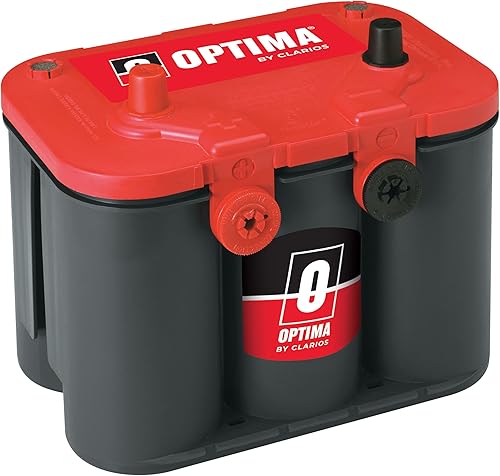
Choose the Optima RedTop 34/78 for starting duty with compatible SAE or GM connections. Its dual terminal arrangement is useful when it matches your vehicle's existing cables.
The battery delivers 800 CCA and has a 100-minute reserve capacity. That makes it the highest-output RedTop in this roundup by cold-cranking figure, but output comes after physical fit.
Optima positions the RedTop for basic electrical demands. Its SpiralCell construction and sealed design suit a starting-focused application without adding water.
Buy it for a vehicle that needs reliable cranking and normally replenishes that charge while driving. Skip it if your main need is repeated engine-off audio use or other accessory cycling.
The YellowTop below addresses that different job. Extra terminals do not give a starting battery the same purpose as a dual-purpose model, and unused terminals still need safe clearance from surrounding metal.
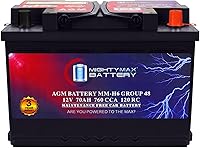
Weize Platinum Group 48 AGM: Best for start-stop commuters
- Start-stop design
- Tapered terminals
- 3-year warranty
A start-stop option for compatible H6 vehicles with higher accessory demands. Resolve conflicting capacity and starting figures with Weize before ordering.
Pros
- Designed for start-stop use
- Defined terminal orientation
- Weize provides a 3-year warranty
Cons
- Conflicting CCA and Ah figures need clarification
- Not intended for deep-cycle solar or marine use
Choose the Weize Platinum Group 48 AGM for a compatible start-stop commuter, once Weize confirms its electrical figures. Its intended use includes repeated starts and vehicles with higher accessory demands.
The case measures 10.94 x 6.89 x 7.48 in, with tapered terminals, negative on the left and positive on the right. Its reserve capacity is 120 minutes, and Weize provides a 3-year warranty.
The important buying issue is conflicting output information. Weize gives both 680 and 760 CCA, along with both 60 and 70 Ah, so get confirmation for the exact battery before comparing it against your car's minimum.
Skip it if you need an immediate purchase without resolving that conflict. A battery that only meets your requirements under the higher figures isn't a safe assumption.
Also skip it for a solar bank or repeated marine deep-cycle duty. Weize identifies this model as an automotive starter battery rather than a dedicated deep-cycle option.
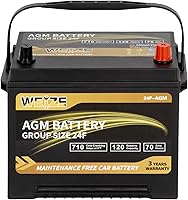
Weize Platinum Group 24F AGM: Best for 24F start-stop replacements
- Automotive start-stop design
- Tapered terminals
- 3-year warranty
A start-stop replacement for vehicles that accept a Group 24F AGM battery. Confirm the exact height before buying because Weize gives conflicting measurements.
Pros
- Supports start-stop applications
- Defined starting and capacity figures
- Weize provides a 3-year warranty
Cons
- Exact case height needs confirmation
- Not intended for deep-cycle solar or marine use
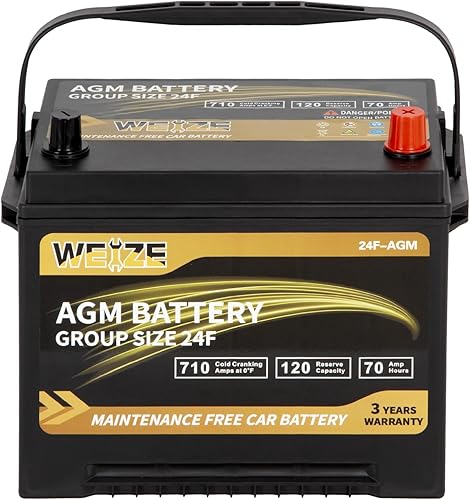
Choose the Weize Platinum Group 24F AGM for a vehicle approved for a 24F AGM replacement. Its start-stop design makes it relevant to buyers who need more than a basic starting-only replacement.
It has 710 CCA and 70 Ah capacity, with negative on the left and positive on the right. Weize backs it with a 3-year warranty.
Confirm its height before buying because Weize gives both 8.19 and 8.98 in. That difference matters under a low hood or a cover that sits close to the battery posts.
Measure the complete installation space, including the terminal connections, rather than only the empty tray. A case that sits in the tray can still leave too little clearance above it.
Skip this battery if the height remains unclear or your vehicle requires a different terminal layout. Despite broader claims about AGM versatility, this automotive starter model is not the choice for solar or marine deep-cycle service.
Optima RedTop 35: Best for everyday starting
- SpiralCell design
- Maintenance-free construction
- Basic electrical demands
A starting-focused choice for compatible Group 35 applications with normal electrical loads. Compare its case height and hold-down fit before replacing another Group 35 battery.
Pros
- Starting-focused design
- Sealed construction
- Defined case dimensions
Cons
- Less reserve capacity than the MM-G35
- Not the pick for repeated accessory cycling
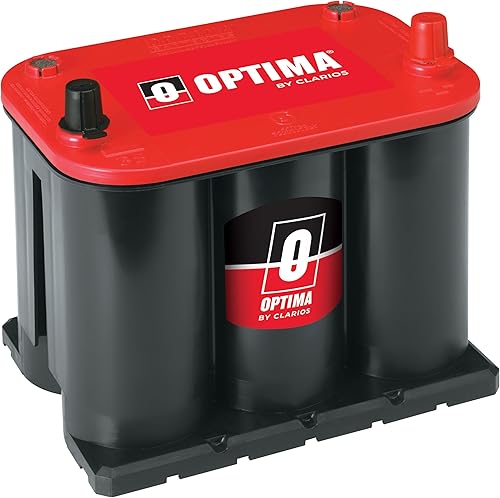
Choose the Optima RedTop 35 for normal starting duty in a compatible Group 35 application. It suits a vehicle whose main battery job is starting the engine and supporting ordinary electrical use.
It provides 720 CCA and 90 minutes of reserve capacity, with SAE post terminals. Its case measures 9.38 x 6.75 x 7.69 in.
Compare that actual shape with the old battery, tray and hold-down. Sharing a group designation with another option doesn't remove the need to check height, cable position and secure mounting.
Against the Mighty Max MM-G35 below, this RedTop offers more starting output but less reserve capacity. Choose based on the vehicle's minimum CCA and your use rather than treating either figure as a complete performance score.
Skip it for repeated accessory cycling that calls for a dual-purpose battery. Optima describes the RedTop for basic electrical demands, so its purpose should guide the decision.
Optima YellowTop D34/78: Best for accessory-heavy vehicles
- Dual-purpose design
- 55 Ah capacity
- SpiralCell construction
The clearest choice here for compatible vehicles with winches or high-demand audio systems. Its dual-purpose design addresses both engine starting and repeated cycling.
Pros
- Designed for starting and cycling
- Supports higher accessory demands
- Supports 2 terminal styles
Cons
- Unnecessary for basic starting needs
- Fit still needs vehicle-specific approval
Choose the Optima YellowTop D34/78 for a compatible vehicle with high accessory demand and repeated cycling. It's the clearest fit here for uses such as a winch or high-demand audio system.
Its dual-purpose design combines engine starting with cycling capability. The battery has 750 CCA, 55 Ah capacity and 120 minutes of reserve capacity, plus dual SAE and GM terminals.
Buy it when the accessory use is real and the vehicle accepts this battery format. An ordinary commuter with factory equipment may have no need for that extra cycling focus.
Skip it if you're trying to solve a charging fault by fitting a different battery. Even a dual-purpose design needs its charge restored and cannot support unlimited engine-off use.
Before adding large electrical loads, check the alternator, wiring and accessory protection as a system. Battery capacity is only one part of keeping those accessories working without sacrificing the next engine start.
Optima RedTop 25: Best for Group 25 drivers
- SpiralCell design
- Maintenance-free construction
- Starting-focused design
Choose the RedTop 25 when your vehicle specifically accepts its Group 25 fit and terminal layout. Confirm the case measurements rather than assuming it matches the RedTop 35.
Pros
- Starting-focused design
- Sealed AGM construction
- Suited to basic electrical demands
Cons
- Conflicting case dimensions need clarification
- Not interchangeable with Group 35 by output alone
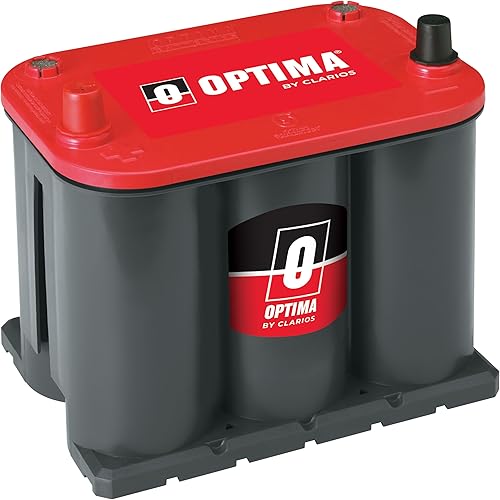
Choose the Optima RedTop 25 when your vehicle specifically accepts Group 25 fit and terminal placement. Its starting figures are similar to the RedTop 35, but that doesn't make the 2 models substitutes.
This model provides 720 CCA and a 90-minute reserve capacity, with SAE posts. Optima describes it for basic electrical demands using its SpiralCell construction.
The buying priority is confirming the case measurements because Optima gives conflicting dimensions for this model. Check the exact battery dimensions and terminal positions with Optima before ordering.
That check matters more than a small difference in score. Cable reach, hood clearance and hold-down engagement decide whether the battery can be installed correctly.
Skip it if your vehicle calls for Group 35 and no approved alternative is identified. Also choose a different design if repeated engine-off accessory use is the main reason you're replacing the battery.
Mighty Max MM-H6 Start-Stop (Group 48): Best for H6 comparison shoppers
- 70 Ah capacity
- Sealed AGM construction
- Start-stop design
An H6 alternative with clear starting and reserve figures. Confirm the terminal connection and applicable warranty before choosing it over the other Group 48 options.
Pros
- Defined starting and reserve figures
- Construction designed to resist shock and vibration
- Mounting screws included
Cons
- Warranty terms conflict
- Terminal connection needs confirmation
- Wire harness and other mounting accessories excluded
Consider the Mighty Max MM-H6 for an H6 replacement comparison where you can confirm fit and support first. It gives you another start-stop option alongside the ACDelco and Weize choices.
Its electrical figures are 760 CCA, 70 Ah and 120 minutes of reserve capacity. The case measures 10.94 x 6.88 x 7.48 in, with positive on the right and negative on the left.
Mighty Max describes construction designed to resist shock and vibration. Mounting screws are included, but a wire harness and other mounting accessories are not.
Confirm the terminal connection because the terminal descriptions differ. Also resolve the warranty term: Mighty Max gives both 1-year and 3-year coverage information.
Skip it if you need a purchase with those details settled from the outset. Its stated output makes it worth comparing, but the correct cable connection and clear warranty support are part of the buying decision.
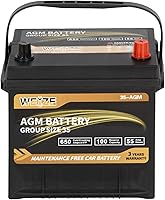
Mighty Max MM-G35 Start-Stop (Group 35): Best for reserve-focused Group 35 shoppers
- 55 Ah capacity
- Sealed AGM construction
- Start-stop design
A Group 35 alternative that trades some starting output for more reserve capacity than the RedTop 35. Choose it only when its starting rating meets your vehicle’s requirement.
Pros
- More reserve capacity than the RedTop 35
- Defined terminal orientation
- Construction designed to resist shock and vibration
Cons
- Lower CCA than the RedTop 35
- Warranty terms need confirmation
- Case height requires careful clearance checks
Choose the Mighty Max MM-G35 when its reserve capacity suits your needs and its starting output meets your vehicle's minimum. It is an alternative to the RedTop 35, not an automatic upgrade.
The MM-G35 has 650 CCA, 55 Ah capacity and 100 minutes of reserve capacity. Its case measures 9.06 x 6.89 x 8.82 in, with positive on the right and negative on the left.
Pay close attention to height because its case is taller than the RedTop 35. Check clearance above the connected terminals and confirm that the hold-down secures the battery correctly.
Mighty Max describes sealed construction intended to resist shock and vibration. Confirm warranty coverage before buying because the stated terms differ.
Skip it if your vehicle requires more starting output. Extra reserve capacity cannot make up for falling below the manufacturer's minimum CCA, even in a climate where very cold mornings are uncommon.
What should you check before buying an AGM battery?
Confirm approved fit, battery technology and electrical requirements before comparing extra features. Use the owner's manual or a reliable vehicle-specific fit guide rather than relying only on the battery currently installed.
Match the group, terminals and hold-down
Check the group designation, actual dimensions, positive terminal position and cable connection style. Our car battery group size chart helps explain the group labels you'll encounter.
Inspect how the battery is secured, including any base clamp or upper bracket. Cables should connect without stretching, sharp bends or contact with nearby metal.
Check for a vent tube, especially with a battery installed inside the passenger area or trunk. A sealed AGM design does not remove the need to follow the vehicle's venting requirements.
Meet the required CCA before comparing capacity
Use the vehicle manufacturer's minimum CCA as a floor. Cold weather makes adequate starting output especially useful, but a higher figure doesn't compensate for an undersized case or wrong connection.
Reserve capacity and Ah describe capacity in different ways. Compare like-for-like figures, and don't turn either one into a promised number of hours for your accessories.
Our guide to what CCA means on a car battery explains the starting figure. For short trips, also consider whether your driving restores the charge used between starts.
Keep the required battery technology
Use AGM when your vehicle requires it. If you're considering an upgrade from another type, our guide to whether your car needs an AGM battery explains the questions to settle first.
Some vehicles need battery registration or coding after replacement. Others require the new capacity or chemistry to be entered into the charging system, so confirm the service procedure before ordering.
Check delivery and warranty support
Choose a purchase route with clear instructions for damage, returns and warranty claims. Keep the receipt and battery identification details somewhere you can find them later.
A parts warranty and a free replacement warranty can have different conditions. Our guide to buying a car battery online covers delivery checks and other practical details.
How should you install an AGM car battery?
Follow your vehicle's replacement procedure and the battery instructions, including any registration step. Arrange professional installation if access is difficult, the battery is heavy or the required service tools aren't available.
Before removal, switch the vehicle off, keep the key away and allow its systems to shut down as directed. Wear eye protection and gloves, remove metal jewelry and keep tools from bridging the terminals.
For a conventional negative-ground vehicle, the usual order is negative off first, then positive. Reconnect positive first and negative last, unless the vehicle's service procedure directs otherwise.
Lift the battery upright with suitable support and inspect the tray and cables. Secure the replacement with the correct hold-down, reconnect any vent tube and use the specified terminal torque.
Do not force a cable onto the wrong terminal or use the clamp to pull a cable into reach. Complete required registration and resets, then return the old battery through an appropriate recycling or core-return service.
How do you care for an AGM battery?
Keep an AGM battery charged, securely mounted and connected to a healthy charging system. Maintenance-free construction means no routine water additions, not freedom from all care.
Check that the hold-down remains secure and the terminals stay clean. Leave the sealed case closed and follow the battery instructions for cleaning around its connections.
Use a compatible charger when driving doesn't restore enough charge, such as during storage or repeated short trips. Follow the vehicle's approved charging points and the battery's voltage and current limits.
Avoid leaving accessories running until the battery struggles to start the engine. Repeated deep discharge can shorten starter-battery life, including with AGM construction.
A replacement battery won't cure a parasitic drain, loose connection or charging fault. If it keeps going flat, use our guide to why a car battery keeps dying to narrow the cause before replacing it again.
Which AGM buying mistakes should you avoid?
Avoid choosing by CCA alone or assuming sealed means interchangeable. Most expensive mistakes begin with overlooking fit, system requirements or the job the battery needs to do.
- Buying the highest-ranked battery in the wrong group. Start with approved vehicle fit, then compare compatible choices.
- Using physical fit as the only check. The correct chemistry, electrical capacity, venting and registration procedure still matter.
- Treating a starter battery as an accessory power bank. Repeated engine-off use calls for a design suited to cycling and a plan to recharge it.
- Ignoring conflicting specifications. Confirm the uncertain measurement, terminal connection or warranty before ordering.
- Expecting a new battery to fix every starting problem. Poor cables, charging faults and unwanted electrical draw need their own repair.
Which AGM car battery should you choose?
Choose the best AGM car battery by approved fit first, then starting duty or accessory use. Write down your required group, terminal layout, minimum CCA and any registration needs before making the final choice.
For a compatible H6 daily driver, start with the ACDelco Gold 48AGM. For H7, choose the ACDelco Gold 94RAGM; for 24F, consider the Weize only after confirming its height.
For basic starting needs, choose the RedTop format your vehicle accepts. For repeated accessory cycling, the YellowTop D34/78 is the more relevant Optima choice when its fit is approved.
Compare the Weize H6 and Mighty Max alternatives after resolving their specific fit or warranty questions. Use the complete AGM car battery guide to turn your vehicle's requirements into a final buying checklist.
ACDelco Gold 48AGM: Best for daily commuters
- AGM construction
- Puncture-resistant separator
- Leak-resistant vent cap
Our first choice for a compatible daily driver that needs an H6 AGM replacement. ACDelco combines cycling-focused construction with clear replacement coverage.
Pros
- Free replacement warranty period
- Construction designed for repeated cycling
- Vent cap resists acid leakage
Cons
- Confirm starting rating for your exact vehicle
ACDelco Gold 94RAGM: Best for H7 replacement shoppers
- High-density plate construction
- Leak-resistant valve system
- Vehicle-specific fit
Choose this ACDelco when your vehicle requires the H7 format. Its warranty covers parts, so plan separately for installation and any vehicle reset work.
Pros
- Clear parts warranty term
- Leak-resistant pressurized valve system
- Puncture-resistant envelope separator
Cons
- Parts warranty does not cover installation labor
- Vehicle-specific fit needs confirmation
Optima RedTop 34/78: Best for dual-terminal starting needs
- SpiralCell design
- Maintenance-free construction
- Starting-focused design
A starting-focused choice for compatible vehicles using SAE posts or GM connections. Pick it for normal electrical demands rather than repeated accessory cycling.
Pros
- Highest starting output among the RedTop picks here
- Supports 2 terminal styles
- Sealed AGM construction
Cons
- Not the accessory-cycling choice in Optima’s range
Weize Platinum Group 48 AGM: Best for start-stop commuters
- Start-stop design
- Tapered terminals
- 3-year warranty
A start-stop option for compatible H6 vehicles with higher accessory demands. Resolve conflicting capacity and starting figures with Weize before ordering.
Pros
- Designed for start-stop use
- Defined terminal orientation
- Weize provides a 3-year warranty
Cons
- Conflicting CCA and Ah figures need clarification
- Not intended for deep-cycle solar or marine use
Weize Platinum Group 24F AGM: Best for 24F start-stop replacements
- Automotive start-stop design
- Tapered terminals
- 3-year warranty
A start-stop replacement for vehicles that accept a Group 24F AGM battery. Confirm the exact height before buying because Weize gives conflicting measurements.
Pros
- Supports start-stop applications
- Defined starting and capacity figures
- Weize provides a 3-year warranty
Cons
- Exact case height needs confirmation
- Not intended for deep-cycle solar or marine use
Optima RedTop 35: Best for everyday starting
- SpiralCell design
- Maintenance-free construction
- Basic electrical demands
A starting-focused choice for compatible Group 35 applications with normal electrical loads. Compare its case height and hold-down fit before replacing another Group 35 battery.
Pros
- Starting-focused design
- Sealed construction
- Defined case dimensions
Cons
- Less reserve capacity than the MM-G35
- Not the pick for repeated accessory cycling
Optima YellowTop D34/78: Best for accessory-heavy vehicles
- Dual-purpose design
- 55 Ah capacity
- SpiralCell construction
The clearest choice here for compatible vehicles with winches or high-demand audio systems. Its dual-purpose design addresses both engine starting and repeated cycling.
Pros
- Designed for starting and cycling
- Supports higher accessory demands
- Supports 2 terminal styles
Cons
- Unnecessary for basic starting needs
- Fit still needs vehicle-specific approval
Optima RedTop 25: Best for Group 25 drivers
- SpiralCell design
- Maintenance-free construction
- Starting-focused design
Choose the RedTop 25 when your vehicle specifically accepts its Group 25 fit and terminal layout. Confirm the case measurements rather than assuming it matches the RedTop 35.
Pros
- Starting-focused design
- Sealed AGM construction
- Suited to basic electrical demands
Cons
- Conflicting case dimensions need clarification
- Not interchangeable with Group 35 by output alone
Mighty Max MM-H6 Start-Stop (Group 48): Best for H6 comparison shoppers
- 70 Ah capacity
- Sealed AGM construction
- Start-stop design
An H6 alternative with clear starting and reserve figures. Confirm the terminal connection and applicable warranty before choosing it over the other Group 48 options.
Pros
- Defined starting and reserve figures
- Construction designed to resist shock and vibration
- Mounting screws included
Cons
- Warranty terms conflict
- Terminal connection needs confirmation
- Wire harness and other mounting accessories excluded
Mighty Max MM-G35 Start-Stop (Group 35): Best for reserve-focused Group 35 shoppers
- 55 Ah capacity
- Sealed AGM construction
- Start-stop design
A Group 35 alternative that trades some starting output for more reserve capacity than the RedTop 35. Choose it only when its starting rating meets your vehicle’s requirement.
Pros
- More reserve capacity than the RedTop 35
- Defined terminal orientation
- Construction designed to resist shock and vibration
Cons
- Lower CCA than the RedTop 35
- Warranty terms need confirmation
- Case height requires careful clearance checks
Our top 3 picks at a glance
-
1
-
2
-
3
Frequently asked questions
What is the best AGM car battery?
The ACDelco Gold 48AGM is our top pick for compatible Group 48/H6 vehicles, but the best AGM car battery must match your car. Choose by approved group size, terminal layout, battery type and minimum starting output first.
Compare reserve capacity and warranty only after those requirements are met.
How do I know which AGM battery fits my car?
Use your owner’s manual or a vehicle-specific fit guide, then check the actual dimensions, terminal positions and hold-down arrangement. Match your year, engine and trim because one model can use different batteries.
Also confirm any vent connection and battery registration requirements before planning a home installation.
Is a higher CCA battery always better?
No. Higher CCA gives more starting capability under a defined cold-weather measurement, but it cannot correct the wrong size, terminals or chemistry.
Meet your vehicle’s minimum first, then consider reserve capacity and use.
A starting battery with more CCA can still be the wrong choice for repeated accessory cycling.
Can I replace an AGM battery with a flooded battery?
Keep AGM when your vehicle requires it unless the vehicle maker approves another type. Charging controls and start-stop operation can depend on the correct battery technology.
Matching case size alone is not enough.
Our AGM versus flooded battery comparison explains the differences that matter when choosing a replacement.
What does reserve capacity mean on a car battery?
Reserve capacity measures how many minutes a fully charged battery can deliver a defined load before reaching a set voltage under controlled conditions. It helps compare backup capacity, but it is not a promised accessory runtime.
Actual runtime changes with electrical demand, temperature, battery condition and starting charge.
Does an AGM battery need a special charger?
Use a charger that explicitly supports your battery’s AGM charging requirements. An AGM mode can help, but the charger’s voltage and current limits must still suit the battery.
Follow the battery and vehicle instructions, especially when charging in the car, and avoid repair or equalization modes unless expressly approved.