8 Best Car Batteries for Cold Weather (November 2026)
The best car batteries for cold weather include the ACDelco Gold 48AGM for everyday H6 replacements, the ACDelco Gold 94RAGM for larger AGM replacements, and the Optima RedTop 34/78 for dual-terminal vehicles.
On this page (10 sections)
- How we chose cold-weather car batteries
- Best car batteries for cold weather by fit and use
- How much CCA do you need for winter starts?
- What do Ah and reserve capacity mean for winter driving?
- Does an AGM battery help in cold weather?
- What should you check before buying a winter battery?
- How should you install and charge a winter replacement?
- How do you keep a car battery ready through winter?
- Which winter battery mistakes should you avoid?
- Which car battery is best for cold weather?
The best car battery for cold weather matches your vehicle's required size, battery type and minimum cold cranking amps, or CCA. Start with the ACDelco Gold 48AGM for a compatible H6 replacement after confirming its CCA, or the Optima RedTop 34/78 for a compatible vehicle with basic electrical demands.
For an H7 start-stop vehicle, the Weize Platinum Group 94R AGM is a useful candidate. Your shortlist should begin with fit, then narrow by starting power, capacity and installation needs.
Cold slows a lead-acid battery's chemical reactions while the engine needs more effort to crank. A healthy, charged battery with clean connections matters as much as choosing the right replacement.
Read what CCA means on a car battery for starting-power details. Our car battery group size guide explains fit, while the AGM car battery buying guide covers the battery design used here.
Our picks at a glance
-
1

-
2
-
3
- 4
 Best for accessory-heavy H6 vehiclesCheck it
- 5
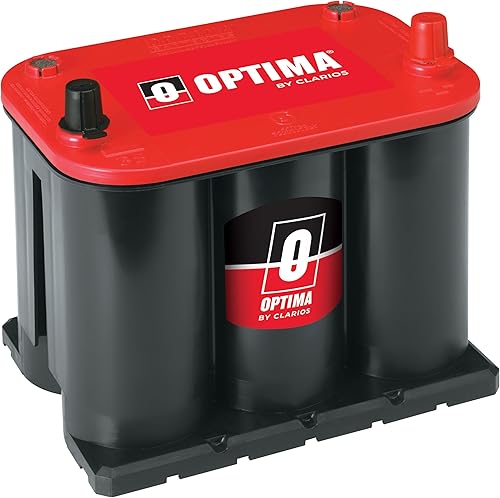 Best for basic-demand Group 35 vehiclesCheck it
- 6
 Best for demanding start-stop commutesCheck it
- 7
 Check it
Mighty Max MM-H6 Start-Stop (Group 48)
Best for H6 start-stop replacements - 8
 Check it
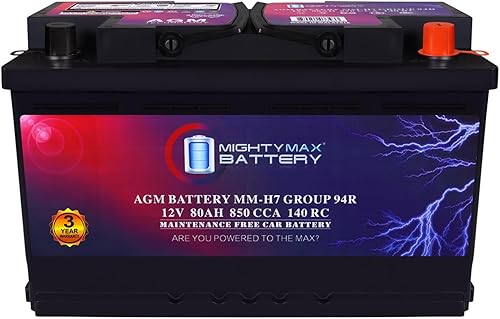
Mighty Max MM-H7 Start-Stop (Group 94R)
Best for H7 replacement comparisons
How we chose cold-weather car batteries
We compared vehicle fit, cold-start output, capacity and replacement support to identify useful winter options. These picks cover several group sizes, so they are alternatives for different vehicles rather than interchangeable upgrades.
The scores reflect each battery's overall place across our guides. A lower-scored model in the correct size is a better choice than a higher-scored battery your vehicle cannot use.
We also flagged details that need clarification before buying. Missing CCA figures, conflicting capacity numbers and unclear warranty terms matter when you depend on the car for early winter starts.
| Product | Best for | Group size | Cold cranking amps | Reserve capacity | Our score |
|---|---|---|---|---|---|
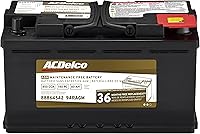
| ACDelco Gold 48AGM | everyday H6 replacements | 48/H6 | Confirm with ACDelco | Confirm with ACDelco | 9.1 |
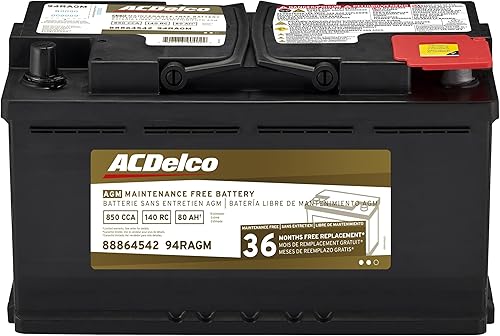
| ACDelco Gold 94RAGM | larger AGM replacements | 94R/H7 | Confirm with ACDelco | Confirm with ACDelco | 9.0 |
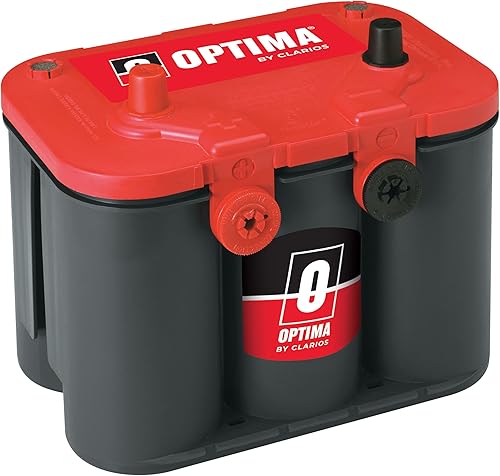
| Optima RedTop 34/78 | dual-terminal vehicles | 34/78 | 800 CCA | 100 minutes | 8.6 |
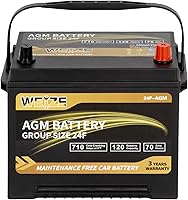
| Weize Platinum Group 48 AGM | accessory-heavy H6 vehicles | 48/H6 | Confirm: conflicting figures | 120 minutes | 8.4 |
| Optima RedTop 35 | basic-demand Group 35 vehicles | 35 | 720 CCA | 90 minutes | 8.3 |
| Weize Platinum Group 94R AGM | demanding start-stop commutes | 94R/H7 | 850 CCA | 140 minutes | 8.1 |
| Mighty Max MM-H6 Start-Stop (Group 48) | H6 start-stop replacements | 48/H6 | 760 CCA | 120 minutes | 8.0 |
| Mighty Max MM-H7 Start-Stop (Group 94R) | H7 replacement comparisons | 94R/H7 | 850 CCA | 140 minutes | 7.9 |
Best car batteries for cold weather by fit and use
Choose within your vehicle's approved battery group first, then compare the options that meet its electrical requirements. Each write-up below explains the buyer it suits and the reason to pass.
ACDelco Gold 48AGM: Best for everyday H6 replacements
- Group 48/H6 AGM
- 12V
- Silver-Calcium alloy
- 36-month free replacement / limited warranty
A fit-first choice for compatible H6 vehicles, with construction aimed at cycle life and charge acceptance. Confirm its CCA before making it your winter replacement.
Pros
- AGM construction for compatible vehicles
- Puncture-resistant envelope separator
- ACDelco offers 36-month free replacement / limited coverage
Cons
- CCA needs confirmation before a winter purchase
- Group size alone does not confirm vehicle fit
The ACDelco Gold 48AGM suits a driver replacing an approved Group 48/H6 AGM battery who wants to keep the decision focused on the vehicle's original needs. It is our highest-scored option, but its CCA needs confirmation before a winter purchase.
ACDelco uses high-density negative paste, Silver-Calcium alloy and a puncture-resistant envelope separator. The brand links these construction choices to performance, acid circulation and cycle life.
Its AGM design holds electrolyte in glass mat separators, and ACDelco describes it as maintenance-free. That removes routine water top-ups, though terminals and charging-system condition still need attention.
ACDelco offers a 36-month free replacement / limited warranty. Keep the receipt and confirm the terms that apply to your purchase.
Buy it when your vehicle calls for this size and design and its confirmed cranking output meets the required minimum. Skip it if you need a fully documented cold-start comparison before ordering and cannot obtain that figure.
ACDelco Gold 94RAGM: Best for larger AGM replacements
- Group 94R/H7 AGM
- 12V
- High-density plate construction
- 36-month/unlimited-mile limited parts warranty
An application-focused replacement for vehicles that require H7 AGM. Its valve system resists leakage, and ACDelco offers a limited parts warranty.
Pros
- Designed for compatible H7 AGM applications
- Leak-resistant pressurized valve system
- ACDelco offers 36-month/unlimited-mile limited parts coverage
Cons
- CCA needs confirmation for winter use
- Dimensions and terminal layout still require a fit check
The ACDelco Gold 94RAGM is the ACDelco choice here for compatible Group 94R/H7 AGM vehicles. It suits a straightforward replacement more than a buyer trying to change battery size or chemistry.
High-density plate construction and a leak-resistant pressurized valve system are its main construction features. ACDelco offers a 36-month/unlimited-mile limited warranty covering parts only, so do not assume installation labor is included.
Confirm fit using the vehicle's year, engine and trim. Two versions of the same model can have different battery requirements, especially when their electrical equipment differs.
Its CCA also needs confirmation with ACDelco before you choose it for winter. Ask for the exact model's figure, rather than accepting a number for another battery in the Gold range.
Choose it if you want an application-focused H7 replacement and can verify the starting requirement. Skip it if your car needs H6, Group 35 or another size, even if the brand matches your old battery.
Optima RedTop 34/78: Best for dual-terminal vehicles
- 800 CCA
- Group 34/78
- Dual SAE and GM posts
- 100-minute reserve capacity
A starting-focused AGM battery for compatible vehicles with basic electrical demands. Dual SAE and GM posts give it a distinct role among these picks.
Pros
- Dual SAE and GM terminal options
- SpiralCell AGM construction
- Maintenance-free design
Cons
- Not the first choice for repeated engine-off accessory use
- Dual terminals do not make it a universal replacement
The Optima RedTop 34/78 suits compatible vehicles that need a starting battery with basic electrical demands. Its dual SAE and GM posts make it useful when the vehicle's cable arrangement calls for those terminal options.
It provides 800 CCA and 100 minutes of reserve capacity. Optima uses SpiralCell AGM construction and positions this model for starting in harsh weather.
That starting focus is the key buying distinction. Choose it for a vehicle that mainly needs the battery to crank the engine, then lets the charging system support normal driving loads.
Skip it if your routine includes long engine-off accessory sessions or repeated deep discharge. Those habits call for a battery chosen around the vehicle's cycling needs, not starting output alone.
Check how the hold-down secures the case and whether unused terminals have proper clearance. Extra posts are useful connection options, but they do not make the battery fit every tray or cable arrangement.
Weize Platinum Group 48 AGM: Best for accessory-heavy H6 vehicles
- Group 48 AGM
- Start-stop design
- 120-minute reserve capacity
- 3-year warranty
A candidate for compatible H6 vehicles with start-stop systems and higher accessory loads. Resolve the conflicting CCA and Ah figures with Weize before ordering.
Pros
- Designed for start-stop use
- Sealed AGM construction
- Weize offers a 3-year warranty
Cons
- Conflicting CCA and Ah figures need clarification
- Not intended for deep-cycle solar or marine use
The Weize Platinum Group 48 AGM is a candidate for compatible start-stop vehicles with higher accessory loads. It deserves a closer look if you need an H6 replacement designed around repeated engine restarts.
Its key drawback is conflicting capacity information: Weize gives both 760 and 680 CCA, plus both 70 and 60 Ah. Resolve those figures with Weize before buying, especially if your vehicle's minimum falls between them.
The case measures 10.94 x 6.89 x 7.48 inches, with negative on the left and positive on the right. Compare the terminal layout from the same viewing direction as the battery diagram.
It has 120 minutes of reserve capacity, and Weize offers a 3-year warranty. The sealed AGM design avoids routine water service.
Choose it after the exact battery's output and fit are confirmed. Skip it if the conflicting figures remain unresolved, or if you need a deep-cycle battery for a solar or marine setup.
Optima RedTop 35: Best for basic-demand Group 35 vehicles
- 720 CCA
- Group 35
- SAE post terminals
- 90-minute reserve capacity
A starting-focused option for compatible Group 35 vehicles with basic electrical needs. Choose it by fit and engine requirements rather than comparing it with larger batteries.
Pros
- Group 35 fit with SAE posts
- Maintenance-free AGM design
- SpiralCell construction
Cons
- Skip it if your vehicle requires more CCA
- Not aimed at repeated deep discharge
The Optima RedTop 35 is the pick to consider for a compatible Group 35 vehicle with basic electrical needs. Its role is engine starting, rather than supporting repeated long periods of engine-off power use.
It delivers 720 CCA with 90 minutes of reserve capacity and uses SAE post terminals. The case measures 9.38 x 6.75 x 7.69 inches, so check height as well as the tray footprint.
Do not reject it simply because larger batteries elsewhere in this guide have higher cranking numbers. If it meets your vehicle's requirement and fits correctly, those larger units may offer no usable replacement option.
Optima's SpiralCell construction is the design feature behind this maintenance-free AGM model. Its weather-focused positioning does not remove the need to keep it charged.
Buy it for the correct Group 35 application. Skip it if your engine requires more starting output, your car calls for a different battery design, or your accessory habits demand a cycling-focused choice.
Weize Platinum Group 94R AGM: Best for demanding start-stop commutes
- Group 94R AGM
- 850 CCA
- 80 Ah
- 3-year warranty
A candidate for compatible H7 start-stop vehicles with higher electrical demands. Check capacity requirements as well as starting power before choosing it.
Pros
- Designed for start-stop and accessory loads
- 80 Ah capacity
- Weize offers a 3-year warranty
Cons
- Larger footprint will not suit every battery tray
- Not intended for deep-cycle solar or marine use
The Weize Platinum Group 94R AGM suits compatible H7 start-stop vehicles with substantial electrical demands. Its clear starting and capacity figures make it easier to compare against the vehicle's requirements than the Weize H6 option above.
It combines 850 CCA, 80 Ah and 140 minutes of reserve capacity. Those figures describe different jobs: starting output, stored charge and reserve runtime under a defined load.
The battery measures 12.4 x 6.89 x 7.48 inches. Its tapered terminals place negative on the left and positive on the right, so verify cable reach and polarity before installation.
Weize offers a 3-year warranty and designs this model for automotive starting and start-stop use. It is not intended for deep-cycle solar or marine applications.
Choose it when the vehicle approves this size, capacity and AGM design. Skip it if you are trying to solve chronic undercharging through a bigger battery alone, because added capacity still needs to be replenished.
Mighty Max MM-H6 Start-Stop (Group 48): Best for H6 start-stop replacements
- Group 48 AGM
- 760 CCA
- 70 Ah
- 120-minute reserve capacity
An H6 option with clear starting and capacity figures for compatible start-stop vehicles. Confirm terminal hardware and warranty terms before buying.
Pros
- 70 Ah capacity
- Sealed AGM construction
- Mounting screws included
Cons
- Warranty descriptions conflict
- Wire harness and other mounting accessories are not included
The Mighty Max MM-H6 is an alternative for a compatible H6 start-stop replacement when you want clear starting and capacity figures. It provides 760 CCA, 70 Ah and 120 minutes of reserve capacity.
Its case measures 10.94 x 6.88 x 7.48 inches, with positive on the right and negative on the left. Check the actual terminal hardware and vehicle fit before ordering rather than relying on a broad compatibility label.
Mighty Max describes the AGM case as sealed and spill-proof. Mounting screws are included, but the wire harness and other mounting accessories are not.
Confirm warranty coverage in writing: Mighty Max gives a 3-year term in its feature details and a 1-year term elsewhere. Keep that confirmation with your receipt.
Choose it if the specifications meet your car's requirements and you have resolved the installation and coverage questions. Skip it if you need a purchase with clear warranty terms immediately, or expect included screws to replace your vehicle's required hold-down hardware.
Mighty Max MM-H7 Start-Stop (Group 94R): Best for H7 replacement comparisons
- Group 94R AGM
- 850 CCA
- 80 Ah
- 140-minute reserve capacity
An alternative for compatible H7 vehicles when you want to compare equal starting and capacity figures. Check its exact footprint, installation hardware and warranty before deciding.
Pros
- 80 Ah capacity
- Sealed AGM construction
- Mounting screws included
Cons
- Warranty descriptions conflict
- Exact length needs checking in tight trays
The Mighty Max MM-H7 gives compatible H7 buyers another option with 850 CCA, 80 Ah and 140 minutes of reserve capacity. It is most useful as a direct comparison with the Weize H7 once both meet your vehicle's requirements.
Its case measures 12.50 x 6.88 x 7.48 inches. Check that length carefully in a tight tray instead of assuming every battery carrying the same group designation has identical clearance.
Positive is on the right and negative on the left. Mighty Max includes mounting screws, but you still need the vehicle's correct securing hardware and cable connections.
The same warranty question applies here: Mighty Max gives both 3-year and 1-year descriptions. Obtain the applicable coverage before buying.
Choose between this and another compatible H7 based on exact fit, installation needs and clear replacement support. Skip the MM-H7 if the case crowds the tray, the terminal arrangement does not suit the cables, or the warranty remains unclear.
How much CCA do you need for winter starts?
Choose at least the vehicle manufacturer's minimum CCA, then keep the comparison within approved battery sizes and types. There is no single winter number that works for every engine.
CCA measures a fully charged battery's ability to deliver starting current at 0°F under a defined procedure. Cranking amps measured at a warmer temperature are a different figure, so compare CCA with CCA.
Choosing the best cold-weather car battery by CCA
Use fit as the filter and CCA as the starting-power check. For a vehicle requiring 700 CCA, a compatible 720 CCA battery clears that minimum; a vehicle requiring 800 CCA needs a different choice.
A higher available CCA figure does not force excess current into the starter. The starter draws what it needs, but the battery must still meet the car's capacity, charging and installation requirements.
Extra cranking capacity can provide useful margin among approved replacements. It cannot correct a weak starter, loose ground connection, wrong engine oil or battery that is routinely left undercharged.
What do Ah and reserve capacity mean for winter driving?
Ah describes stored charge, while reserve capacity describes runtime under a defined load. Neither number replaces CCA, and neither promises a fixed amount of time using your own accessories.
Heated seats, window defrosters, lights and the blower add electrical demand. A healthy charging system supports these loads while driving, but short trips can leave little time to restore energy used for starting.
Match the vehicle's capacity guidance, especially with start-stop systems and battery monitoring. A battery with more stored charge still needs enough charging time to stay healthy.
Avoid treating reserve capacity as permission to run accessories until the battery is nearly empty. A starter battery needs charge left for the next crank, and cold weather reduces that margin.
Does an AGM battery help in cold weather?
Use AGM when your vehicle requires it, and compare cold-start capability separately. AGM holds electrolyte in glass mat separators, but that design alone does not make every AGM battery equally suitable for winter.
Start-stop vehicles may need a battery built for repeated restarts and electrical loads while the engine pauses. Do not replace a required AGM battery with a conventional flooded design just because the case fits.
For a vehicle that originally uses a flooded battery, check charging-system compatibility before changing types. Read whether your car needs an AGM battery before treating the change as an upgrade.
Maintenance-free also does not mean attention-free. AGM batteries still need secure mounting, clean connections and charging equipment suited to their design.
What should you check before buying a winter battery?
Record the approved group, battery type, CCA, capacity and terminal layout before comparing brands. Use the vehicle's requirements as the reference, because the battery already installed could be the wrong replacement.
Check these details before ordering:
- Case and hold-down: Confirm length, width, height and how the clamp grips the battery.
- Cable reach: Both cables should connect without stretching, crossing or pulling against nearby parts.
- Terminal clearance: Check hood clearance and any covers around positive connections.
- Vent connection: Match the required vent arrangement if the battery sits in an enclosed vehicle compartment.
- Vehicle procedures: Check whether replacement requires battery registration, adaptation or saved settings.
Our guide to choosing a car battery walks through the full replacement process. Keep your old battery until the new unit's fit is confirmed and you understand the return and recycling arrangements.
If the car cranks slowly, use our guide to checking a car battery at home before ordering. A voltage reading can show charge condition, but it does not measure starting capacity under load.
How should you install and charge a winter replacement?
Follow the vehicle's replacement procedure and the battery's charging instructions. Arrange professional installation if access is difficult, the battery is inside the cabin, or registration requires equipment you do not have.
Before removal, switch the vehicle off and let its systems shut down as directed. Wear eye protection, remove metal jewelry and keep tools from bridging the positive terminal to grounded metal.
For a conventional negative-ground vehicle, disconnect negative first and positive second. Reconnect positive first and negative last, unless the vehicle's specific procedure directs otherwise.
Lift with proper support and secure the new battery with the correct hold-down. A loose case can move, strain cables and damage connections.
Inspect the new battery for cracks, leakage or damaged terminals before fitting it. Do not install a damaged unit or assume a newly delivered battery is fully charged.
Use an automatic charger approved for the battery type, connected at the points the vehicle specifies. Select the correct AGM mode when required and follow the stated charging limits rather than using a high-current setting to hurry.
How do you keep a car battery ready through winter?
Keep the battery charged and its connections clean before the coldest weather arrives. Cold exposes a weak or undercharged battery more quickly than a healthy one.
Check that terminal clamps are secure and free of corrosion. Sealed AGM batteries should not be opened for water top-ups.
If you make mostly short trips, consider a compatible maintainer when the car is parked where charging is practical. Idling briefly or driving around the block may not replace the energy used by repeated cold starts.
Turn off unnecessary accessories before starting, and avoid long engine-off sessions with the blower or lights running. If cranking slows, follow the vehicle's instructions rather than repeatedly holding the starter on.
A battery that keeps losing charge needs a diagnosis. Our guide to why a car battery keeps dying explains how charging faults, unwanted electrical draw and driving habits can lead to the same symptom.
Never charge or jump-start a battery that may be frozen, cracked or leaking. Arrange qualified help before attempting to restore power.
Which winter battery mistakes should you avoid?
Avoid buying by the largest CCA number alone. Wrong fit, unsuitable charging requirements or a poor connection can defeat the benefit of more available starting power.
Do not squeeze an H7 battery into an H6 space without an approved fitment. Similar width and height do not guarantee cable clearance or correct hold-down engagement.
Do not confuse a start-stop starter battery with a deep-cycle house battery. Running camping equipment or other parked loads for long periods calls for a system designed around that use.
Do not assume a warranty covers labor, towing or every cause of failure. Keep proof of purchase and understand how a replacement claim would work before winter travel.
Which car battery is best for cold weather?
The best car battery for cold weather is the approved replacement you can keep fully charged. Choose by vehicle group and use, then settle any missing specifications before buying.
For H6 AGM vehicles, start with ACDelco Gold 48AGM once its CCA is confirmed. Consider Weize for accessory-heavy use after resolving its conflicting figures, or Mighty Max MM-H6 after clarifying warranty and terminal details.
For H7 AGM vehicles, compare ACDelco Gold 94RAGM with the Weize and Mighty Max alternatives. Weize offers clear starting and capacity figures; Mighty Max needs an exact fit check and warranty clarification.
Choose the appropriate Optima RedTop for a compatible Group 34/78 or Group 35 vehicle with basic starting demands. For more options within the same battery design, see the best AGM car batteries.
Our top 3 picks at a glance
-
1
-
2
-
3
Frequently asked questions
What makes a car battery suitable for cold weather?
A suitable winter battery matches your vehicle's required size, battery type and minimum cold cranking amps; cold reduces available battery output while the engine needs more effort to turn, so charge condition matters too. Choose a compatible battery and keep it charged rather than relying on a high CCA number alone.
How many CCA do I need for winter?
Use your vehicle manufacturer's minimum CCA as the starting point, then compare compatible replacements that meet or exceed it; engine size, design and starting requirements vary, so there is no universal winter number. Do not substitute a larger battery unless its dimensions, terminals, hold-down and charging requirements also match.
Is AGM better than a flooded battery in cold weather?
AGM is the correct replacement when your vehicle requires it, but chemistry alone does not decide winter starting performance; CCA, charge condition and vehicle compatibility still matter. Our AGM vs flooded battery guide explains the design differences and helps you decide whether a change in battery type makes sense.
Can I install a higher CCA battery than the original?
Yes, a higher CCA battery can work when its type, capacity requirements, terminals and physical fit suit the vehicle; the starter draws the current it needs; extra available cranking capacity does not force more current into it. Follow the vehicle's replacement guidance, including any battery registration or charging-system requirements.
How can I tell if my battery is weak before winter?
Slow cranking, repeated jump starts and electrical resets can point to a weak battery, though loose connections or charging faults can cause similar symptoms; have the battery and charging system checked before replacing parts. Our home battery check guide explains useful checks and the limits of a voltage reading.