Car Battery Group Size Chart
A car battery group size chart helps match case size and terminal layout. Choose the group approved for your exact vehicle, then confirm battery type, minimum CCA, hold-down fit and cable reach before buying.
On this page (9 sections)
- What does a car battery group size chart tell you?
- How do you read battery group sizes and dimensions?
- Which battery examples suit each group?
- How can you confirm the right battery before buying?
- What should you do if the chart and fit guide disagree?
- How do group size and battery type work together?
- How should you install and care for the replacement?
- Which battery-buying mistakes should you avoid?
- Which car battery group size should you choose?
A car battery group size chart helps you match a replacement battery’s case and terminal layout to your vehicle. Choose the approved group first, then confirm battery type, starting power and mounting fit before ordering.
The chart below covers 4 common groups with specific battery examples. These batteries serve different applications, so a higher capacity or larger case does not make one a better choice for every car.
What does a car battery group size chart tell you?
A battery group chart identifies physical formats, helping you compare case size and terminal arrangements. It does not tell you which battery your particular vehicle needs without a vehicle-specific fit check.
The Battery Council International, or BCI, uses group designations to identify battery formats. The numbers are identifiers, not a scale of power, quality or capacity.
| Common group | Example battery | Dimensions in inches | Terminal check |
|---|---|---|---|
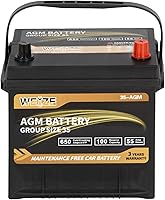
| 35 | Mighty Max MM-G35 | 9.06 x 6.89 x 8.82 | Right positive, left negative |
| 48 / H6 | ACDelco Gold 48AGM | 7.5 deep x 11.9 wide x 7.6 high | Confirm post layout against your cables |
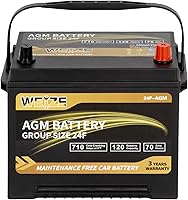
| 65 | Weize Platinum Group 65 AGM | 12.05 long x 7.56 wide x 7.56 high | Left positive, right negative |
| 94R / H7 | ACDelco Gold 94RAGM | 12.4 deep x 6.9 wide x 7.5 high | Confirm post layout against your cables |
These are dimensions of the example batteries, not a complete table of BCI standard limits. Dimension labels can differ between brands, so compare the physical long side, short side and total height carefully.
Names such as H6 and H7 often appear alongside BCI group numbers. Use those paired names to find candidates, then confirm the exact battery rather than assuming every cross-reference guarantees fit.
For more on the numbering system, read what car battery group size means. Our car battery size and fit guide connects these checks with vehicle-specific advice.
How do you read battery group sizes and dimensions?
Start with your vehicle’s approved group, then check case size, post position and mounting shape. A battery needs to fit the whole installation, including the space above it.
Measure the installed battery only as a cross-check. A previous replacement may be incorrect, or it may use an approved alternative that differs from the original size.
How to use a car battery group size chart at the tray
Compare the battery’s longest side with the tray’s usable length, then check width and total height. Include the posts when checking clearance beneath the hood or other metal parts.
Look for a retaining lip, base clamp or top bracket. The replacement needs the right mounting shape for that hardware, not simply a case small enough to sit in the tray.
Terminal descriptions need a consistent viewing direction. Compare a clear battery diagram or photo with your installed cable positions, since turning a battery around on a screen can reverse what appears to be left and right.
A cable should reach its post without pulling tight, crossing an unsafe path or pressing against a sharp edge. Turning a battery around is not a valid fix if it disrupts the clamp, vent hose or terminal covers.
What does a car battery group size not tell you?
A group designation does not specify CCA, amp-hour capacity or battery type. Batteries in the same group can serve different electrical needs.
Cold cranking amps, or CCA, describe starting ability in cold conditions. Meet the vehicle maker’s minimum; a higher number cannot make up for an incorrect case or reversed posts.
Amp-hours describe stored electrical capacity under specified conditions. Reserve capacity describes how long a battery can support a defined load, so neither figure should be treated as permission to run accessories indefinitely.
Our guide to car battery CCA explains the starting specification in more detail.
Which battery examples suit each group?
Choose among these examples only after confirming the required group. They illustrate 4 replacement formats rather than 4 interchangeable upgrades.
All 4 examples use AGM construction. That makes them relevant to drivers seeking an AGM replacement, but you still need to confirm the exact application and electrical requirements.
Mighty Max MM-G35: for approved Group 35 applications
The Mighty Max MM-G35 suits drivers whose vehicles accept a Group 35 AGM battery with its terminal arrangement. It offers 55 Ah, 650 CCA and 100 minutes of reserve capacity.
Its sealed AGM design avoids routine electrolyte top-ups. Mighty Max says the construction resists shock and vibration, which may interest buyers whose vehicles regularly travel over rough roads.
Choose it if your fit information approves this format and its starting output meets your vehicle’s minimum. Its case is shorter along its long side than the other examples here, but that does not make it a universal choice for a tight tray.
Skip it if your vehicle requires more starting power, a different terminal layout or another group. The included mounting screws do not replace the need for compatible vehicle hardware; wire harnesses and other mounting accessories are not included.
Warranty information differs between Mighty Max’s stated terms, so confirm the applicable coverage before buying. Keep that check separate from fit: a warranty cannot resolve an unsuitable installation.
ACDelco Gold 48AGM: for approved Group 48/H6 replacements
The ACDelco Gold 48AGM suits vehicles that specify a Group 48/H6 AGM replacement. Its AGM construction supports applications with repeated cycling demands, including compatible stop-start vehicles.
ACDelco uses high-density negative paste, a calcium-lead positive grid and an envelope separator with a puncture-resistant back. These are construction features aimed at supporting conductivity, acid circulation and service life.
Choose it if your vehicle calls for this group and you want ACDelco’s 36-month free-replacement limited warranty. Confirm the exact replacement’s CCA against your vehicle requirement before ordering.
Skip it if your vehicle needs H7, Group 65 or another format. A brand name shared with an original vehicle part does not guarantee compatibility across that brand’s whole model range.
The battery weighs 45.5 lb, so plan how you will lift it into position. A tight engine bay can make controlled placement harder than simply lifting the weight from the floor.
Weize Platinum Group 65 AGM: for approved Group 65 applications
The Weize Platinum Group 65 AGM suits vehicles approved for its case and post layout that need up to its stated 750 CCA output. It has 70 Ah capacity and 120 minutes of reserve capacity.
Weize identifies this as an automotive starter battery for applications that can include stop-start systems and higher accessory loads. The brand backs it with a 3-year warranty.
Choose it if your vehicle calls for Group 65, accepts AGM and meets the other fit checks. Its capacity figures can help compare it with another suitable Group 65 candidate once the required format is settled.
Skip it for solar storage or marine deep-cycle use. Weize specifically excludes those uses, so the AGM label should not lead you to treat it as a general-purpose deep-cycle battery.
For external charging, follow Weize’s instructions and use a compatible charger. Its stated charging limits are 14.4–15.0 V and up to 18 A, which are model-specific guidance rather than settings to apply to every battery here.
ACDelco Gold 94RAGM: for approved Group 94R/H7 replacements
The ACDelco Gold 94RAGM suits vehicles that call for a Group 94R/H7 AGM battery. Confirm the exact year, engine and trim even when your vehicle brand appears among its supported applications.
Its construction includes high-density plate material, envelope separators and a leak-resistant valve system. ACDelco provides a 36-month, unlimited-mile limited warranty for parts only.
Choose it if your approved replacement specification calls for this format and AGM construction. Confirm the terminal connection style and starting output as part of the final application check.
Skip it if you are trying to fill spare space in a tray designed for a smaller battery. Extra case length is not useful unless the vehicle supports that size and the mounting hardware secures it.
At 53.2 lb, it needs a clear lifting path. Arrange help if you cannot lower it into the tray without tilting awkwardly or risking contact between the posts and nearby metal.
For model-specific starting points, see what size battery a Toyota Camry takes and what size battery a Ford F-150 takes. Use the guidance for your configuration rather than choosing by model name alone.
How can you confirm the right battery before buying?
Build a short replacement checklist from your vehicle’s requirements, then match each candidate against it. This prevents a strong specification in one area from hiding a mismatch elsewhere.
- Record the full year, make, model, engine and trim.
- Find the approved battery group or approved alternatives.
- Confirm the required battery type and minimum CCA.
- Check the candidate’s dimensions, posts and hold-down shape.
- Check any vent connection and terminal-cover requirements.
- Find out whether replacement requires battery registration or a reset.
- Review warranty terms, delivery arrangements and return conditions.
Some vehicles use a battery-management system that needs a replacement registered or coded. Check the service instructions before starting so you can arrange the required equipment or professional help.
If your vehicle has more than one battery, identify which one you are replacing. A main starter battery and an auxiliary battery can have different formats and functions.
For an online order, consider how you will handle a damaged shipment or an incompatible battery. Our guide to buying a car battery online covers the practical steps before delivery.
What should you do if the chart and fit guide disagree?
Resolve the conflict with vehicle-specific information before buying. A general chart cannot account for every engine, factory option, production change or approved alternative.
Recheck the vehicle details entered into the fit guide. Small differences, such as engine choice or stop-start equipment, can change the required replacement.
Then compare the manual, the installed battery label and the actual mounting arrangement. If the old battery differs, ask a parts professional to confirm whether it is an approved alternative or an earlier mistake.
Photographs of the label, cable positions, retaining bracket and any vent hose can help explain the conflict. Do not remove brackets, stretch cables or improvise spacers to force an unapproved battery into place.
How do group size and battery type work together?
Match both physical format and battery technology to your vehicle. The right group with the wrong battery type can still be an unsuitable replacement.
AGM batteries hold electrolyte in glass mats rather than leaving it free-flowing. That construction does not make every AGM battery suitable for every charging system, mounting position or use.
Keep AGM when the vehicle requires it. If you want to move from a flooded battery to AGM, confirm compatibility and any required charging-system settings first.
Our AGM car battery buying guide covers replacement choices. For the construction differences, read AGM vs flooded car batteries.
Stop-start compatibility also requires a vehicle-specific match. A battery name containing “Start-Stop” does not override requirements for group, chemistry, output or registration.
How should you install and care for the replacement?
Follow your vehicle’s service procedure and the battery instructions, especially for venting and battery-management steps. Use professional help when access is difficult or the procedure requires equipment you do not have.
Wear eye protection and gloves, remove metal jewelry and keep sparks or flames away. Keep tools from bridging the terminals or touching the positive post and grounded metal at the same time.
For a conventional negative-ground vehicle, the usual removal order is negative cable first, then positive. Reconnection is usually positive first, then negative, but check the vehicle procedure before disconnecting anything.
With the battery removed, inspect the tray and retaining hardware for damage. Clean and dry the mounting area, then secure the replacement using the specified hardware and tightening instructions.
Reconnect any required vent hose and refit the terminal covers. A sealed AGM battery may still need external venting in a particular vehicle installation.
Do not open an AGM battery to add water. Keep its case and terminals clean, inspect cable security periodically and use an appropriate maintainer if the vehicle sits unused for long periods.
Repeated short journeys may not replace the energy used to start the engine. If the replacement keeps losing charge, investigate the charging system or an unwanted electrical drain rather than assuming a different group will solve it.
Which battery-buying mistakes should you avoid?
The most costly mistakes are choosing by one number and ignoring the rest of the installation. Use the group designation to narrow candidates, then finish the fit and electrical checks.
- Choosing the highest CCA regardless of fit: Starting output cannot correct a wrong post position or incompatible clamp.
- Assuming all batteries from one brand fit: Compatibility belongs to the exact model and vehicle application.
- Copying an old battery without checking: The installed battery may already be incorrect.
- Confusing reserve capacity with accessory runtime: Actual runtime changes with load, charge level and conditions.
- Treating AGM as unlimited deep-cycle power: Starter batteries still need protection from repeated deep discharge.
- Overlooking service access: A battery that fits may still require careful lifting or removal of nearby parts.
Avoid using battery replacement to guess at a starting fault. Loose connections, charging problems and other faults can cause symptoms that a new battery will not resolve.
Which car battery group size should you choose?
Use this car battery group size chart to identify candidates, then buy the exact replacement your vehicle approves. Decide on the required format before comparing brands or capacity figures.
Choose the Mighty Max for an approved Group 35 AGM application, the ACDelco 48AGM for an approved Group 48/H6 application, the Weize for an approved Group 65 AGM application, or the ACDelco 94RAGM for an approved Group 94R/H7 application.
If none meets your vehicle’s full requirements, choose another battery. If several qualify, compare warranty coverage, capacity and replacement support within that approved group.
Before ordering, work through our how to choose a car battery guide with your vehicle details and replacement checklist beside you.
Frequently asked questions
Does battery group size tell me the battery’s CCA?
No, group size describes a battery’s physical format, while cold cranking amps describe its ability to start an engine in cold conditions. Find your vehicle’s minimum CCA first, then choose a battery that meets it while also matching the required group, battery type and terminal layout.
Can I use a different battery group size?
Use a different group only when your vehicle’s replacement guidance approves that alternative. Extra tray space does not prove compatibility: cable reach, terminal height, hold-down shape and vent connections can still prevent a safe fit; confirm all those details before changing from the recommended group.
Are Group 48 and H6 the same size?
Group 48 and H6 are commonly paired size names, and the ACDelco 48AGM uses both designations. Still compare the exact battery dimensions, terminal layout and hold-down with your vehicle; matching names help narrow your search, but they do not replace a fit check for your year, engine and trim.
Can I replace an AGM battery with a flooded battery?
Keep AGM when your vehicle requires it; the replacement must suit the charging system and any stop-start functions, as well as fit the tray. If you want to change battery types, follow vehicle-specific guidance and check whether battery registration or a charging-system setting is needed.
Where can I find my car’s battery group size?
Start with the owner’s manual or a fit guide using your year, make, model, engine and trim; compare that result with the installed battery’s label and mounting arrangement. If they disagree, have a parts professional confirm the correct replacement rather than copying a possibly incorrect old battery.