10 Best Optima Batteries (November 2026)
The best Optima batteries include the Optima RedTop 34/78 for everyday starting, the Optima RedTop 35 for compact daily drivers, and the Optima YellowTop D34/78 for accessory-loaded trucks.
On this page (6 sections)
The Optima RedTop 34/78 is our top Optima battery choice for everyday starting when it fits your vehicle. Choose a YellowTop instead if accessories regularly draw on the battery and you need starting power plus cycling capability.
Fit comes before rank: a lower-ranked model with the correct case, terminals and electrical specifications is the better buy for your car. Don't replace a battery by color or cranking output alone.
Start with our complete AGM car battery guide if you're choosing a battery type. For the main split within this range, compare Optima RedTop vs YellowTop.
Our picks at a glance
-
1
-
2
-
3

Which Optima battery suits your driving?
Choose a RedTop for starting-focused use or a YellowTop for regular accessory loads, then narrow the options by vehicle fit. The highest-capacity battery here only helps if your vehicle can accept it.
We compared starting output, reserve capacity, terminal options and intended use. Scores reflect those differences, while the individual write-ups explain when another model is the better match.
All these picks are sealed AGM batteries, but their jobs differ. A starting battery delivers brief bursts to crank an engine; a dual-purpose battery also suits repeated discharge and recharge from accessory use.
| Product | Best for | Cold cranking amps | Terminals | Reserve capacity | Our score |
|---|---|---|---|---|---|
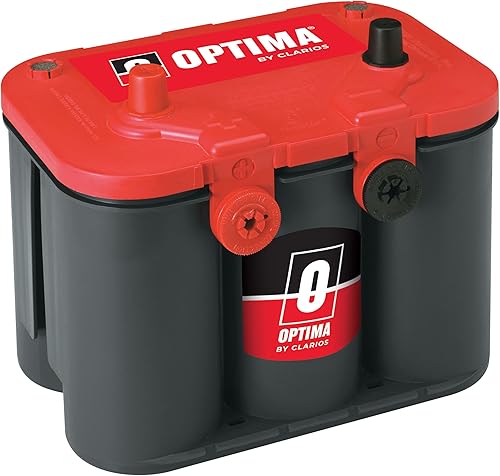
| Optima RedTop 34/78 | everyday starting | 800 CCA | SAE and GM posts | 100 minutes | 8.6 |
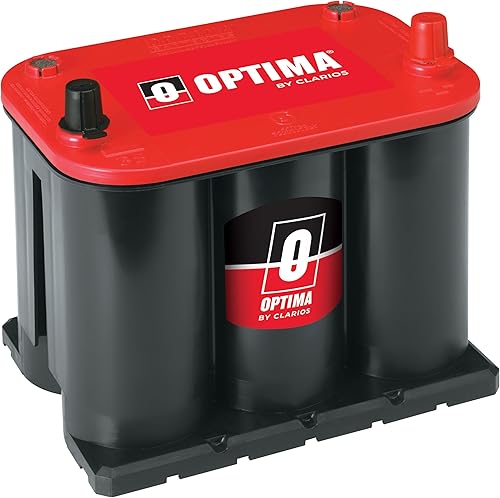
| Optima RedTop 35 | compact daily drivers | 720 CCA | SAE posts | 90 minutes | 8.3 |
| Optima YellowTop D34/78 | accessory-loaded trucks | 750 CCA | SAE and GM posts | 120 minutes | 8.2 |
| Optima RedTop 25 | Group 25 replacements | 720 CCA | SAE posts | 90 minutes | 8.1 |
| Optima RedTop 75/25 | GM cable replacements | 720 CCA | SAE and GM posts | 90 minutes | 8.0 |
| Optima RedTop 34 | Group 34 replacements | 800 CCA | SAE posts | 100 minutes | 7.9 |
| Optima YellowTop DH7 | power-hungry compatible vehicles | 880 CCA | 155 minutes | 7.8 | |
| Optima RedTop 34R | Group 34R replacements | 800 CCA | SAE posts | 100 minutes | 7.7 |
| Optima YellowTop D34 | SAE accessory setups | 750 CCA | SAE posts | 120 minutes | 7.5 |
| Optima YellowTop D35 | space-limited accessory builds | 620 CCA | SAE posts | 100 minutes | 7.4 |
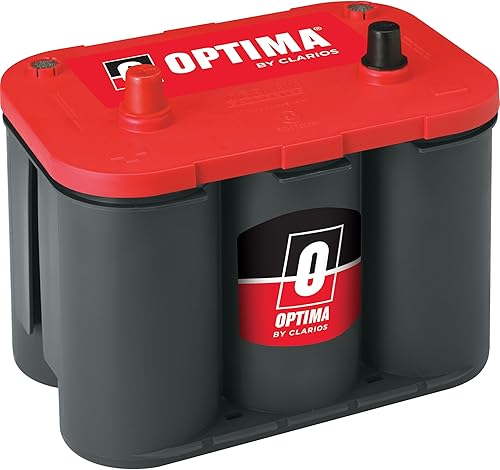
Optima RedTop 34/78: Best for everyday starting
- 800 CCA
- Dual SAE and GM terminals
- 100-minute reserve capacity
- 50 Ah C20 capacity
A starting-focused choice for vehicles that accept its case and terminal layout. Dual connection styles suit compatible SAE or GM battery cables.
Pros
- Supports SAE and GM connections
- Starting-focused design
- Maintenance-free AGM construction
Cons
- Not the choice for regular accessory cycling
- Dual terminals do not guarantee vehicle compatibility
The RedTop 34/78 suits drivers who want starting power with 2 connection styles. It offers 800 CCA and both SAE and GM terminals, making it a useful first candidate for compatible cars, trucks and SUVs.
Buy it for a vehicle with ordinary electrical loads that usually runs its accessories while the engine is on. The extra terminal option helps with connection compatibility, but it doesn't make this a universal replacement.
Skip it for a setup that regularly runs substantial audio equipment, lighting or other loads with the engine off. The YellowTop D34/78 addresses that use more directly through its dual-purpose design.
At 38.8 lb, plan a clear lifting path before installation. Keep the terminal covers in place while positioning it, and read our Optima RedTop 34/78 review for a closer look at this model.
Optima RedTop 35: Best for compact daily drivers
- 720 CCA
- SAE posts
- 90-minute reserve capacity
- 44 Ah C20 capacity
A shorter starting battery for compatible vehicles with basic electrical needs. It suits buyers who need Group 35 fit rather than a larger case.
Pros
- Shorter case than the 34/78
- Lighter than the larger RedTop models
- Maintenance-free construction
Cons
- No GM terminal connections
- Less reserve capacity than the larger RedTop models
The RedTop 35 is a sensible choice for compatible daily drivers with limited tray space. Its case is 9.38 in long, and it delivers 720 CCA through SAE posts.
Choose it when Group 35 fit is confirmed and the vehicle mainly needs dependable engine starting. Its 31.7 lb weight also makes it easier to handle than the larger batteries in this comparison.
Skip it if your vehicle requires GM connections, a different mounting arrangement or more starting output. A smaller case isn't an upgrade if it leaves the battery loose in the tray.
Don't choose the RedTop 35 simply because its headline figures resemble the RedTop 25's. Compare the positive post location and mounting details, since matching capacity does not mean 2 models can replace each other.
Optima YellowTop D34/78: Best for accessory-loaded trucks
- 750 CCA
- Dual SAE and GM terminals
- 120-minute reserve capacity
- 55 Ah C20 capacity
A dual-purpose choice for compatible vehicles with added electrical loads. Both SAE and GM connections are available.
Pros
- Designed for starting and cycling
- Supports both terminal styles
- More reserve capacity than the RedTop 34/78
Cons
- Heavier than the RedTop 34/78
- Accessory runtime still needs careful planning
The YellowTop D34/78 is the stronger match for compatible vehicles with regular accessory loads. It combines a dual-purpose design with SAE and GM connections, so it's worth considering for trucks with winches or added audio equipment.
Its 55 Ah capacity and 120-minute reserve capacity give it more stored-energy headroom than the RedTop 34/78. Those figures support comparison, but neither is a promise of how long your particular accessories will run.
Skip this model if you only need routine starting and have no meaningful cycling demand. It weighs 43.5 lb, so choosing it adds handling weight without necessarily helping your use.
Plan how you'll replace the energy your accessories consume. If you're deciding whether AGM suits the vehicle at all, our AGM vs flooded battery guide explains the broader choice.
Optima RedTop 25: Best for Group 25 replacements
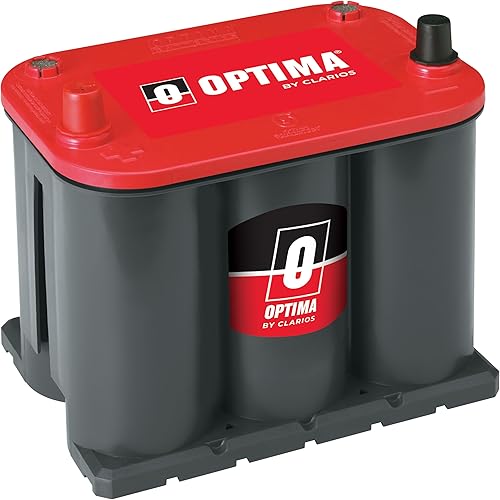
- 720 CCA
- SAE posts
- 90-minute reserve capacity
- 44 Ah C20 capacity
A starting-focused replacement when Group 25 compatibility is confirmed. Choose it for routine vehicle use rather than frequent engine-off accessory loads.
Pros
- Starting-focused design
- Maintenance-free AGM construction
- SAE cable connections
Cons
- Exact case dimensions need confirmation
- Not intended for high electrical demands
The RedTop 25 suits buyers replacing a confirmed Group 25 starting battery. Its electrical figures resemble the RedTop 35's, so the reason to choose it is the required physical arrangement.
This is a good fit for ordinary driving with basic electrical demands. Skip it for frequent engine-off accessory use, or if you're choosing it only because another RedTop has similar capacity.
Confirm exact case dimensions for this model before ordering, because the available measurements differ. Use the current battery's label as a clue, then check the vehicle requirements and the exact replacement model.
Inspect how the hold-down engages the case as well as where the cables connect. A battery can sit inside the tray yet still be unsuitable if the clamp can't secure it or a cable pulls tight.
Optima RedTop 75/25: Best for GM cable replacements

- 720 CCA
- Dual SAE and GM posts
- 90-minute reserve capacity
- 44 Ah C20 capacity
A starting battery for compatible installations that need GM connections or SAE posts. Confirm the exact case and mounting arrangement before choosing it.
Pros
- Includes GM and SAE connections
- Maintenance-free construction
- Lighter than the RedTop 34/78
Cons
- Lower starting output than the RedTop 34/78
- Exact case dimensions need confirmation
The RedTop 75/25 makes sense for a starting-focused replacement that needs GM connections. Its dual-terminal arrangement also includes SAE posts, while its electrical capacity sits below the larger RedTop 34/78.
Choose it when the vehicle's requirements point to this model and basic starting is the main task. Don't choose it just to gain spare terminals for an accessory build.
Additional terminals don't add stored energy or turn a starting battery into a dual-purpose model. Any accessory wiring still needs suitable cable, circuit protection and a connection method approved for that setup.
Exact case measurements need confirmation for the 75/25 because the available dimensions differ. Skip it if fitting it would require stretched cables, an improvised hold-down or an unapproved change to the tray.
Optima RedTop 34: Best for Group 34 replacements
- 800 CCA
- SAE posts
- 100-minute reserve capacity
- 50 Ah C20 capacity
A straightforward starting choice for vehicles that require this Group 34 arrangement. It suits SAE cable connections without the 34/78's additional GM terminals.
Pros
- Starting output matches the RedTop 34/78
- Slightly lighter than the 34/78
- Maintenance-free construction
Cons
- No GM connections
- Not intended for regular accessory cycling
The RedTop 34 is the direct choice for compatible Group 34 installations with SAE cables. It shares the 34/78's starting output and reserve capacity without the additional GM connections.
Choose it for everyday starting when the post positions, case and mounting arrangement match. There's little reason to favor the dual-terminal alternative if your installation only needs SAE posts and this model is the approved fit.
Skip it if the vehicle needs side connections or your driving includes regular battery-powered accessory sessions. Those needs point toward a different terminal arrangement or a YellowTop, respectively.
Its 37.9 lb weight is slightly lower than the 34/78's. During installation, check clearance above the posts as carefully as clearance around the case, especially if a metal brace or hood sits nearby.
Optima YellowTop DH7: Best for power-hungry compatible vehicles

- 880 CCA
- 80 Ah C20 capacity
- 155-minute reserve capacity
- PUREFLOW technology
The largest-capacity option here for compatible vehicles with high electrical demands. Its longer case makes space and mounting checks essential.
Pros
- Highest capacity in this comparison
- Dual-purpose design
- PUREFLOW radial grid plates
Cons
- Longest case in this comparison
- Exact terminal configuration needs confirmation
The YellowTop DH7 suits compatible vehicles with substantial electrical demands. Its 80 Ah capacity and 155-minute reserve capacity are the largest here, and its 880 CCA is also the highest.
This is the model to consider when the vehicle requires its larger format and benefits from dual-purpose use. It uses PUREFLOW technology with highly compressed radial grid plates rather than the SpiralCell design used by the other picks.
Skip it as a speculative upgrade for a smaller battery tray. At 12.44 in long, it demands more space, and extra capacity cannot compensate for the wrong mounting or cable arrangement.
Confirm the exact terminal configuration before ordering, since the terminal descriptions conflict. Also check any vehicle-specific battery replacement procedure, including whether the vehicle needs battery registration or coding after installation.
Optima RedTop 34R: Best for Group 34R replacements

- 800 CCA
- SAE posts
- 100-minute reserve capacity
- 50 Ah C20 capacity
A starting battery for vehicles that require the 34R arrangement. Match positive and negative post positions before comparing it with other RedTop models.
Pros
- Starting output matches the RedTop 34
- Maintenance-free construction
- SAE cable connections
Cons
- Terminal orientation must suit the vehicle
- Not intended for high electrical demands
The RedTop 34R is for buyers whose vehicle requires the 34R terminal arrangement. Its starting and capacity figures match the RedTop 34, so physical compatibility should decide between them.
Look at the positive and negative markings on the battery rather than relying on a photo angle. Compare their positions with the vehicle's cable routing before removing the current battery.
Choose this model for basic electrical demands when the required arrangement is confirmed. Skip it if connecting the cables would require crossing them, pulling them taut or turning the battery into an unapproved position.
Don't assume similar names mean similar fit. Write down the full model designation when ordering, and inspect the replacement label before beginning installation so a nearly identical name doesn't lead to the wrong battery.
Optima YellowTop D34: Best for SAE accessory setups

- 750 CCA
- SAE posts
- 120-minute reserve capacity
- 55 Ah C20 capacity
A dual-purpose choice for compatible vehicles with SAE connections and added electrical loads. Its core capacity figures match the D34/78.
Pros
- Designed for starting and cycling
- More reserve capacity than the RedTop 34
- Maintenance-free construction
Cons
- No GM connections
- Heavier than the RedTop 34
The YellowTop D34 suits accessory-loaded vehicles that use SAE connections. It gives you the D34/78's core electrical figures in an SAE-only configuration, making terminal needs the main distinction between those options.
Choose it when regular accessory use calls for cycling capability and the vehicle accepts this model. Added audio equipment or repeated engine-off loads are stronger reasons to choose it than ordinary factory electronics alone.
Skip it if your vehicle needs GM connections or if starting is its only meaningful battery job. At 42.9 lb, it also adds weight compared with the RedTop 34.
Treat the dual-purpose design as part of an energy plan, not permission to run accessories until everything shuts off. Leave enough charge for starting, and recharge after substantial use rather than depending on the next short drive.
Optima YellowTop D35: Best for space-limited accessory builds

- 620 CCA
- SAE posts
- 100-minute reserve capacity
- 48 Ah C20 capacity
A shorter dual-purpose option for compatible vehicles with added electrical loads. Check the engine's starting requirement before choosing this lower-CCA model.
Pros
- Shorter than the D34 models
- Dual-purpose design
- More reserve capacity than the RedTop 35
Cons
- Lowest CCA in this comparison
- Less capacity than the larger YellowTop models
The YellowTop D35 is the option for compatible accessory builds with less case space. Its roughly 9.31 in length is shorter than the D34 models, but its 620 CCA is the lowest in this comparison.
Choose it when the vehicle's starting requirement is met and cycling capability matters more than the RedTop 35's higher cranking figure. Its 48 Ah capacity offers a different balance of starting output and stored energy.
Skip it if the engine requires more cranking output or your accessory plan calls for substantially more capacity. Choosing the smaller YellowTop cannot solve a mismatch between demand and available energy.
Before buying, separate the vehicle's starting needs from the accessories' runtime needs. This model must satisfy both jobs in your installation, even though its smaller case may appear easier to fit.
How do you choose the right Optima battery?
Choose an Optima battery by checking vehicle requirements first and usage second. Eliminate incompatible models before weighing capacity, handling weight or extra terminal options.
Which Optima battery group size fits your vehicle?
Use the group and replacement specifications approved for your vehicle's exact configuration. Engine, equipment and model-year differences can matter, so don't rely on a broad car-model search alone.
Compare length, width, height, mounting features and terminal locations. Leave room for cable ends, protective covers and any nearby metal parts, not just the plastic case.
Our car battery group size guide explains the group labels. For that vehicle specifically, our Toyota Camry battery size guide can narrow the search before you confirm the exact requirements.
How much CCA should an Optima battery have?
Meet the vehicle manufacturer's cold cranking requirement before considering a lower-output model. Cold weather makes that requirement especially relevant because the battery must crank an engine under harder starting conditions.
Higher CCA doesn't indicate longer accessory runtime. Use our CCA guide to understand starting output, then compare capacity separately.
What do Ah and reserve capacity tell you?
Ah describes charge capacity, while reserve capacity describes performance under a defined discharge load. Both help you compare stored energy, but they aren't interchangeable measurements.
C20 capacity uses a 20-hour discharge rate. A high-current accessory draws energy differently, so dividing Ah by a device's current gives only a rough starting estimate, not dependable usable runtime.
Reserve minutes also don't equal minutes of music, winching or parked lighting. Actual runtime depends on the load, charge level, temperature and how much energy you must preserve for restarting.
Should you buy a RedTop or YellowTop?
Buy a RedTop for basic starting duty and a YellowTop for regular cycling demands. Count how you use accessories, rather than simply counting how many electronic features the vehicle has.
A factory-equipped commuter and a parked vehicle running added equipment present different demands. Running accessories with the engine on also doesn't prove the charging system can cover every added load.
If the vehicle already requires AGM or a particular capacity, retain those requirements. Our guide to choosing a car battery helps organize those checks before you order.
How should you install an Optima battery?
Install the battery using the vehicle's replacement procedure and OPTIMA's instructions. Confirm fit and inspect the new battery before disconnecting anything.
Check for case damage, damaged terminals or signs of leakage. Don't install a damaged battery, and keep tools or loose metal away from the posts.
Wear eye protection, remove metal jewelry and use a secure grip. These batteries are heavy enough that an awkward reach can make lowering one into a deep tray difficult.
On a typical negative-ground vehicle, disconnect the negative cable first and reconnect it last, unless the vehicle's procedure specifies otherwise. Some vehicles also need settings preserved, sensors handled carefully or a registration step after replacement.
Clean the tray and cable connections, secure the hold-down and tighten connections to the correct specifications. Don't overtighten terminals, force mismatched connectors or leave the battery able to move.
Check any required vent connection, especially in an enclosed battery location. Sealed AGM construction doesn't remove the need to follow the vehicle's ventilation requirements.
How do you keep an Optima battery charged?
Keep the battery charged for the way you drive, using a compatible charger or maintainer when driving doesn't replace the energy consumed. Maintenance-free construction removes routine water refilling, not charge management.
Short trips can leave little time to recover energy used for starting. Add parked accessory use or long gaps between drives, and a charging plan becomes more useful than simply buying a larger battery.
Choose charging equipment approved for the exact AGM battery and follow its instructions. Don't assume every old charger, boost setting or recovery mode is suitable.
After substantial accessory use, recharge promptly. Regularly leaving a lead-acid battery partly discharged can reduce its useful life, even when it has cycling capability.
For a seasonal vehicle, use a suitable maintainer if power is available. If disconnecting the battery is part of storage, follow the vehicle procedure because alarms, locks and stored settings may be affected.
Keep connections clean and inspect the hold-down periodically. Don't open the sealed case or add water.
Which mistakes lead to the wrong Optima battery purchase?
The most common mistake is buying more battery before identifying the actual need. A different model won't repair a charging fault, poor connection or unwanted electrical drain.
Replacing a repeatedly discharged battery without finding the cause
Find out why the current battery keeps losing charge before choosing its replacement. A larger battery can give an unwanted load more energy to consume while leaving the fault unchanged.
Our guide to why a car battery keeps dying covers the main causes. Repeated jump-starts should lead to a battery and charging-system check, not an endless cycle of replacements.
Treating vibration claims as a lifespan promise
Use construction claims as one part of the decision, not a replacement schedule. OPTIMA claims greater vibration resistance and longer life than standard flooded batteries, but service life still depends on use, charging and conditions.
A secure mount matters even with a vibration-resistant battery. Don't use durability claims to justify a loose hold-down or ignore repeated discharge.
Expecting YellowTop capacity to replace charging-system capacity
Plan for both energy storage and energy replacement. A dual-purpose battery can support accessory use, but it doesn't increase alternator output.
For substantial added equipment, have the load, wiring and charging system assessed together. Avoid adding accessories to whichever terminal happens to be free without suitable protection.
Buying around a score instead of an approved fit
Choose the compatible model even when another battery ranks higher here. The DH7's larger capacity and the 34/78's terminal options offer no advantage when the vehicle needs a different arrangement.
Also separate brand choice from battery-type choice. A vehicle with straightforward starting needs may not require a dual-purpose battery simply because that model offers more capacity.
Which Optima battery should you buy?
Choose the Optima battery that matches your vehicle and its actual workload. Use the full model designation, then verify mounting, polarity, terminals and electrical requirements before ordering.
- Everyday starting: choose the RedTop model approved for your vehicle, with the 34/78 our first candidate when its fit and connection options suit.
- Regular accessory use: choose a compatible YellowTop, using the D34/78 for dual connections or the D34 for SAE connections.
- Less available space: consider the RedTop 35 or YellowTop D35 according to starting needs and accessory use.
- Larger approved battery format: consider the DH7 when its capacity serves a real need and its exact configuration is confirmed.
Resolve any recurring discharge problem before installation, and plan how you'll keep the replacement charged. If you're still choosing between brands, our Optima vs Odyssey battery guide is the useful next comparison.
Our top 3 picks at a glance
-
1
-
2
-
3
Frequently asked questions
Which Optima battery is best for most cars?
The RedTop 34/78 is our first choice for everyday starting when it matches the vehicle's requirements. It isn't a universal replacement, and another group may be the correct choice for your car.
Start with approved fit, then choose a RedTop for basic loads or a YellowTop for regular accessory cycling.
Should I choose an Optima RedTop or YellowTop?
Choose a RedTop when engine starting is the main job and electrical demands are basic. Choose a YellowTop when accessories regularly draw on the battery and cycling capability matters.
Our RedTop and YellowTop comparison explains that choice, but either type still needs the correct vehicle fit and charging setup.
Do Optima batteries fit any car?
No, Optima batteries need to match the vehicle's battery requirements. Check the group, case dimensions, terminal type, positive and negative post positions, hold-down and electrical specifications before ordering.
Our battery group size guide explains the group number, which is only one part of confirming a suitable replacement.
What does CCA mean on an Optima battery?
CCA means cold cranking amps and describes a battery's ability to deliver starting current in cold conditions. Meet your vehicle manufacturer's requirement before comparing other features.
A higher number cannot correct the wrong case or terminals, and it doesn't describe accessory runtime.
Our car battery CCA guide explains the difference.
Does maintenance-free mean an Optima battery needs no care?
No, maintenance-free means you don't routinely add water to these sealed AGM batteries. You still need secure mounting, clean connections and enough charge for the way you use the vehicle.
Use a compatible charger when needed, inspect the battery periodically and address repeated discharge rather than relying on jump-starts.