Optima RedTop vs YellowTop: Which Should You Buy? (November 2026)
For Optima RedTop vs YellowTop, choose RedTop for starting with basic electrical demands or YellowTop for accessory loads and cycling. Confirm vehicle fit and charging requirements before buying either.
On this page (12 sections)
- Optima RedTop vs YellowTop: which fits your use?
- Who should buy the RedTop, and who should skip it?
- Who should buy the YellowTop, and who should skip it?
- Which battery has more starting power?
- Does the YellowTop's extra reserve capacity matter?
- How do the RedTop and YellowTop compare on fit?
- What should you check before replacing your battery?
- How should you plan accessory power?
- How should you set up either battery?
- What care do RedTop and YellowTop batteries need?
- Which buying mistakes should you avoid?
- Final choice: Optima RedTop vs YellowTop
For Optima RedTop vs YellowTop, choose RedTop for starting a vehicle with basic electrical demands and YellowTop for accessory loads that call for cycling capability. Check vehicle compatibility first, then choose the design that matches how you use power.
The useful distinction is what happens between engine starts. A stock commuter and a truck running a winch can need different battery designs even when both batteries fit their trays.
Both are sealed AGM batteries, but their intended jobs differ. Buying the higher starting figure or the greater reserve alone can leave you with the wrong match.

Optima RedTop vs YellowTop: which fits your use?
Choose RedTop for a starting-focused job and YellowTop for starting plus cycling. Cycling means discharging a battery and recharging it, which matters when equipment draws on stored energy between charging periods.
An ordinary engine start uses a short burst of power. Running electrical equipment for longer periods asks the battery to supply energy over time, so your accessory habits deserve as much attention as your engine.
Optima RedTop vs YellowTop for daily driving
The RedTop suits a vehicle with basic electrical demands, where starting is the battery's main job. A standard radio, normal vehicle electronics and routine driving don't automatically create a need for a dual-purpose battery.
Choose the YellowTop when your actual use includes demanding equipment or repeated draws on stored power. OPTIMA identifies winches, high-demand audio systems and accessory-loaded vehicles as uses for this model.
A useful starting question is: What runs while the engine is off? Then consider high-demand equipment used with the engine running, since the charging system may not cover every load under every condition.
Who should buy the RedTop, and who should skip it?
Buy the RedTop for basic electrical demands when it meets your vehicle's requirements. Its starting-focused role makes sense for a compatible vehicle without equipment that needs repeated discharge and recharge.
A commuter who starts the engine, drives and parks with accessories off has a different need from someone powering equipment while stopped. The RedTop fits the first pattern more closely.
It also suits buyers whose main concern is meeting a required starting specification. Check that requirement before treating any extra starting output as a reason to change battery models.
Skip the RedTop if your main reason for shopping is extended accessory use or recurring cycling. Choosing it only for its higher cranking figure overlooks the job the YellowTop is designed to do.
Also skip it if your vehicle calls for another size, battery type or installation arrangement. A starting-focused design doesn't excuse a poor physical or electrical match.
Who should buy the YellowTop, and who should skip it?
Buy the YellowTop for starting plus demanding accessory use, provided it meets the vehicle's requirements. Its dual-purpose design is the main reason to choose it over the RedTop.
For example, a winch can place a heavy demand on a battery during use. A high-demand audio system can also change the load well beyond the needs of a stock sound system.
Think about how often you use that equipment and how you recharge afterward. A battery suited to cycling still needs enough charging time or an appropriate charger to replace the energy drawn.
Skip the YellowTop if your only reason is that it sounds like the more capable model. A simple vehicle with basic demands may have no practical need for its cycling role.
Don't choose it as a cure for recurring overnight discharge or weak charging. More stored energy can delay the symptoms while the underlying fault remains.
Which battery has more starting power?
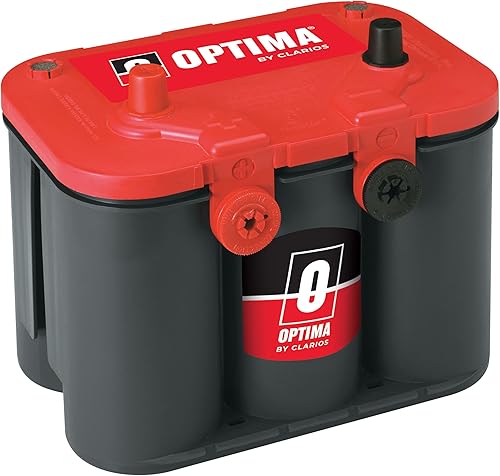
The RedTop has 800 CCA, compared with 750 CCA for the YellowTop. Choose a battery that meets the vehicle's required cold cranking amps before weighing other differences.
CCA describes starting output under defined cold conditions. Our guide to what CCA means on a car battery explains how to use that number when shopping.
A larger engine or cold-weather starting requirement may make this specification especially relevant. Use the vehicle maker's guidance rather than assuming every engine needs the highest number available.
If both batteries meet the requirement, return to your electrical use. A higher cranking figure doesn't turn a starting battery into the better choice for recurring accessory discharge.
Slow cranking also deserves diagnosis before you order. Poor connections, an undercharged battery or a vehicle fault can create symptoms that a different battery model won't solve.
Does the YellowTop's extra reserve capacity matter?
The YellowTop offers 120 minutes of reserve capacity and 55 Ah C20 capacity, versus 100 minutes and 50 Ah for the RedTop. Those differences matter most when stored energy supports your use.
Reserve capacity measures how long a battery can supply a defined load before reaching a specified cutoff. It helps compare batteries under the same conditions, rather than predict your exact accessory runtime.
C20 capacity measures amp-hour capacity over a 20-hour discharge period. It describes stored charge under that condition, while CCA describes a short burst of cold starting output.
Don't read the reserve figure as a promise that your stereo or winch will run for that many minutes. Actual runtime depends on the load, battery condition, temperature and how much charge you must preserve for starting.
Nor should you divide amp-hours by an accessory's current draw and use every calculated hour. Starting needs a charge reserve, and real loads can vary throughout use.
How do the RedTop and YellowTop compare on fit?
Both have dual SAE and GM terminals and a similar footprint, but each needs a vehicle-specific fit check. Terminal choice alone doesn't confirm cable reach, polarity or secure mounting.
The RedTop measures about 10.06 x 6.94 x 7.88 in, while the YellowTop measures 10 x 6 7/8 x 7 13/16 in. Measure the tray and available height, including clearance above the terminals.
The RedTop weighs 38.8 lb and the YellowTop 43.5 lb. Plan a clear lifting path and get help if you can't safely lower the battery into its tray.
Start with the required group size; our guide to car battery group size explains what the code tells you. Check the hold-down design and any required vent connection as well.
Use our car battery group size chart to understand the options, then confirm the exact vehicle application. Don't stretch cables or improvise a loose mount to make a near match work.
What should you check before replacing your battery?
Confirm battery type, fit and charging requirements before buying either model. The owner's manual and vehicle-specific replacement guidance should lead the decision.
The current battery label is useful, but a previous replacement may have been incorrect. Compare it with the vehicle's requirements rather than copying it without checking.
Some vehicles need a battery registration or reset after replacement. Find out whether yours does before starting, so the job includes any required charging-system setup.
Also check whether the car requires AGM or a particular battery design. Our guide to whether you need an AGM battery helps explain that choice.
If the existing battery keeps going flat, identify the cause first. Our guide to why a car battery keeps dying covers the next checks before you spend money on a replacement.
How should you plan accessory power?
Plan around equipment draw, time in use and recharge opportunities, rather than battery color alone. The YellowTop's cycling role helps with the battery choice, but it doesn't size the whole electrical system.
List the equipment you use while parked, then note how long each item normally runs. Include small devices that stay connected, since a modest draw can add up over a long stop.
For equipment used with the engine running, consider the combined load. Adding a battery with more capacity doesn't increase the alternator's output.
If extended parked use is your goal, consider whether a separate accessory battery and suitable charging arrangement would better protect starting power. That system needs proper sizing, wiring and circuit protection.
Keep a realistic margin for restarting the engine. Running accessories until the starter struggles is a poor way to decide how much usable energy you have.
How should you set up either battery?
Install either model with secure mounting, correct polarity and sound connections. Follow the vehicle's replacement procedure and the battery instructions, especially if the vehicle has battery monitoring equipment.
Switch the vehicle off and remove the key before work. Keep sparks and metal tools away from exposed terminals, and use eye protection when handling lead-acid batteries.
For a conventional negative-ground vehicle, the usual sequence is negative cable off first and back on last. Follow the vehicle procedure if it specifies extra steps or access restrictions.
Inspect the tray, hold-down and cable ends before lowering in the replacement. Corroded or damaged connections need attention, and the battery should stay firmly secured after installation.
Use the correct terminal hardware and specified tightening torque. Don't force an unsuitable connector onto a post or leave an unused terminal exposed to accidental contact.
Although these batteries allow versatile mounting, confirm the approved orientation for your application. Mounting flexibility doesn't remove the need for clearance, secure restraint and compliance with installation instructions.
What care do RedTop and YellowTop batteries need?
Both need adequate charge and clean, secure connections, even though they are maintenance-free. You don't add water or open their sealed cases.
Check for loose hardware, corrosion around cable connections and signs of case damage during routine vehicle care. A secure hold-down also prevents movement that can strain cables.
Short trips can leave too little time to replace energy used during starts and accessory use. If that pattern is common, assess the state of charge and whether external charging is needed.
Use a charger compatible with AGM batteries and follow OPTIMA's instructions for the exact model. Don't select a charging mode just because its name sounds stronger or faster.
For a vehicle parked for long periods, account for the electronics that continue drawing power. A suitable maintainer can support storage care where the battery and vehicle instructions allow it.
Cycling capability doesn't make repeated full discharge harmless. Recharge promptly after substantial use, and investigate a battery that repeatedly loses charge during normal driving.
Which buying mistakes should you avoid?
Avoid choosing by one headline number or expecting either battery to correct an electrical fault. The right choice has to match the vehicle, equipment and charging pattern together.
- Choosing only by CCA: Confirm the required starting output, then consider cycling needs.
- Assuming similar size means correct fit: Check the hold-down, polarity, terminal clearance and cable reach.
- Treating reserve capacity as accessory runtime: Your equipment won't necessarily match the measurement's defined load.
- Buying capacity to cover a drain: Find out why charge is disappearing before replacing the battery.
- Expecting short drives to restore every discharge: Match your charging plan to the energy used.
- Ignoring the replacement procedure: Check for battery registration, monitoring sensors and vehicle-specific steps.
Shared technology also shouldn't decide the comparison. Both use OPTIMA SpiralCell technology, so that feature doesn't tell you which intended role fits your vehicle.
Finally, don't assume the higher-scored battery is right for every buyer. A starting-focused choice can suit ordinary demands well while a lower-scored dual-purpose choice better fits accessory use.
Final choice: Optima RedTop vs YellowTop
For Optima RedTop vs YellowTop, buy the RedTop when your compatible vehicle mainly needs starting power with basic electrical demands. Buy the YellowTop when your use calls for starting plus cycling for demanding accessories.
If both meet the starting requirement, your equipment use should break the tie. Regular draws on stored power favor the YellowTop; ordinary starting-focused use favors the RedTop.
If neither meets the fit or charging requirements, choose another battery. For other models to consider, see our guide to Optima batteries.
Frequently asked questions
What is the main difference between Optima RedTop and YellowTop?
The RedTop focuses on starting a vehicle with basic electrical demands, while the YellowTop combines starting with cycling capability for higher electrical demands. Choose by how you use electrical equipment, especially with the engine off, after confirming that the exact battery meets your vehicle's requirements.
Does the RedTop or YellowTop have more starting power?
The RedTop has the higher cold cranking amp figure: 800 CCA compared with the YellowTop's 750 CCA; both still need to meet your vehicle's starting requirements. If both qualify, use your accessory load and need for cycling capability to decide which design better matches your driving.
Which Optima battery is better for accessories?
The YellowTop is the better choice for high electrical demands and cycling; OPTIMA identifies winches, high-demand audio systems and accessory-loaded vehicles as uses for its dual-purpose design. Size the battery around the equipment you actually run, and make sure your charging system can replenish the energy you use.
Can I replace a RedTop with a YellowTop?
Yes, if the exact YellowTop model meets your vehicle's fit, starting and charging requirements; check the tray, hold-down, terminal polarity, cable reach and any required vent connection. Similar dimensions and shared terminal types are useful starting points, but neither confirms that the replacement is suitable for your vehicle.
Are the RedTop and YellowTop both AGM batteries?
Yes, both are 12-volt sealed AGM batteries with OPTIMA SpiralCell technology and maintenance-free designs; maintenance-free means you don't add water; you still need to keep connections secure and maintain the charge. Follow your vehicle's requirements and the battery's charging instructions when choosing and caring for either model.