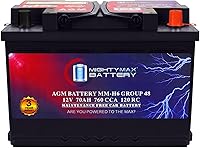
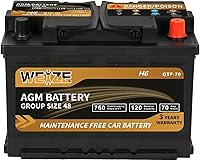
What Does AGM Stand for in an AGM Battery?
AGM stands for Absorbent Glass Mat. It describes how the battery holds its acid: a thin glass fiber mat soaks up the electrolyte instead of letting it slosh around as a liquid.
On this page (10 sections)
- What does AGM stand for in an AGM battery?
- What do the three letters describe inside the battery?
- How does an AGM battery work?
- How is an AGM battery different from a flooded battery?
- What are the advantages of AGM batteries?
- What are the drawbacks of AGM batteries?
- When should you choose an AGM battery?
- How should you charge and maintain an AGM battery?
- How do you check whether an AGM battery is still good?
- Which AGM battery and tools fit your setup?
AGM stands for Absorbent Glass Mat, and it describes the material inside the battery rather than a brand or a size. A thin mat of glass fibers soaks up the acid so it can't spill or slosh.
When someone asks what does AGM stand for in AGM battery specs, the answer is that glass mat construction, not a chemistry label like lithium.
That design is why AGM batteries show up in start-stop cars, trucks with heavy electrical loads, boats and RVs. This guide unpacks the acronym, the parts, the differences from flooded and lithium types, and the cases where AGM is the right buy.
What does AGM stand for in an AGM battery?
AGM stands for Absorbent Glass Mat, a separator that holds the electrolyte in place. Instead of sitting in a pool of liquid acid, the acid is absorbed into a fine glass fiber sheet sandwiched between the plates.
The mat keeps the acid in contact with the active plates while preventing free liquid from moving around. That lets the battery be sealed, because there's nothing loose to spill if the case tips.
The "glass" in the name is not a solid pane. It's a nonwoven web of thin glass strands, similar in feel to a dense felt.
The "mat" part refers to how that web is laid flat against the plates.
AGM batteries carry a valve that releases pressure under overcharge, which is why they're also called valve regulated lead acid, or VRLA.
What do the three letters describe inside the battery?
The three letters describe one component, not three separate technologies. Absorbent covers how the acid is held, glass names the material, and mat is the shape it takes.
- Absorbent: the acid is soaked up rather than pooled, so it can't flow freely.
- Glass: the holding material is a fine fiberglass web.
- Mat: the web is pressed into a flat sheet between plates.
The plates themselves are still lead-based, so an AGM battery is a lead-acid battery. That matters for charging and recycling.
If you've wondered is an AGM battery a lithium battery, the short answer is no: AGM is a sealed lead-acid type, and lithium refers to a different chemistry.
How does an AGM battery work?
An AGM battery works by trapping the electrolyte in the glass mat so the acid stays in contact with the plates. Charging and discharging happen the same way as any lead-acid battery, just without free liquid.
During discharge, the acid reacts with the lead plates and releases current. During charging, the current reverses that reaction.
The mat keeps the acid evenly distributed so the plates stay active.
Because the acid is held in the mat, the battery can be sealed and mounted in more positions than a flooded battery. There's no liquid to spill out of a vent.
The valve only opens if pressure builds too high.
The mat also presses against the plates, which helps hold the active material in place. That pressure is part of why AGM batteries handle vibration better than a standard flooded design.
How is an AGM battery different from a flooded battery?
The main difference is how the acid is stored: a flooded battery holds liquid acid, while AGM holds it in a glass mat. That changes the case, the mounting options and the charging needs.
Flooded batteries have open vents and need to stay upright. AGM batteries are sealed and can be mounted in more positions.
AGM is also more resistant to vibration and can cycle deeper without as much wear.
Flooded batteries are usually cheaper to buy. AGM batteries cost more because of the mat and the sealed build, but they often last longer in demanding use.
For a start-stop engine or a truck with winches and extra lights, the extra cost can pay back.
AGM batteries also self-discharge more slowly than flooded types when stored. That makes them a better fit for seasonal equipment like boats and RVs that sit for weeks.
What are the advantages of AGM batteries?
AGM batteries bring spill-proof sealing, strong vibration resistance and deep-cycle capability in one package. Those three traits cover most of why people choose them.
The sealed case means no acid leaks if the battery tips. That matters in off-road vehicles, boats and anything that sees rough movement.
It's also why AGM batteries are common in vehicles where the battery sits in the cabin or trunk.
The glass mat holds the plates firmly, so AGM batteries resist vibration better than flooded ones. Owners of trucks and off-road rigs often want that durability.
You can see the fit in our guide to the AGM car battery options built for heavy use.
AGM batteries also handle deeper discharges. A flooded starting battery doesn't like being run down, while an AGM can cycle down further and recover.
That's useful for trolling motors, winches and accessories that draw power with the engine off.
What are the drawbacks of AGM batteries?
The main drawbacks are higher cost and stricter charging needs. AGM batteries don't forgive overcharging as easily as flooded ones.
Overcharging a sealed battery can dry out the mat and shorten its life. A charger that doesn't match the AGM profile may push too much voltage.
A smart charger with an AGM setting avoids that problem.
AGM batteries also cost more up front. The longer service life in demanding use can close that gap.
If your car only needs a basic starting battery and never runs accessories with the engine off, a flooded battery may be the smarter spend.
AGM batteries aren't a universal upgrade, either. Some vehicles charge at a voltage tuned for flooded batteries and need a setting change or a battery registered to the car.
Check your owner's manual before swapping.
When should you choose an AGM battery?
Choose AGM when your vehicle or equipment needs sealed mounting, vibration resistance or deep cycling. That covers start-stop cars, trucks with winches and lights, boats, RVs and off-road rigs.
If you're weighing the swap, our guide on do I need an AGM battery walks through the signs that point to yes. A car with a start-stop system or a heavy accessory load is a strong candidate.
The OPTIMA RedTop 34/78 is a sealed AGM starting battery built for that kind of use. It's a 12-volt unit with 800 cold cranking amps, dual SAE and GM posts, and a 50 amp-hour capacity.
OPTIMA uses a spiral-wound cell design and says the battery is 15 times more resistant to vibration than a standard flooded one. It measures about 10.06 inches long, 6.94 inches wide and 7.88 inches tall and weighs 38.8 pounds, so check your battery tray before ordering.
For a closer look at a sealed AGM option, the ACDelco AGM battery review covers a different build in the same family.
How should you charge and maintain an AGM battery?
Charge an AGM battery with a charger set to its AGM profile, and keep it topped up when the vehicle sits. Matching the charge voltage protects the glass mat from drying out.
The NOCO GENIUS5 handles 6-volt and 12-volt lead-acid batteries, including AGM, gel and flooded types. It adjusts its charge based on ambient temperature and can charge a battery from as low as 1 volt.
NOCO says pulse charging helps reverse sulfation, and the unit is rated for batteries up to 120 amp-hours. Leave it connected for maintenance and it monitors the battery without overcharging.
Avoid draining an AGM battery flat when you can, and recharge it soon after a deep discharge. If the battery lives in a vehicle that sits for weeks, a maintainer beats a jump start.
How do you check whether an AGM battery is still good?
Check an AGM battery with a load test, not just a voltage reading. A resting voltage can look fine while the battery still fails under starting load.
The TOPDON BT200 is a 12-volt and 24-volt load tester rated for 100 to 2000 CCA. It works on flooded, AGM, gel and deep-cycle batteries and runs a cranking test plus a charging system test.
The color display shows a Good or Replace prompt, and TOPDON says it operates from -4°F to 140°F.
Test before a long trip or a cold snap. A weak AGM battery often shows up as slow cranking first.
If the tester flags it for replacement, compare fresh AGM options before the old one fails completely.
Which AGM battery and tools fit your setup?
Pick AGM when you need a sealed, vibration-resistant battery for a start-stop car, truck, boat or RV. Pick a flooded battery for a basic car with no extra electrical load and a tighter budget.
For the battery itself, the OPTIMA RedTop 34/78 is the sealed AGM starting option here, with 800 CCA and dual posts. Pair it with the NOCO GENIUS5 so charging stays on the AGM profile.
Use the TOPDON BT200 to confirm the battery still holds up under load before you trust it on a cold morning.
So what does AGM stand for in AGM battery shopping? It stands for Absorbent Glass Mat, and that build is the reason to buy one: no spills, less vibration damage and deeper cycling.
Match the case size and terminals to your vehicle, charge it on the right setting, and an AGM battery earns its higher price in the right application.
Frequently asked questions
Is an AGM battery the same as a gel battery?
No. Both are sealed lead-acid designs, but AGM uses a glass fiber mat to hold the acid, while a gel battery thickens the electrolyte into a paste.
They charge at different voltages, so use a charger with a setting for the type you own.
Can I put an AGM battery in a car that came with a regular battery?
Often yes, as long as the case size and terminal layout match the original. Check the vehicle's requirements first, because some cars charge at a voltage tuned for flooded batteries and may need a setting change or a battery registered to the car.
Do AGM batteries need a special charger?
They need a charger that offers an AGM mode or an AGM-compatible profile. A smart charger that senses battery type and adjusts voltage is the safe choice, since a plain trickle charger can overcharge a sealed battery.
Why are AGM batteries more expensive than flooded ones?
The glass mat and the sealed construction cost more to build. That extra build is what gives AGM its spill-proof case, its higher vibration resistance and its ability to cycle deeper than a standard flooded battery.
How long does an AGM car battery last?
Many AGM batteries are built to last longer than flooded types, and makers often quote up to about twice the cycle life. Real lifespan depends on charging habits, heat and how deeply the battery gets drained.
What does the acronym VRLA mean next to AGM?
VRLA stands for Valve Regulated Lead Acid, a family that includes both AGM and gel batteries. The valve releases pressure if the battery is overcharged, which is why these batteries can be sealed and mounted in more positions.