How Long Does a Car Battery Last?
How long does a car battery last? Usually 3 to 5 years, with heat, repeated short trips, long parking periods, and charging faults often shortening its life.
On this page (9 sections)
- How long does a car battery last in normal use?
- What shortens a car battery's life?
- What are the signs that a car battery is wearing out?
- How can you check a battery before replacing it?
- Does an AGM battery last longer than a flooded battery?
- How do you choose a replacement that will fit?
- What should you do when installing a new battery?
- How can you help a car battery last longer?
- How do you decide whether to keep or replace your battery?
A car battery usually lasts 3 to 5 years, though heat, frequent short trips, and charging faults can shorten its life. To judge how long a car battery will last in your vehicle, check its age, starting behavior, and condition together.
A healthy older battery may still serve you well. A newer one that keeps losing charge needs diagnosis before you spend money on a replacement.
How long does a car battery last in normal use?
Expect about 3 to 5 years from a typical car battery, with regular condition checks becoming more useful as it ages. Neither its birthday nor one successful start tells you how much useful life remains.
Look for an installation sticker or receipt first. A date stamped into the case may show when the battery was made, which can be earlier than when it went into service.
If the date code is unclear, ask a repair shop to decode it. Keep the replacement receipt and record the installation date so the next decision is easier.
How long can a car battery last in a rarely driven car?
A rarely driven car can need a battery sooner because time parked doesn't stop charge loss. Alarm systems, clocks, and other electronics can keep drawing power with the engine off.
Briefly idling the car isn't a dependable way to restore a low battery. For extended storage, follow the vehicle manual and consider a compatible maintainer designed for continuous connection.
What shortens a car battery's life?
Heat and repeated low-charge use are major causes of early wear. Cold weather often exposes an already weak battery because starting the engine becomes harder.
High heat speeds up internal chemical wear. Frequent short trips can leave the battery partly discharged because each start uses energy that a brief drive may not replace.
Leaving lights or accessories on can cause a deep discharge. Repeated deep discharges are especially hard on a starter battery, which is built to deliver short bursts of power.
A charging fault or unwanted electrical drain can cause the same symptoms as an aging battery. If trouble keeps returning, use our guide to why a car battery keeps dying before buying another one.
What are the signs that a car battery is wearing out?
Slower cranking and repeated jump-starts are reasons to arrange a battery health check. Loose connections, corrosion, starter faults, and charging problems can produce similar symptoms.
Notice changes from your car's normal starting behavior. A battery warning light while driving usually points toward the charging system and needs prompt attention.
A swollen case, leakage, or damaged terminals calls for professional inspection. Don't charge or jump-start a swollen, leaking, damaged, or frozen battery.
If the engine turns at its normal speed but won't fire, the battery may not be the cause. Avoid replacing it solely because the car won't start.
How can you check a battery before replacing it?
Use a battery health check plus cranking and charging-system checks to separate battery wear from a vehicle fault. Resting voltage shows charge level, but it doesn't fully reveal starting ability.
If the battery is low, follow the diagnostic instructions for charging and checking it again. A discharged battery isn't automatically a failed battery, and repeated discharge still needs an explanation.
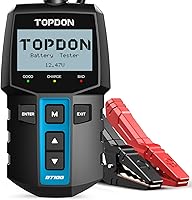
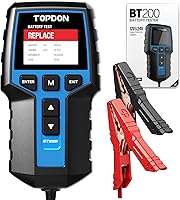
Who should buy the Topdon BT100?
The Topdon BT100 Battery Load Tester suits drivers who want to check several vehicles or follow battery condition over time. It supports compatible 12V lead-acid batteries from 100 to 2000 CCA, including flooded, AGM, EFB, and GEL types.
Connect its clamps to clean terminals as instructed, then enter the correct battery type, rating standard, and labeled value. Incorrect settings or poor clamp contact can lead to misleading results.
The BT100 draws power from the connected battery and doesn't recharge it. Skip it if you need a charger, need support for another battery chemistry, or prefer a shop to interpret the results.
Follow how to test a car battery at home for the process. Treat any result as a condition check, not a prediction of the exact month the battery will fail.
Does an AGM battery last longer than a flooded battery?
AGM can offer better cycle capability, but it doesn't guarantee a longer calendar life. Correct fit, charging, and vehicle requirements matter more than buying an AGM label alone.
AGM batteries hold electrolyte in glass mats and suit many vehicles with start-stop systems or larger electrical loads. Keep AGM where the vehicle requires it rather than substituting a conventional flooded battery.
For a car that permits a flooded battery, weigh your driving needs before upgrading. Our AGM car battery buying guide explains the choices, while what CCA means on a car battery covers cold-start capability.
How do you choose a replacement that will fit?
Match battery type, group size, terminal layout, and required performance before comparing brands. Extra starting power can't make an incorrectly sized battery safe to install.
Check the owner's manual or a vehicle-specific fit guide, then compare the battery tray, hold-down, cable reach, and clearance above the terminals. Never force cables into position or let a terminal approach the hood.
Our car battery group size chart helps explain size labels. Use how to choose a car battery to work through the full selection process.
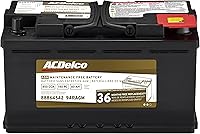
When does the ACDelco Gold 48AGM make sense?
The ACDelco Gold 48AGM suits owners whose vehicles call for a Group 48/H6 AGM replacement. ACDelco backs it with a 36-month free-replacement limited warranty, making the coverage worth checking before ordering.
Its construction includes a puncture-resistant separator and a vent cap designed to resist acid leakage. These features don't remove the need to keep the battery secure and the charging system working correctly.
Skip it if your vehicle requires another size or terminal arrangement. Don't assume its shared group label makes it interchangeable with every other battery without checking actual fit.
Who should choose the Weize Platinum Group 35 AGM?
The Weize Platinum Group 35 AGM suits compatible Group 35 vehicles needing an AGM starter battery. It has 55 Ah capacity and 650 CCA, so compare those figures with your vehicle's requirements.
Confirm overall height before ordering because Weize publishes conflicting height measurements. Check terminal positions too, using the same viewing orientation when comparing your current battery.
Skip this model if your vehicle needs more starting power or a different group size. It is an automotive starter battery, so don't choose it for deep-cycle solar storage or marine house loads.
Who should choose the UPLUS Group 48 AGM?
The UPLUS Group 48 AGM suits compatible start-stop vehicles with higher electrical demands. Its 70 Ah capacity, 760 CCA, and 120-minute reserve capacity give buyers clear figures to compare with vehicle requirements.
UPLUS designs it for frequent short trips, stop-and-go use, and vehicles that sit between drives. That makes it relevant to those driving patterns, but short trips can still leave any starter battery undercharged.
Skip it if your car requires a different size or battery type. UPLUS's cycle-life claims don't translate into a fixed number of years in your car.
What should you do when installing a new battery?
Follow the vehicle's replacement procedure, including any required battery registration or charging-system reset. Some cars need these steps to manage the new battery correctly.
Check whether disconnecting power affects security codes or vehicle settings before starting. On a typical negative-ground vehicle, the negative cable comes off first and goes back on last, but the manual takes priority.
Secure the hold-down, protect the terminals from accidental tool contact, and reconnect any required vent tube. Ask a technician to handle the job if access, lifting, or electronic setup is difficult.
How can you help a car battery last longer?
Keep it properly charged, securely mounted, and clean at the connections. These habits reduce avoidable wear, though they can't reverse aging inside the battery.
Combine brief errands when practical and avoid running accessories for long periods with the engine off. A deeply discharged battery may need a compatible charger rather than a long drive.
Use an AGM-compatible charging mode where required. Follow the charger instructions, and don't leave a basic charger connected indefinitely unless it supports that use.
Have recurring corrosion, loose connections, and abnormal charging checked. Keep the receipt and warranty details, and send the old battery to an approved recycling or return point.
How do you decide whether to keep or replace your battery?
Keep a healthy battery, diagnose repeated discharge, and replace a failing or damaged one. If you depend on the car far from help, planned replacement of an older battery may be worth considering before a major trip.
When deciding how long a car battery will last, use its condition and your driving needs rather than age alone. Choose ACDelco or UPLUS only for a compatible Group 48 application, Weize for a compatible Group 35 application, and the BT100 if you want repeat condition checks.
Before buying a replacement for unexplained starting trouble, start with how to test a car battery at home. Finding the cause helps protect both your next start and your next battery.
Frequently asked questions
How long does a car battery usually last?
A car battery usually lasts about 3 to 5 years; heat, repeated short trips, long parking periods, and charging faults can shorten that span, so use age as a planning guide rather than a replacement deadline. Check its condition during routine service and arrange a battery health check if cranking slows.
Should I replace a car battery after 3 years?
No, age alone doesn't mean a battery needs replacement; around 3 years, start paying closer attention to its condition, especially in hot climates or cars used for short trips. Replace a failing battery, and investigate repeated starting trouble so a charging fault or electrical drain doesn't damage the next one.
Can a car battery last 10 years?
A car battery can sometimes reach 10 years, but don't plan around that outcome; climate, charge level, vehicle use, and normal wear make service life hard to predict. For an unusually old battery, arrange regular condition checks and consider planned replacement if a breakdown would leave you without practical help.
Does an AGM car battery last longer?
An AGM battery can handle repeated charge cycles better than a conventional flooded battery, but that doesn't promise more years in every vehicle; heat, chronic undercharging, and electrical faults still cause wear. Keep the battery type your vehicle requires, and choose a compatible charger or maintainer when extra charging is needed.