Do I Need an AGM Battery in My Car?
You need an AGM battery when your vehicle manufacturer specifies AGM for replacement. If you're asking whether you need an AGM battery as an upgrade, confirm that your car supports it and that your driving needs justify the change.
On this page (7 sections)
You need an AGM battery when your car’s manufacturer requires AGM for replacement. If you're asking “do I need an AGM battery?” as an optional upgrade, check compatibility and your driving needs before spending more.
AGM stands for absorbed glass mat. It holds electrolyte in glass mat separators and suits applications that need repeated starts and electrical support while the engine is off.
It won't fix a failing alternator, loose connection, or device draining power overnight. Choose the right battery type first, then address why the old battery struggled.
Do I need an AGM battery for my car?
Use AGM if your vehicle requires it; otherwise, AGM is an option only when approved for your car. The manual or vehicle-specific service guidance should settle the type before you compare brands.
Start-stop systems can place repeated demands on a battery as the engine shuts down and restarts. Some use AGM, while others use enhanced flooded batteries, called EFB, so the start-stop button alone isn't enough to choose.
AGM can also suit vehicles with electrical loads that continue during engine stops. Added equipment needs a separate power assessment, especially if you run it for long periods with the engine off.
For a car designed for a conventional flooded battery and used mainly for ordinary driving, a correctly matched flooded replacement may be enough. Our AGM car battery guide explains where AGM fits among the choices.
Can I switch from AGM to a regular battery?
Switch only when the vehicle manufacturer approves the alternative for your exact model. A flooded battery that fits the tray may still be unsuitable for the car’s charging strategy or cycling demands.
Don't downgrade simply because you rarely use start-stop or have turned it off. The battery requirement may support other vehicle functions too.
Moving from flooded to AGM also needs a compatibility check. Some vehicles need a battery-type setting changed, and an upgrade should retain the required capacity and starting power.
Read AGM vs. flooded car batteries if both types are approved and you need to weigh the differences.
How can I tell which battery my car needs?
Confirm chemistry, fit, and electrical requirements using your vehicle’s year, make, model, engine, and relevant equipment. Use the current battery label as a reference, since a previous replacement may be incorrect.
Check these details before ordering:
- Battery type: AGM, EFB, or conventional flooded, as required.
- Group size and dimensions: The case must fit the tray, hold-down, and available height.
- Terminal layout: Cables must reach the correct posts without stretching or crossing.
- Starting power and capacity: Meet the vehicle’s required CCA and capacity range.
- Vent connection: Match any required vent hose and outlet arrangement.
- Replacement procedure: Check for registration, coding, or a battery-monitor reset.
Group size helps narrow the case dimensions and terminal arrangement, but it isn't a complete fit guarantee. See what car battery group size means if you're comparing different case labels.
Don't choose by the highest CCA number alone. CCA measures cold-start capability, while amp-hours describe capacity and reserve capacity measures support under a defined discharge load.
Use what CCA means on a car battery to understand starting requirements. A battery with higher CCA can still have the wrong case, terminals, or capacity for your car.
Which AGM batteries suit different drivers?
Choose from these batteries only after confirming vehicle fit. Their case sizes and intended uses differ, so they aren't interchangeable upgrades.
Do I need an AGM battery like the ACDelco Gold 48AGM?
The ACDelco Gold 48AGM suits a driver whose vehicle calls for Group 48/H6 AGM and who values clear replacement-warranty terms. ACDelco describes it as suitable for start-stop applications.
Its vent cap is designed to resist acid leakage, and ACDelco backs it with a 36-month free replacement period under its limited warranty. Check coverage terms and the claim process before buying.
Skip it if your vehicle needs another case size or a vent connection that doesn't match. A warranty doesn't make up for an incorrect fit.
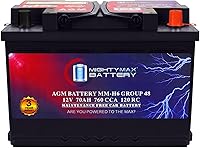
Who should consider the Mighty Max MM-H6?
The Mighty Max MM-H6 suits drivers comparing Group 48 AGM replacements against specific capacity and starting requirements. Its stated figures give you useful points to compare with your manual.
It has 120 minutes of reserve capacity and measures 10.94 x 6.88 x 7.48 inches. Its positive terminal is on the right, so verify orientation against your cables before ordering.
Skip it if your car needs a different capacity or mounting arrangement. Mighty Max gives conflicting warranty durations, so confirm the applicable written coverage before choosing it.
When should I consider the Optima RedTop 34/78?
The Optima RedTop 34/78 suits a compatible vehicle that needs a starting battery for basic electrical demands. Its dual SAE and GM terminals make the connection type a key part of the fit check.
It has 800 CCA, 50 Ah capacity, and 100 minutes of reserve capacity. Optima describes its SpiralCell construction as resistant to vibration, which makes it worth considering for compatible vehicles used on rough routes.
Skip this starting-focused option if your main goal is repeatedly running accessories with the engine off. AGM chemistry alone doesn't turn a starting battery into a deep-cycle power source.
Who should choose the Mighty Max MM-G35?
The Mighty Max MM-G35 suits a vehicle that accepts Group 35 AGM and matches its electrical requirements. It offers 55 Ah, 650 CCA, and 100 minutes of reserve capacity.
It measures 9.06 x 6.89 x 8.82 inches, with the positive terminal on the right. Check hood clearance and hold-down fit rather than assuming the Group 35 label settles every detail.
Skip it if your vehicle requires Group 48/H6 or another unapproved size. Mighty Max also gives conflicting warranty durations for this model, so confirm coverage before ordering.
What should I check before installing an AGM battery?
Follow the vehicle-specific replacement procedure, including any registration or coding requirements. Some cars need the battery management system told that a new battery has been fitted, while others also need its type or capacity entered.
Before removal, switch the vehicle off and follow its shutdown instructions. Wear eye protection, remove metal jewelry, and keep tools from bridging the positive terminal to body metal.
For a conventional negative-ground vehicle, disconnect negative first and reconnect it last, unless the service procedure directs otherwise. These batteries are heavy, so use a suitable handle or get help lifting them safely.
Secure the hold-down and reconnect any required vent hose. Don't assume a sealed AGM battery can skip ventilation or be installed in any position.
If access is difficult or the car needs electronic setup, arrange installation with someone who can complete those steps. Our start-stop battery guide explains the replacement needs worth checking for those vehicles.
How do I care for an AGM battery?
Keep it charged, secured, and clean, and use charging equipment approved for AGM batteries. Maintenance-free means you don't add water; it doesn't mean you can ignore connections or charge level.
Frequent short trips may not replace all the energy used to start the engine. For infrequent driving or storage, use a compatible maintainer according to the battery, charger, and vehicle instructions.
Use the designated charging points where the vehicle requires them, especially with battery monitoring systems. Don't select a high-voltage repair or equalization mode unless the battery manufacturer expressly permits it.
Avoid repeated deep discharge, even if a battery promises discharge recovery. Turn off accessories when parked and investigate any recurring loss of charge.
Have a weak battery checked before replacing it. Our guide to how to test a car battery at home covers initial checks, while why a car battery keeps dying helps you trace repeat failures.
How can I decide if I need an AGM battery?
Choose AGM when your vehicle requires it; keep an approved flooded battery when it meets your needs. An optional AGM upgrade makes sense only after you confirm charging compatibility, fit, and replacement setup.
If you're still asking whether you need an AGM battery, settle the required type before choosing a brand. Then compare compatible models by capacity, starting requirements, connections, warranty terms, and installation needs.
For a vehicle that accepts either type, use our AGM vs. regular car battery guide to decide whether the upgrade fits how you drive.
Frequently asked questions
Do I need an AGM battery if my car came with one?
Keep AGM when your vehicle manufacturer requires it; the charging system and battery monitoring may depend on that type, so confirm the original requirement rather than relying only on the installed battery. A previous replacement could be wrong; check the manual or vehicle-specific service guidance before ordering.
Can I replace an AGM battery with a regular battery?
Only switch if your vehicle manufacturer approves a flooded battery for your exact model; matching the case size and starting power is not enough because charging and repeated cycling needs also matter. Follow any required battery registration or coding steps, even when the replacement fits the original tray.
Does every start-stop car need an AGM battery?
No, some start-stop cars use an enhanced flooded battery, often labeled EFB, while others require AGM; follow the requirement for your exact vehicle rather than choosing by the start-stop feature alone. If you're considering an EFB-to-AGM upgrade, confirm that the vehicle supports it and whether coding is needed.
How do I know if my car has an AGM battery?
Look for AGM or absorbed glass mat on the battery label; a sealed case or maintenance-free wording alone doesn't identify AGM, since other battery types can share those features. If the label is unreadable, have a battery shop identify it and confirm the correct replacement against your vehicle's requirements.