10 Best Car Battery Testers (November 2026)
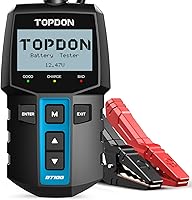
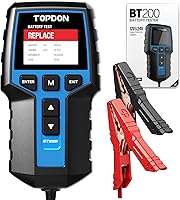
The best car battery testers include the Topdon BT200 Battery Load Tester for mixed vehicle garages, the Topdon BT100 Battery Load Tester for occasional car checks, and the Topdon BT300P Battery Load Tester for garage service records.
On this page (7 sections)
- Which best car battery tester fits your garage?
- How do you choose a compatible battery tester?
- What can battery, cranking and charging results tell you?
- How should you set up a battery check?
- Which mistakes lead to misleading results?
- How do you care for a car battery tester?
- Which best car battery tester should you buy?
The best car battery tester for most drivers is the Topdon BT200 Battery Load Tester, because it covers battery health, cranking and charging across compatible 12V and 24V vehicles. Choose the BT100 for occasional car checks or the BT300P if you need paper records.
A useful tester helps you decide what to do next: recharge the battery, investigate the starting or charging system, or consider replacement. Buying the right one starts with your battery label and how you plan to use the tool.
Our picks at a glance
-
1

-
2

-
3

- 4
 Check it
Motopower MP0515A Battery Load Tester
Best for routine garage maintenance - 5
 Best for solo fleet checksCheck it
- 6
 Check it
Topdon BT50 Battery Load Tester
Best for tracking battery changes - 7
 Best for detail-minded car ownersCheck it
- 8
 Check it
Konnwei KW208 Battery Load Tester
Best for multilingual households - 9
 Best for solo driveway checksCheck it
- 10
 Check it
Schumacher BT-100 Battery Load Tester
Best for older vehicle garages
Which best car battery tester fits your garage?
Choose the BT200 for mixed vehicle coverage, then look at the specialist picks if you need printed receipts, extra cable reach or support for an older 6V vehicle. All 10 choices have a role, but voltage and battery compatibility come before convenience features.
We compared supported batteries, available checks and the practical details that affect use under the hood. The order favors broad usefulness, while the badges point to buyers whose needs may make a lower-ranked option the better choice.
| Product | Best for | System voltage | Battery range | Test functions | Our score |
|---|---|---|---|---|---|
| Topdon BT200 Battery Load Tester | mixed vehicle garages | 12V and 24V | 100–2000 CCA | Battery, cranking and charging | 8.7 |
| Topdon BT100 Battery Load Tester | occasional car checks | 12V | 100–2000 CCA | Battery, cranking and charging | 8.6 |
| Topdon BT300P Battery Load Tester | garage service records | 12V battery; 12V and 24V systems | 100–2000 CCA | Battery, cranking and charging | 8.4 |
| Motopower MP0515A Battery Load Tester | routine garage maintenance | 12V | 100–2000 CCA | Battery, cranking and charging | 8.3 |
| Foxwell BT705 Battery Tester | solo fleet checks | 12V and 24V | 100–2000 CCA | Battery, cranking and charging | 8.2 |
| Topdon BT50 Battery Load Tester | tracking battery changes | 12V | 100–2000 CCA | Battery, cranking and charging | 8.1 |
| Ancel BA101 Battery Tester | detail-minded car owners | 12V | 100–2000 CCA | Battery, cranking and charging | 7.9 |
| Konnwei KW208 Battery Load Tester | multilingual households | 12V | 100–2000 CCA | Battery, cranking and charging | 7.9 |
| Foxwell BT301 Battery Tester | solo driveway checks | 12V | 100–2000 CCA | Battery, cranking and charging | 7.8 |
| Schumacher BT-100 Battery Load Tester | older vehicle garages | 6V and 12V | Up to 1,000 CA | Battery, charging and starter draw | 7.6 |
Topdon BT200 Battery Load Tester: Best for mixed vehicle garages
- 12V and 24V lead-acid battery checks
- 100–2000 CCA range
- Battery, cranking and charging checks
- Color display and last-result memory
Choose the BT200 for a garage with different vehicle types. Its broad voltage coverage, color display and last-result memory support regular battery and vehicle-system checks.
Pros
- 12V and 24V coverage
- Sunlight-readable color display
- Recalls the last result
Cons
- Battery range starts at 100 CCA
- No printed receipts
The BT200 suits a garage that includes a car plus other vehicles or equipment. It supports 12V and 24V lead-acid batteries from 100 to 2000 CCA, including flooded, AGM, GEL and deep-cycle types.
Its 2.4-inch color screen is designed for reading in sunlight, and plain Good or Replace prompts help you act on the result. Last-result memory is useful when you want to look back after moving away from the battery.
Buy it when you want battery and vehicle-system checks in one tool with room for different vehicles. TOPDON specifies an operating range of -4°F to 140°F, which also makes it worth considering for an unheated garage.
Skip it if your needs stop at an occasional check on one ordinary car and you prefer a smaller tool. Our step-by-step car battery guide explains how to prepare the battery and work through the results.
Topdon BT100 Battery Load Tester: Best for occasional car checks
- 12V lead-acid batteries
- 100–2000 CCA range
- Battery, cranking and charging checks
- Three-color LED indicators
The BT100 suits drivers who want a compact tool for occasional checks. Three-color indicators offer a quick cue, while menus show more detailed battery readings.
Pros
- Compact body
- Draws power from the connected battery
- Copper clamps with reverse polarity protection
Cons
- 12V batteries only
- Battery range starts at 100 CCA
The BT100 is the straightforward choice for occasional checks on compatible 12V vehicles. Its 5.3 x 3 x 1 in body fits the buyer who wants a tool that stores easily between uses.
Three LED colors provide a quick condition cue, while the menu gives access to health, charge and other readings. It draws power from the connected battery, so there is no separate device battery to remember to charge.
Choose it before a long drive, after storage or when starts begin to slow. Battery, cranking and charging functions let you follow up on a weak-start complaint without stopping at a resting-voltage reading.
Skip it for a garage that needs 24V coverage or paper records. Its compact size is the reason to choose it over a more elaborate model, rather than buying extra features you will rarely use.
Topdon BT300P Battery Load Tester: Best for garage service records
- 12V lead-acid battery checks
- 12V and 24V cranking and charging checks
- Built-in thermal printer
- Color screen
The BT300P produces paper receipts for maintenance files or shop work. Its battery-health function covers 12V batteries, while cranking and charging checks also cover 24V systems.
Pros
- Prints diagnostic receipts
- Thermal printer needs no ink
- Includes carrying bag and printer paper
Cons
- Requires thermal paper refills
- Print function works only on 12–16V cars
The BT300P suits a shop, shared garage or organized owner who wants a printed diagnostic receipt. A paper record gives you something to attach to a maintenance file or hand to another person.
Its thermal printer uses standard thermal paper without ink cartridges or ribbons. Keep spare paper nearby, and copy important receipts into a longer-term record because thermal prints can fade with heat and age.
Pay attention to the split between functions: battery-health checks cover 12V batteries, while cranking and charging checks support 12V and 24V systems. Printing works only on 12–16V cars, so this is not an all-purpose 24V printing tool.
Skip it if you only need an on-screen answer a few times a year. Its broader system checks can help investigate why a car battery keeps dying, but a printer adds little if you never keep records.
Motopower MP0515A Battery Load Tester: Best for routine garage maintenance
- 12V lead-acid batteries
- 100–2000 CCA range
- Battery, cranking and charging checks
- Health, charge and resistance readings
The MP0515A suits routine maintenance on compatible vehicles and equipment. It combines battery readings with cranking-voltage and charging-system checks.
Pros
- Reports internal resistance
- Supports flooded, AGM, GEL and EFB batteries
- Accepts several battery rating standards
Cons
- 12V batteries only
- Battery range starts at 100 CCA
The MP0515A suits routine garage maintenance when you want to see more than a replace-or-recharge message. It reports state of health, state of charge and internal resistance, alongside cranking-voltage and charging-system checks.
It works with flooded, AGM flat plate, AGM spiral, GEL and EFB lead-acid batteries. Support for several rating standards helps when different batteries in your garage use different label formats.
Choose it if you are comfortable reading the battery label and using the results to plan a follow-up check. Charge and health are separate questions, so having both readings helps you avoid treating every low-charge result as a failed battery.
Skip it if your main need is a printed receipt, historical review or 24V coverage. The BT300P, BT50 and BT200 address those needs more directly, while this model focuses on the usual 12V battery and system checks.
Foxwell BT705 Battery Tester: Best for solo fleet checks
- 12V and 24V lead-acid batteries
- 100–2000 CCA range
- Guided battery and system checks
- 5.9 ft cable and hard case
The BT705 combines broad voltage coverage with a long cable and guided prompts. Its hard case suits users who move the tool among vehicles.
Pros
- 12V and 24V coverage
- Long cable supports solo cranking checks
- Includes a hard carrying case
Cons
- Battery range starts at 100 CCA
- Driver-seat reach depends on battery location
The BT705 suits someone who works alone across cars, trucks or other compatible vehicles. Its 5.9 ft cable gives you more freedom to follow starting prompts while keeping the clamps connected.
Guided checks and a 2.8-inch screen lead you through battery health, cranking and charging. Good, Recharge and Replace results are useful when you want a clear next step alongside the numbers.
The hard carrying case is a practical reason to choose it for a tool that moves between vehicles or storage locations. It keeps the tester organized instead of leaving its cable and clamps loose in a toolbox.
Skip it if all you need is a small device for rare checks on one car. Before buying for solo use, measure a safe cable route from the battery toward the driver's seat; battery location can matter more than vehicle size.
Topdon BT50 Battery Load Tester: Best for tracking battery changes
- 12V lead-acid batteries
- 100–2000 CCA range
- Battery, cranking and charging checks
- Historical results review
The BT50 suits drivers who want to review earlier results during routine checks. Its small body and one-button operation keep the tool easy to store and use.
Pros
- Reviews historical results
- Six interface languages
- Reverse polarity protection
Cons
- 12V batteries only
- Cannot complete a check below 8V
The BT50 suits drivers who want to review historical results rather than rely on memory. That makes it useful for checking whether a battery's condition is changing over time.
Its one-button operation and six language choices suit a simple routine: connect, enter the right information, check and review. The body measures 4.9 x 2.6 x 0.7 in, so storage space is unlikely to drive the decision.
Use a separate note to record dates, charge state and any starting symptoms. Comparable conditions make a change in readings more useful than comparing a freshly charged battery with one left sitting for weeks.
Skip it if your main concern is a deeply discharged battery: the BT50 stops below 8V. That message calls for a safe charging assessment, not repeated attempts to force a result from a battery that cannot power the tool.
Ancel BA101 Battery Tester: Best for detail-minded car owners
- 12V lead-acid batteries
- 100–2000 CCA range
- SOH, SOC, voltage, current and CCA readings
- Adjustable screen contrast and backlight
The BA101 suits drivers who want several readings alongside a condition result. Check its capacity restrictions carefully before choosing it for a motorcycle.
Pros
- Detailed battery readings
- Adjustable contrast and white backlight
- Reverse polarity, short-circuit, overcurrent and overvoltage protection
Cons
- Not for lithium, 6V, 8V or 24V batteries
- Not for motorcycle batteries below 30Ah
The BA101 suits drivers who want detailed numbers and are willing to enter the battery information carefully. Its readings include SOH, SOC, voltage, current and CCA, with cranking and charging checks for follow-up.
Adjustable contrast and a white backlight let you tailor its black-and-white screen to the light around you. Direct battery power means you can take it out of storage without first charging the device.
Choose it for compatible flooded, AGM, GEL or EFB batteries when the label is readable and you want to understand the result. Enter the requested type, rating and temperature correctly rather than accepting a convenient default.
Skip it for lithium batteries, other system voltages or motorcycle batteries below 30Ah. If you are weighing battery condition against age, our guide to how long a car battery lasts explains the factors that affect replacement timing.
Konnwei KW208 Battery Load Tester: Best for multilingual households
- 12V batteries
- 100–2000 CCA range
- Battery, cranking and charging checks
- Eight interface languages
The KW208 offers eight language options for households sharing one tool. It checks compatible batteries both in and out of the vehicle.
Pros
- Eight language options
- In-vehicle and out-of-vehicle checks
- Reports voltage, resistance, CCA, health and charge
Cons
- 12V batteries only
- Confirm exact battery chemistry before use
The KW208 is useful for households sharing a tool across different language preferences. Its eight interface languages give it a clear role beyond the usual battery and system functions.
It reports voltage, internal resistance, CCA, amp-hour capacity, health and charge status. You can check a compatible battery in the vehicle or on a suitable work surface after removal.
Choose it for common 12V lead-acid applications when language choice matters more than paper records or a long cable. Flooded, AGM flat plate, AGM spiral and GEL batteries are among its supported types.
Skip it for other system voltages, and confirm exact chemistry support before using it with lithium. Do not buy solely because a tool accepts an amp-hour entry; a quick analyzer result is different from a controlled discharge measurement of usable capacity.
Foxwell BT301 Battery Tester: Best for solo driveway checks
- 12V lead-acid batteries
- 100–2000 CCA range
- Battery, cranking and charging checks
- 2.8-inch color screen and 6.5 ft cable
The BT301 suits a driver working alone who wants readable results near the driver's seat. It needs no app or separate internal battery.
Pros
- Color screen with plain condition results
- Long cable
- Includes a carrying bag
Cons
- 12V batteries only
- Not designed for lithium batteries
The BT301 suits a driver who wants to perform cranking checks alone on a compatible 12V vehicle. Its 6.5 ft cable and 2.8-inch color screen put the emphasis on reach and readable results.
It shows battery health, charge, CCA, voltage and internal resistance, then gives a condition result such as Good, Recharge or Replace. There is no app to pair and no separate internal battery to maintain.
Choose it if your battery sits far enough from the driver's seat that a short handheld cable would be awkward. The included carrying bag also gives the cable and clamps a place to go between checks.
Skip it for lithium batteries or a garage needing 24V coverage. Route the lead clear of moving parts, and do not assume a long cable makes every battery location reachable from the seat without tension.
Schumacher BT-100 Battery Load Tester: Best for older vehicle garages
- 6V and 12V batteries
- Up to 1,000 CA
- Analog meter
- Battery, charging and starter draw checks
The BT-100 suits garages that need 6V coverage and prefer a direct load check. Its analog meter and rocker switch use a different approach from digital battery analyzers.
Pros
- Supports 6V batteries
- Applies a direct electrical load
- Steel case with insulated carrying handle
Cons
- Battery range tops out at 1,000 CA
- Requires attention to load duration and cooling
The Schumacher BT-100 suits older vehicle garages that need 6V support and prefer an analog meter. It applies a direct electrical load rather than presenting the menu-led analysis used by the digital choices.
It supports batteries up to 1,000 CA, using a 50-amp load for 6V batteries and a 100-amp load for 12V batteries. A rocker switch controls operation, and the tool also covers charging-system performance and starter motor draw.
Choose it if you understand load duration and want to read battery response on a visible needle meter. Its steel case and rubber-insulated handle fit bench or garage storage.
Skip it if you want guided digital results, memory or automatic receipts. Follow the manual's load duration and cooling instructions exactly; holding the switch longer does not make the result more useful and can overheat a load tester.
How do you choose a compatible battery tester?
Match voltage, battery chemistry and label standard before comparing screens or storage features. A device powering on does not prove that it supports the battery you connected.
What makes the best car battery tester right for your vehicle?
The best fit covers the batteries you actually maintain. A household with one 12V car rarely needs the same voltage coverage as a garage with commercial vehicles or older equipment.
Read the battery itself rather than guessing from the vehicle badge. In vehicles with more than one battery, individual battery voltage and total system voltage may differ, so follow the vehicle and tool instructions.
AGM and EFB batteries need the correct menu choice where supported. Our AGM vs flooded battery guide helps you identify the difference before entering settings.
Match the number and the standard
Enter the battery's rated value, not a guessed figure or a previous measured result. CCA, CA, MCA, EN and other standards are not interchangeable entries.
If the label gives several figures, choose the one that matches the standard selected on the device. Our car battery CCA guide explains what the cold-cranking number means.
Also check small-battery restrictions. A tool advertised for cars and motorcycles can still exclude certain capacities, as the BA101 does.
Pay for the feature you will use
Choose cable reach for solo checks, a printer for shared records or history review for repeated maintenance. These features solve different problems, so a longer feature list does not automatically make a tool a better fit.
For repeated checks across several vehicles, easy storage and readable menus matter. For one car, compatibility and a clear result usually matter more than a printer.
What can battery, cranking and charging results tell you?
Use the three checks together to decide where to look next. Each one answers a different question, and none provides a complete diagnosis of every starting problem.
Battery health and charge are different
State of charge describes how full the battery is now, while state of health estimates its condition. A healthy battery can be discharged, and a charged battery can still have poor starting ability.
Digital conductance analyzers estimate performance from electrical behavior and the settings you enter. Their health percentage or CCA estimate is useful guidance, not a promise that the next start will succeed.
Cranking results need context
A cranking check watches battery behavior during engine startup. A poor result can point toward a weak battery, but loose connections, cable resistance or starter trouble can also affect starting.
Do not replace the starter based on one screen message. Check battery charge and connections first, then seek further diagnosis if the problem remains.
Charging results check system behavior
A charging check assesses what happens with the engine running. It can help flag abnormal output, but it does not measure every possible electrical fault.
Modern charging systems may change output with temperature, load and vehicle strategy. Use the vehicle's guidance before treating a generic voltage threshold as a firm pass-or-fail rule.
How should you set up a battery check?
Start with a safe battery, clean contact points and correct menu entries. Most avoidable errors happen before the device displays a result.
- Identify the battery. Read its voltage, chemistry, rating standard and value before connecting the tool.
- Inspect its condition. Stop if the case is cracked, leaking, swollen or appears frozen, and arrange proper service.
- Prepare the vehicle. Park securely, switch off the ignition and accessories, and follow any required rest period after driving or charging.
- Connect correctly. Follow the manual's connection points and sequence, with red to positive and black to negative.
- Enter the label information. Select the right battery type, standard and rated value, plus temperature if requested.
- Follow each prompt. Start the engine only when the selected cranking or charging procedure calls for it.
Wear eye protection, remove metal jewelry and work in a ventilated area away from flames or sparks. Keep the lead, clothing and hands clear of belts and fans during engine-running checks.
For a battery hidden under trim or in the trunk, check the vehicle manual for approved access points. Remote jump terminals may be convenient, but added cable resistance can affect a battery-health reading.
Which mistakes lead to misleading results?
The biggest mistakes are wrong settings, poor clamp contact and checking a discharged battery without follow-up. Correct those before spending money on a replacement.
Treating low charge as battery failure
A low-charge result tells you the battery needs attention, not necessarily replacement. If the battery is safe to charge, use a compatible charger and repeat the check as directed.
If it soon loses charge again, investigate the cause. Short trips, a charging fault or a key-off drain can leave a good battery unable to start the car.
Clamping onto corrosion or loose hardware
The tool needs solid electrical contact, not just a clamp that stays attached. Corrosion, paint and loose connections can distort the reading.
If results change sharply between attempts, inspect the connection and repeat with the same settings. Do not average conflicting numbers before fixing the source of the variation.
Comparing unlike conditions
A reading taken immediately after charging can differ from one taken after storage. Record when you checked, whether you charged first and what symptoms led you to connect the tool.
A history log helps identify a pattern, but one favorable result cannot guarantee future reliability. Recheck when starting behavior changes.
Expecting a tester to find every drain
A charging-system check does not automatically locate an accessory that stays awake overnight. Finding a key-off drain usually needs a separate diagnostic process.
Avoid disconnecting the battery casually on a modern vehicle. Lost settings and battery-management procedures can turn a simple check into extra work.
How do you care for a car battery tester?
Keep the clamps clean, cables intact and tool dry so poor connections do not undermine future checks. Storage matters most when the device sits unused for months.
Inspect insulation and clamp joints before use, and remove the tool from service if conductors are exposed. Clean it according to its manual, then coil the cable loosely without sharp bends at the handle or clamps.
Keep thermal paper away from heat and save important receipts as photos or notes. Allow an analog load tester to cool as instructed before storage or another load cycle.
Which best car battery tester should you buy?
Buy the BT100 for occasional checks on one compatible car, or step up to the BT200 when your garage needs broader coverage. Those are the clearest starting choices if you do not need a specialist feature.
Choose the BT300P for paper records, the BT705 for solo work across different system voltages, or the BT301 for extra reach on a 12V vehicle. The Schumacher fits older garages needing a direct load check and 6V support.
Before ordering the best car battery tester for your needs, photograph your battery label and match every required setting. If the results point toward replacement, use our car battery group size guide to check fit and how to choose a car battery to plan the next purchase.
Our top 3 picks at a glance
-
1
-
2
-
3
Frequently asked questions
What does a car battery tester check?
A car battery tester checks battery condition, while models with cranking and charging functions also assess behavior during starting and engine operation. Results help separate low charge from possible battery or vehicle-system trouble; they guide your next step, but they do not identify every wiring fault or drain.
Is a battery tester the same as a multimeter?
A battery tester adds battery-focused analysis that a basic multimeter does not provide. A multimeter can measure voltage, but resting voltage alone cannot show how well a battery will start an engine; many digital battery analyzers estimate available cranking ability and guide you through starting and charging checks.
Can I check an AGM car battery with these testers?
Several picks support AGM batteries, including the BT200, BT100, BT705, BA101 and KW208. Select the correct AGM option, including flat plate or spiral where required, and enter the label's matching rating; our AGM car battery guide explains this battery type and where it fits.
When should I check my car battery?
Check before a long trip, after extended storage or when starts become slow; record the result so you can compare future checks under similar conditions. If the battery repeatedly goes flat, investigate why a car battery keeps dying rather than assuming a replacement will solve the problem.
Will a car battery tester recharge a dead battery?
No, the tools in this guide assess batteries and vehicle systems rather than recharge them. A deeply discharged battery may not supply enough power for a digital analyzer to work; use a compatible charger according to its instructions, then repeat the battery check before deciding on replacement.