What Is a Battery Core Charge?
A car battery core charge is a refundable deposit collected when you buy a replacement battery. Return an eligible old battery within the seller's deadline to claim it back, and confirm the return location and refund method before paying.
On this page (9 sections)
- What does a car battery core charge pay for?
- How do you get a core charge refund?
- What if you buy a car battery online?
- Does your old battery have to match the replacement?
- Which replacement battery should you choose?
- How should you install and care for the replacement?
- How do you store and transport the old battery?
- Which mistakes can cost you the refund?
- How should the core charge affect your final decision?
A car battery core charge is a refundable deposit you pay when buying a replacement battery. You usually recover it by returning an eligible old battery within the seller's deadline.
The best buying decision combines the right replacement with a return process you can finish. Check fit first, then confirm where the old battery goes and how you'll receive the refund.
What does a car battery core charge pay for?
A car battery core charge encourages the return of used batteries for recycling. Lead-acid batteries contain recoverable materials and shouldn't go in ordinary trash.
The “core” is the old battery you hand back. It generally doesn't need to start a car, but the seller can set rules about its type and condition.
A core deposit is separate from installation costs or nonrefundable fees. Don't assume every extra charge on your receipt will come back after the return.
California's Battery Recycling Fee program explains a separate battery fee, which shows why reading each checkout line matters.
How do you get a core charge refund?
Return a qualifying old battery through the seller's approved process and keep proof that you did. Confirm the deadline before removing the old battery, especially if someone else will install the replacement.
Use this order to avoid extra trips:
- Confirm whether your old battery qualifies.
- Ask where it must be returned and what paperwork is required.
- Find out whether bringing it at checkout avoids paying the deposit upfront.
- Return it within the deadline and request a receipt.
- Keep both receipts until the refund arrives.
The refund may go to your original payment method or follow another process. Ask how long it should take so you know when to follow up.
What should you bring for a car battery core charge refund?
Bring the eligible battery and proof of the deposit, plus anything else the seller requests. An online order confirmation may help, but confirm whether the store needs an order number, receipt, or payment card.
If an installer keeps your old battery, arrange the core return before approving the work. Otherwise, you could lose access to the battery you need to reclaim your deposit.
What if you buy a car battery online?
Check the return route before placing an online order. A convenient delivery can still leave you with an inconvenient core return.
Ask whether a local branch accepts cores from that specific online order. A store that carries the same battery brand doesn't automatically handle another seller's deposits.
If shipping is required, confirm the approved packaging, carrier process, and who covers any return costs. Never put a used battery in a parcel and assume ordinary return instructions apply.
Read our guide to buying a car battery online for delivery and fit checks. If the core instructions remain unclear, compare a local retailer with a return counter you can reach.
Does your old battery have to match the replacement?
The seller decides which cores qualify, so ask about size, chemistry, and condition before checkout. Don't assume a motorcycle battery or another small battery will qualify for an automotive deposit.
Replacement fit is a separate decision. A store accepting your old battery doesn't mean the new one suits your car.
Use what battery group size means to understand physical fit, then verify terminal position, hold-down fit, and any vent connection your vehicle needs.
Also match the required battery technology and minimum cold cranking amps. Our CCA guide explains starting power, while AGM vs flooded car batteries explains the construction choices.
Which replacement battery should you choose?
Choose by vehicle fit and electrical requirements before comparing deposits. These 4 AGM options serve different vehicles, and their features don't guarantee any seller's core policy.
Start with your owner's manual and a fit check for your exact year, model, engine, and equipment. Our car battery selection guide walks through those checks.
ACDelco Gold 48AGM: for compatible Group 48/H6 vehicles
Choose the ACDelco for a vehicle that calls for a Group 48/H6 AGM battery. It measures 11.9 x 7.5 x 7.6 in and weighs 45.5 lb, so plan how you'll lift it into the tray.
ACDelco uses a calcium-lead positive grid and an envelope separator designed to resist punctures and reduce internal shorts. The brand backs this battery with a 36-month free replacement period under its limited warranty.
Skip it if your vehicle needs a different case size, terminal arrangement, or starting specification. Check the required CCA separately rather than deciding from the group number alone.
Mighty Max MM-G35: for compatible Group 35 cars
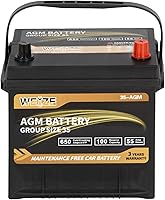
Choose the Mighty Max for a Group 35 application requiring no more than its 650 CCA. Its 55Ah capacity and 100-minute reserve capacity give you useful figures to compare against your vehicle's needs.
The case measures 9.06 x 6.89 x 8.82 in, with the positive terminal on the right and negative on the left. Check the orientation carefully so the cables reach without strain.
Mounting screws are included, but a wire harness and other mounting accessories aren't. Confirm warranty coverage before buying because Mighty Max's warranty descriptions differ, and skip this model if your car requires higher starting power.
Weize Platinum Group 65 AGM: for accessory-heavy compatible vehicles
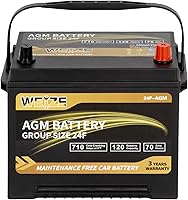
Choose the Weize for a compatible Group 65 vehicle with start-stop operation or higher accessory demands. It has 70Ah capacity, 750 CCA, and a 120-minute reserve capacity.
The battery measures about 12.05 x 7.56 x 7.56 in, with left-positive and right-negative terminals. Weize backs it with a 3-year warranty.
Skip it for solar storage or marine deep-cycle use, which Weize excludes from its intended applications. Its reserve capacity also isn't a reason to run accessories until the battery is deeply discharged.
Interstate Group 65 AGM: for compatible start-stop vehicles
Choose the Interstate for a compatible Group 65 start-stop vehicle when you prefer its pure-lead AGM design. It offers 68Ah capacity and 750 CCA in a spill-proof, vibration-resistant case.
Its dimensions are 12.06 x 7.56 x 7.44 in, with a weight of 45 lb. That height differs from the Weize, so check the hold-down and terminal clearance even when comparing the same group size.
Skip it if your vehicle needs another group or a different terminal layout. Interstate promotes longer service life from its design, but that claim shouldn't outweigh correct fit or clear warranty terms.
How should you install and care for the replacement?
Follow the vehicle's battery replacement procedure, including any registration or reset it requires. Some cars need the charging system configured for a new battery, so check before starting.
For a conventional negative-ground vehicle, the usual order is negative cable off first and back on last. Use an installer if the vehicle has an unfamiliar battery location, extra connections, or procedures you can't complete.
Secure the hold-down, check that cables aren't stretched, and reconnect any required vent tube. A loose battery can move even when the terminal clamps feel tight.
AGM batteries don't need water added, but they still need clean, secure connections. Use a compatible charger when charging is needed, and investigate charging-system faults or electrical drains instead of repeatedly replacing batteries.
How do you store and transport the old battery?
Keep it upright, secured, and protected from short circuits while arranging the return. Use a sturdy acid-resistant tray and stop the battery from sliding or tipping in the vehicle.
Wear gloves and eye protection when handling it, and keep tools or other metal away from the terminals. Wash your hands afterward.
While waiting, store it away from children, pets, flames, and sparks in a dry, ventilated area. For a cracked, leaking, or badly damaged case, contact the receiving seller or recycling center before moving it.
Which mistakes can cost you the refund?
Missed deadlines and unapproved return locations are avoidable problems. Save the policy with your receipt and put the return date on your calendar as soon as you buy.
Other mistakes include:
- Letting an installer dispose of the old battery before arranging the core credit.
- Assuming any branch can refund an online order.
- Taking a different battery type without checking eligibility.
- Confusing recycling acceptance with a deposit refund.
- Comparing checkout totals without separating refundable deposits from other fees.
If you have no old battery, budget for keeping the deposit in your final cost. Don't count on obtaining an eligible core later.
How should the core charge affect your final decision?
Choose the correct battery, then favor a core return process you can complete. A nearby return counter can be more useful than a lower checkout total paired with unclear shipping steps.
Pick ACDelco for a matching H6 application, Mighty Max for a matching Group 35 car, or compare Weize and Interstate for a matching Group 65 vehicle. Confirm each choice against the vehicle's full requirements.
Before paying a car battery core charge, know whether your old battery qualifies, where it goes, and when the refund is due. Use our car battery selection guide to settle fit before choosing the seller.
Frequently asked questions
What is a core charge on a car battery?
A core charge is a refundable deposit collected when you buy a replacement car battery; the old battery you return is called the core, and it usually doesn't need to work. The seller decides which batteries qualify, how long you have to return one, and how the refund is issued.
Do you get the battery core charge back?
You can usually recover the deposit by returning an eligible old battery within the seller's deadline; keep proof of purchase and get a receipt for the return. For an online order, confirm the approved return location before buying, since a nearby store may not handle that seller's refunds.
Can I return a car battery core without a receipt?
A seller may accept the battery for recycling without a receipt, but that doesn't mean it can refund your deposit; ask whether an order number, account record, or payment record is enough to verify the charge. Confirm this before traveling, especially if someone else bought the replacement.
Why do car batteries have a core charge?
Core charges encourage buyers to return used lead-acid batteries so their materials can be recovered through recycling; the deposit gives you a financial reason to bring the old battery back. It is separate from any nonrefundable fee, so check each charge on your receipt before expecting a refund.