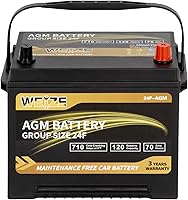
What Is a Group 31 AGM Battery?
A Group 31 AGM battery is a 12V absorbed glass mat battery built to BCI Group 31 dimensions, roughly 13 x 6.8 x 9.4 inches. The AGM part means the acid sits absorbed in glass fiber mats, so the battery is sealed, spill-resistant and better at deep cycling than a flooded battery of the same size.
On this page (8 sections)
- What does Group 31 mean in a battery name?
- What does AGM mean in a battery?
- What is a Group 31 AGM battery used for?
- How do you know a Group 31 AGM will fit your vehicle?
- Can you put an AGM battery where a flooded one was?
- How do you maintain a Group 31 AGM battery?
- What are the trade-offs of a Group 31 AGM battery?
- So, is a Group 31 AGM battery right for you?
A Group 31 AGM battery is a 12V absorbed glass mat battery built to the BCI Group 31 case size, about 13 x 6.8 x 9.4 inches. That makes it one of the larger common automotive and marine sizes, and the AGM construction means the acid is held in glass fiber mats instead of free liquid.
The two halves of the name matter separately. "Group 31" tells you whether it will fit the tray.
"AGM" tells you how it behaves under load, how it charges and what it can safely do that a flooded battery cannot.
What does Group 31 mean in a battery name?
Group 31 is a physical size standard set by the Battery Council International. It fixes the case length, width, height and terminal layout so a battery from any brand drops into the same tray.
The dimensions are roughly 13 inches long, 6.8 inches wide and 9.4 inches tall. A Group 31 is longer and taller than a Group 24 or Group 27, which are the sizes it most often replaces in trucks and RVs.
That size is why a Group 31 usually carries more plates and more acid. In practice it means higher cold cranking amps and more reserve capacity than smaller groups.
If you are still learning the sizing system, our explainer on what battery group size means covers how the numbers and letters work.
How Group 31 compares to nearby sizes
The jump from Group 27 to Group 31 adds length and height, not just capacity. Measure your tray, hold-down bracket and the space above the battery before ordering.
Height is the detail people miss. A taller Group 31 can foul a hood, a brace or a cable run even when the footprint looks fine.
Compare exact figures in our car battery group size chart before you commit.
What does AGM mean in a battery?
AGM stands for absorbed glass mat. The electrolyte is soaked into thin glass fiber separators between the plates instead of sitting as free liquid.
That design makes the battery sealed and spill-resistant. The acid stays in the mat, so the case can be mounted in more positions and is far less likely to leak acid onto nearby parts if it tips.
AGM batteries also tolerate deep discharge better than flooded ones. They recharge faster and hold charge longer in storage.
Weize says its AGM batteries are built for stop-start vehicles and higher electrical loads, and that they should not be used for deep-cycle solar or marine work.
What is a Group 31 AGM battery used for?
It suits vehicles and setups that need high reserve capacity plus resistance to vibration and deep cycling. The size gives you room for more active material, and the AGM build holds up better under repeated partial discharge.
Common uses include heavy-duty pickups, commercial vans, RVs and boat starting or house banks. It also appears in off-grid and accessory setups where a large sealed battery is preferred over a flooded one.
The AGM part matters most in stop-start vehicles. Those systems shut the engine off at lights and restart constantly, which asks more of the battery than a conventional flooded unit handles well.
Many automakers specify AGM for exactly this reason.
How do you know a Group 31 AGM will fit your vehicle?
Check three things: the case dimensions, the terminal position and the cold cranking amps. A battery that fits the tray but has reversed terminals will not connect cleanly, and one with too few CCA can struggle in cold weather.
Start with your current battery. Measure its length, width and height, note which side the positive terminal sits on, and compare that to the new battery's figures.
The BCI group number should match, but measuring catches tray modifications and aftermarket changes.
Then confirm the CCA. Your vehicle's original battery rating is the number to match or beat, not drop below.
A Group 31 usually clears that bar easily, but a smaller group swapped in might not.
Finally, check the hold-down. Group 31 batteries are heavy, often around 45 to 60 pounds depending on the build, so the bracket and tray need to be in good shape.
A Group 65 AGM like the Weize Platinum sits at 46 pounds, which gives you a sense of what a large AGM battery weighs.
If you are shopping across brands and sizes, our roundup of the best AGM car batteries compares capacity, CCA and warranty terms side by side. It helps when you know your group size but not which brand to trust.
Can you put an AGM battery where a flooded one was?
Yes, upgrading from flooded to AGM is generally fine, but the reverse is not. If your vehicle came with a flooded battery, an AGM replacement is a safe step up as long as it fits and meets the CCA rating.
The catch is charging. AGM batteries want a charge profile that tops out lower than many older flooded chargers deliver.
Overcharging an AGM can dry out the mats and shorten its life.
So check your charger or the vehicle's charging system. If you are unsure, a smart charger with an AGM mode takes the guesswork out.
The NOCO GENIUS5 handles 6V and 12V lead-acid batteries including AGM and lithium, and it adjusts its charge based on ambient temperature to avoid overcharging in heat and undercharging in cold.
If your car already has an AGM battery from the factory, do not downgrade to flooded. The charging system is set up for AGM, and a flooded battery will not last under that profile.
Weize makes the same point about its AGM line: if the original is AGM, stay with AGM.
How do you maintain a Group 31 AGM battery?
Keep it charged, keep the terminals clean and avoid letting it sit deeply discharged. AGM batteries have a lower self-discharge rate than flooded ones, but they still lose charge over weeks and months.
If the vehicle or boat sits for long stretches, connect a maintainer. A smart charger in maintenance mode monitors the battery and can stay connected without overcharging it.
That keeps the battery healthy through storage season.
Check the terminals now and then for corrosion and tightness. Even sealed batteries can suffer from loose or dirty connections, and a poor connection mimics a weak battery.
Load testing tells you the real condition. The Schumacher BT-100 runs load, charging system and starter draw tests on 6V and 12V batteries up to 1,000 CA, so you can see whether a slow start is the battery or something else.
What are the trade-offs of a Group 31 AGM battery?
The main trade-offs are weight, cost and charging sensitivity. A Group 31 is heavy, so lifting it into a tall engine bay or a boat locker takes care.
AGM versions also cost more than flooded batteries of the same size.
Weight is the practical one. At roughly 45 to 60 pounds, you want a secure grip and a helper if the tray sits high.
Plan the lift before you pull the old battery out.
Cost is the other. AGM brings spill resistance and better deep cycling, and you pay for those.
If your vehicle only needs a basic starting battery and has no stop-start system, a flooded Group 31 may be the more sensible buy.
Charging is the quiet trade-off. An AGM battery needs the right charge profile, so a mismatched charger or an older vehicle can shorten its life.
Budget for a smart charger if you do not already have one.
So, is a Group 31 AGM battery right for you?
Pick one if your vehicle calls for Group 31 and you want sealed, spill-resistant performance with strong reserve capacity. It is the natural choice for heavy trucks, RVs and boats that see vibration and repeated partial discharge.
Skip it if the tray only takes a smaller group or your budget points to flooded. In that case, match the group size first and choose the chemistry second.
The order to decide is simple. Confirm the group size and terminal position from your current battery.
Match or beat the CCA rating. Then decide whether AGM is worth the extra cost for your use.
For a deeper look at AGM weight in a smaller size class, see how much an H6 AGM battery weighs and compare it with the larger Group 31.
Once you know what a Group 31 AGM battery is, the buying decision comes down to fit and charging support. Measure twice, match the CCA, and make sure whatever charges it is set up for AGM.
Frequently asked questions
What are the dimensions of a Group 31 battery?
A Group 31 battery measures about 13 inches long, 6.8 inches wide and 9.4 inches tall. Check your battery tray and hold-down before buying, because a Group 31 is longer and taller than the Group 24 or Group 27 it often replaces.
Is a Group 31 AGM battery the same as a Group 31 flooded battery?
No. Both use the same BCI Group 31 case size and terminals, but AGM holds the acid in glass fiber mats.
AGM batteries are sealed, spill-resistant and handle deep discharge better, though they usually cost more than flooded versions.
Can I replace a flooded Group 31 with an AGM Group 31?
Yes, if your charging system supports AGM. An AGM battery needs a charge profile that stops at a lower voltage than many older flooded chargers deliver.
Check your charger or alternator settings, or use a smart charger with an AGM mode.
Can I swap a Group 31 AGM for a Group 24 or Group 27?
Only if the smaller battery meets your vehicle's minimum cold cranking amps and physically fits the tray. A Group 31 delivers more reserve capacity and CCA, so downsizing can leave you short on starting power or run time.